1718 products
Sort by:
1718 products





I would probably doubt the desirability of mauve if I didn't have a friend who claims that apricots, of all things, are her favorite fruit. To that end I know for a fact someone is absolutely frothing at the mouth for this botanical monument to mauve. The fleshy-pinky-purple flowers of this hardy ginger relative defy characterization but they will certainly mauve you, whether to joy or uncertain regard however, is in the eye of the beholder. An introduction from the Roscoe-royalty at Hartside nursery in the UK.


A richly purple selection of this usually pale yellow species, a color which is here maintained in the central eye. This is a favorite in our bed of 70+ Roscoeas for its early show of numerous flowers held among multitudinous vigorous crowns. Kudos to its originator Hartside Nursery across the pond and to Kelly and Sue for ferrying it across.

We are very excited to be offering one of the incredible New Zealand alpine daisies. If you aren't familiar you may want to leave now or you will be a lifelong thrall, with your fellow gardeners playing whip noises from their phone at every mention of another Celmisia you simply must have. If you're already in Asteraceae Anonymous then you are in good company hear with us. Broad felty leaves with a silver-furred underside belie the large classic daisy flowers, a simple recipe that produces untold deliciousness. Needs full sun, sharp drainage, and is maladapted to hot humid summers, though this species is among the more forgiving of these divas.


A unique Bergenia collected in Kashmir and later named by Beth Chatto after a close friend. It forms a neat rosette of highly unusual, bright green leaves that have a strongly tapered, or cuneate, base with a coarse ciliate margin, typical of B. stracheyi. In autumn, the leaves turn a brilliant shade of crimson, plum red. Heads of small white, drooping flowers appear in spring in tight clusters. An interesting foliage plant that may not be to everyone’s taste but is well worth growing for its winter colour and white flowers.
Thanks to our pal Scott Galloway curator of the best Bergenia collection around and creator of the incomparable info source the Bergenlist for the description and photos!


We grow an unreasonable amount of different Ophiopogon or mondo grass species and varieties. Unreasonable because they mostly just fuse together into one globular grassy ball in the mind due to their lack of distinguishing characters. The forbidden blue jelly beans of this particular collection are vivid as ever. Wild collected umbraticola is good enough already but if that's what this is then it is a particularly fine form with a large profusion of both flowers and fruits, with the latter being on the larger side of those we have encountered. Being called "dwarf" must have given these a Napoleon complex that led them to excel in other areas...

For those whom bigger is better but biggest is best comes this larger of the two "Bamboo Iris" species. The name refers to its habit of forming tall upright canes which hold the fans of foliage and flowers ever higher aloft. While bamboo might be a slight exaggeration in the case of I. confusa (only reaching 3ft or so) this species can reportedly top out at 6'+. I envy legendary plant breeder and Iridophile Darrell Probst who collected this species for what must have been a truly incredible encounter in the wild. Needs a fairly sheltered/mild spot to reach full potential.
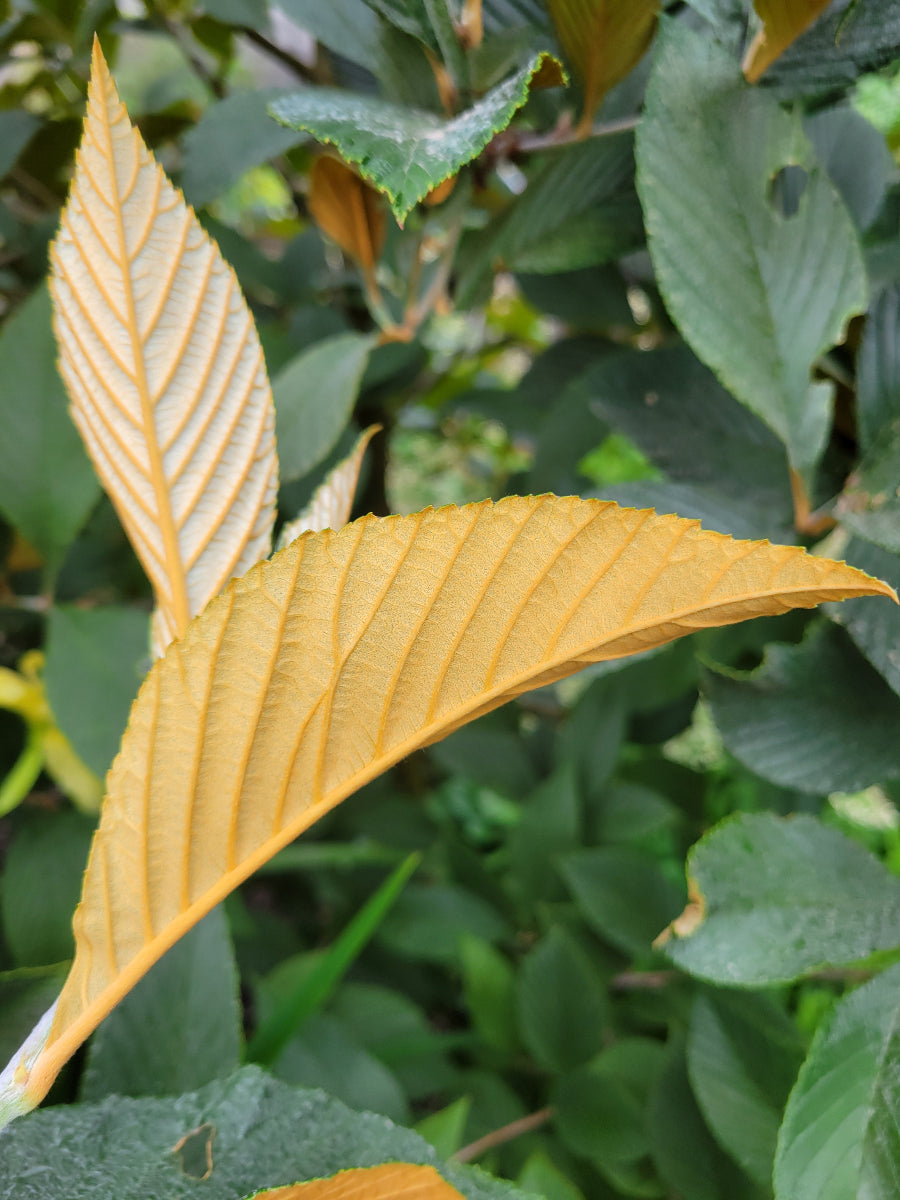
As a plant hunter and explorer, it doesn’t get any better than being part of a team that finds and introduces a species new to science and we were tasked with growing this from very limited seed. It is even better when that species is not new because it is obscure with minor taxonomic differences from other known Asian species but instead, waves those richly ornamental characteristics like a flag. The main feature that jumps right out at you on this entire-leafed tree is the tawny amber indumentum on the underside of the leaves which tantalizes spring into fall, the latter time enhanced by the orange-red fruit. This has also been collected by a French nursery from a different area but likely the same mountain range. This very limited offering is from one clone propagated by cuttings.


One of the Asian hornbeams longest in cultivation, as well as one of the most graceful, yet still sadly rare particularly here in the US. Most introductions trace back to the Himalayas and China, whereas this is possibly the first from Vietnam collected and shared with us by Aaron Floden. Gently drooping branches and pendulous catkins give a soft weeping effect (particularly good in this clone) without the messiness of a true weeper. A beauty and with good hardiness for its origins surviving -6 F in Aaron's home garden.