1704 products
Sort by:
1704 products

Tolmie Star-Tulip or Pussy Ears are the colloquial sobriquets for this diminutive Oregon and California native. Historically in Washington but extirpated. This species is very tolerant of winter rains growing from the coast up into the Cascades. Very fuzzy flowers with 3 broadly rounded generally white petals and 3 narrow lavender petals. Freshly dug bulbs - 1 bulb per pot

Someone was doing that odd thing where you name a kid the opposite of what you want it to be to ward off evil or some such when they described this one. Despite the humorously offputting nomenclature this is actually a surprisingly cute and fairy-like little ginger relative with stalks of tiny golden flowers in a shape almost akin to a paper crane. Almost unheard of in cultivation, especially outside of botanic gardens so cultural information is scarce to say the least but given the Sichuanese origins and Zingiberaceae nature it likely wants a moist rich soil and to be kept protected from strong frosts.
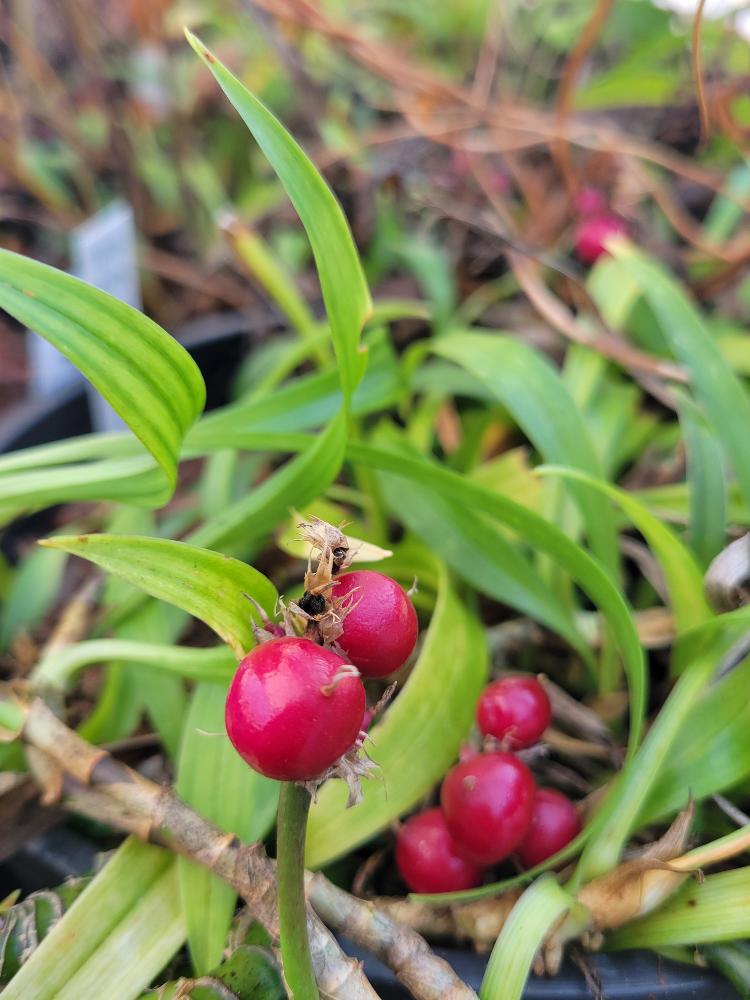
A Darrell Probst collection of this classic Chinese evergreen groundcover which sends Kelly into defensive throes of passionate oration when ne'er do well gardeners question its place. Little candles of pink and white flowers held by the arched creeping candelabra stems which are then followed by glossy red baubles that would be fabulous as miniature ornaments. Let the Christmas reign of holly end and the new dawn of Reineckea begin.

This evergreen Solomon Seal mimic was collected in Taiwan by horticultural powerhouse Adam Black who graciously shared a plant with us some years ago. Evergreen leaves on a low spreading plant with white flowers although severe cold events might turn evergreen to deciduous. Pair this with fine-textured ferns, smaller Ophiopogon, Trillium or really, whatever floats your garden design boat. Follow Adam on Instagram – he goes deep!

Podophyllum or Dysosma – the Asian species are better in Dysosma but when shopping, most people look for Podophyllum when they need to push their shade garden over the top. This Chinese species was shared with us by our friend and great plantsman Darrell Probst who knows an extraordinary plant when he sees it. Among our sea of Podophyllum species and cultivars, this stands apart in habit, form and flower. Upright stems hold green lobed saucers of leaves which cannot be confused with the other green-leafed species. Beautifully displayed are single white flowers under each leaf which when pollinated, morphs into a glowing orange fruit. For us, this species stays in a tight crown without the running habit of some other species. This is good if your space is limited and bad if you want more and of course, we want lots! Which we don’t have but the scant few we do have in surplus, are here.

A native of the wild east of Washington state, this is one outlaw that couldn't escape the long arm of taxonomical law and its free-wheeling life as the impossible to spell Synthyris has ended in emasculation at the hands of all consuming Veronica. Cormac would weep. Nonetheless it's evergreen discs of boot-spur margined foliage and vivid purple gun-barrel flowers spikes will live on in garden legend.

Imagine prizing open the rigid and unrelenting fingers of one Kelly Dodson and wresting from him prized jewels and precious heirlooms. A scenario not far from the one that has finally made this exquisite Central American bulb available to you, our beloved customers, for whom we endure much separation anxiety and grief. The flowers like little flames must be very akin to the will-o-the-wisps in their native cloud forest, luring unwary travelers to an endless curse of botanical lust. Desirous of moist, well draining mix and not amicable to deep frosts. Bulb at or near flowering size.

Into the rabid cutthroat world of the Gesneriad convention goes the strongest soldier of rare plant reconnaissance, Steve Hootman, curator of the Rhody garden and out comes a treasured jewelbox of all but unseen Gesner hybrids. Move over Mr. Cage there's a new heist-master, and I guess that makes us the black market dealer and you the faceless, nameless, glitterati of the botanical underworld. Imagine the gasp as the auctioneer brings forth this beauty, all red-bracted and silver-veined. Let the bidding begin
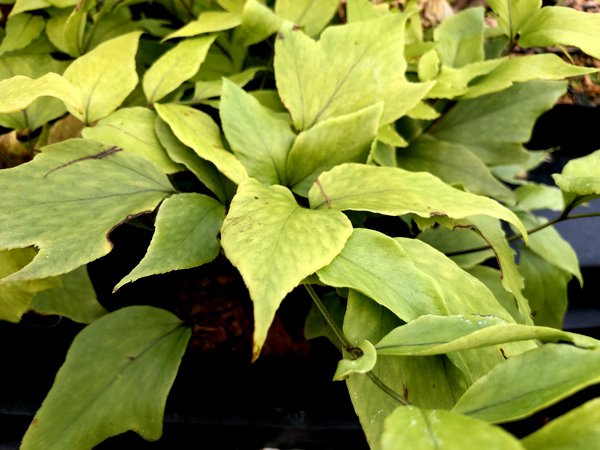
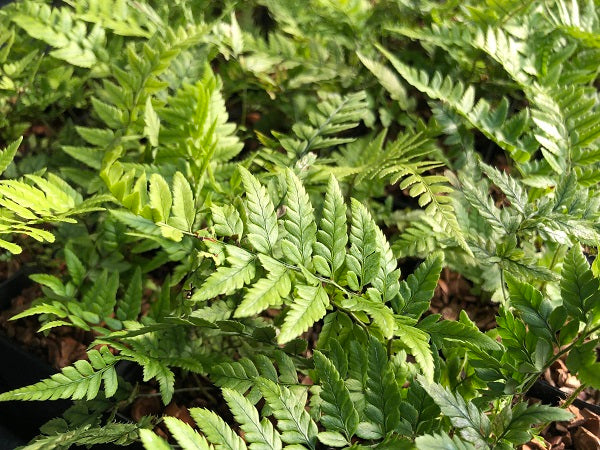
For those who have grown ferns from spore you know that Cyrtomium are how-shall-we-say convivial, popping up where you least expect them. So here an offering for those who appreciate the unexpected joys of life. Due to their dubious origins we can't place a certain name or collection to them but the genus is notoriously indistinguishable anyway. What we can guarantee are the usual smooth evergreen sickle-pinna-ed leaves of the stalwart holly fern that mean you are equally assured of a first-rate garden plant.


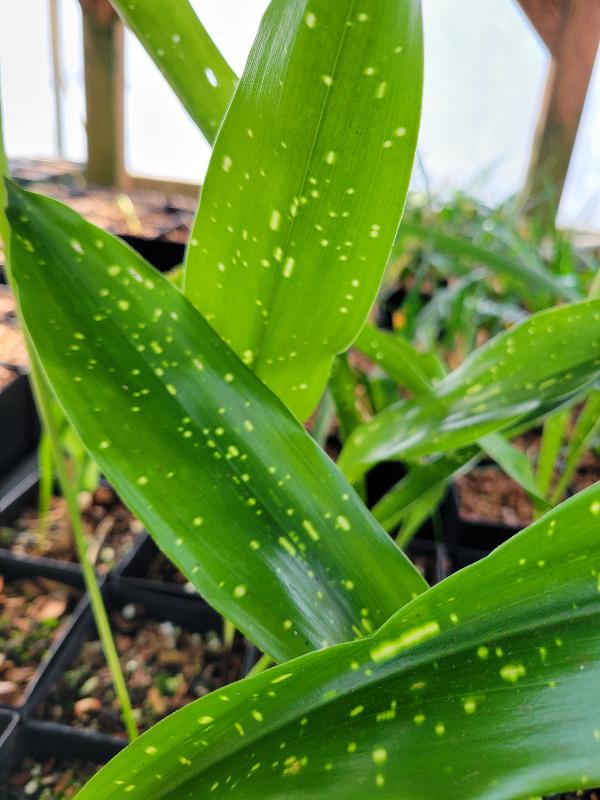
We received this from plantsman Lance Reiners via Barry Yinger who brought this in from Japan some years back. 2ft evergreen lanceolate leaves with a light yellow to white central stripe. Tolerant of deep shade and a variety of soils, also happy containerized or as a houseplant.

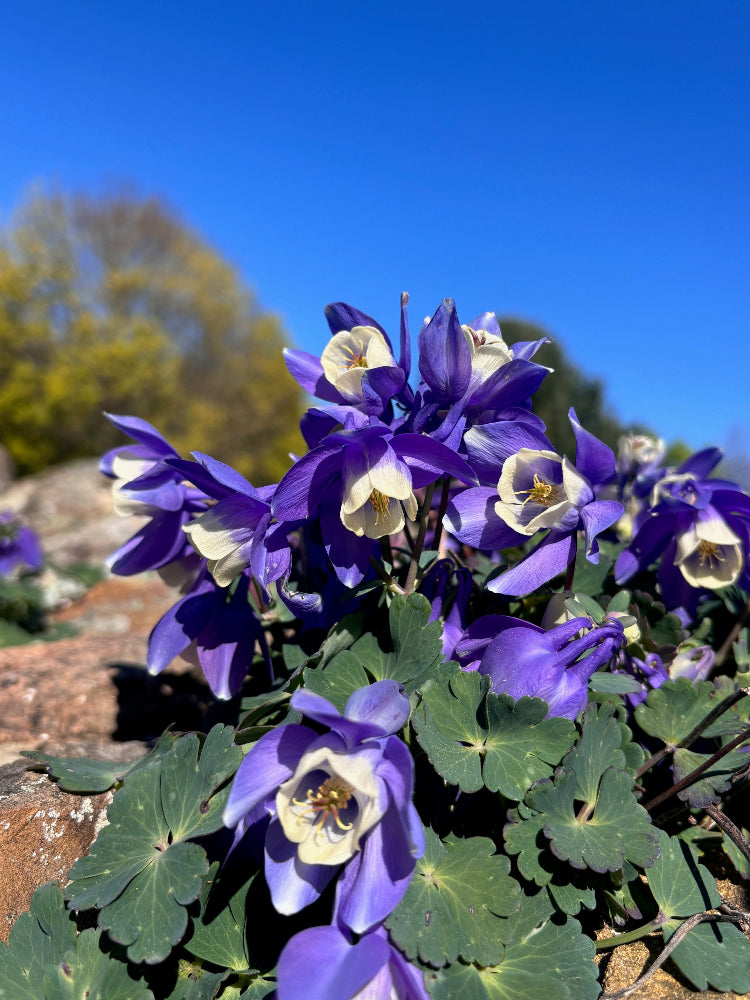
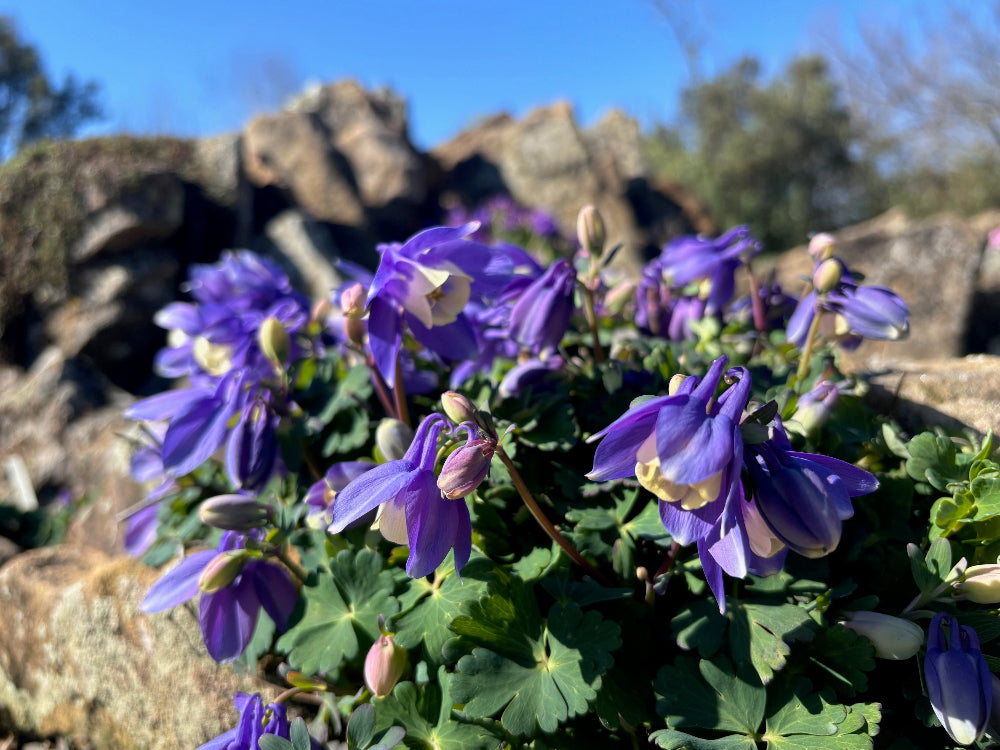
A columbine caricatured for cuteness would be a fair assessment of this species and selection. Taking an already dwarf plant and selecting for the smallest of its kind is very Alpine gardener behavior and luckily this one plays along happily growing and seeding in our crevice garden. Buoyant light purple and white-centered starship flowers outsize in comparison to the teensy vegetative parts. Happy in colder climes but unsuited to strong summer heat.
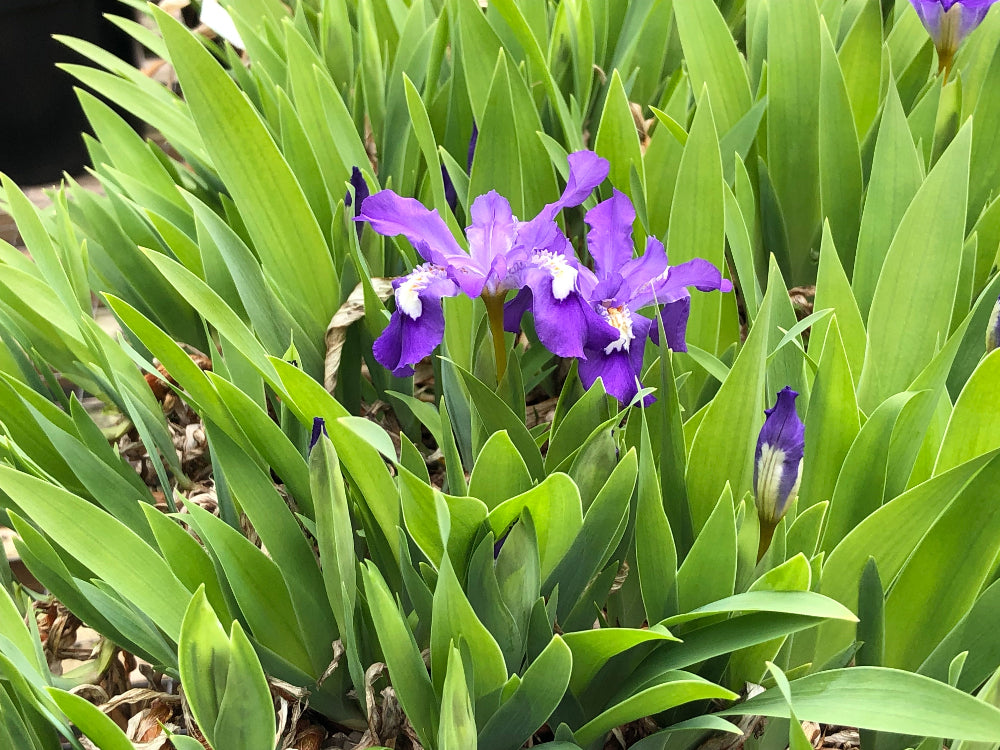
An unusually deeply colored selection of this Eastern US native dwarf Iris. Despite its Yankee origins this one has taken up with the enemy inheriting the name of noted British botanophile Collingwood 'Cherry' Ingram. What can we say the Anglo-saxon can't help but claim credit for what isn't theirs. Grows to just a couple inches high, dark purple flowers as big or bigger than the foliage
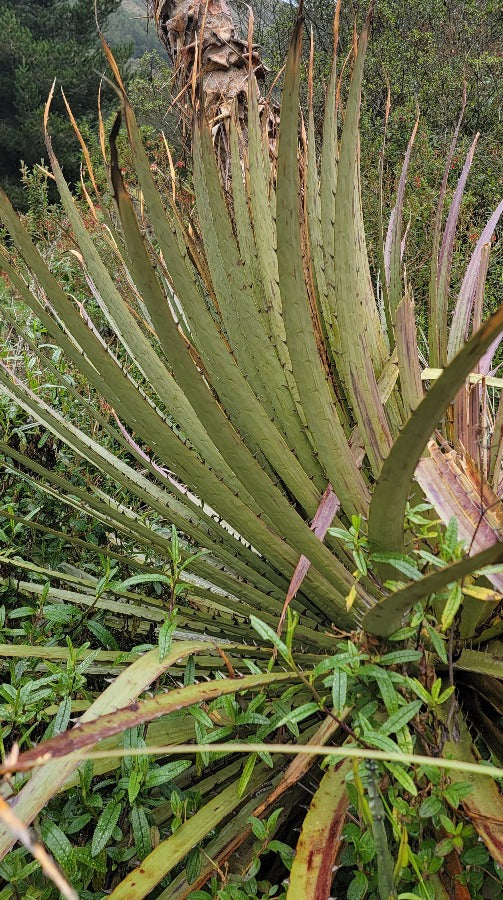
Collected in Ecuador at nearly 12000', this bromeliad will certainly tease with possibilities of hardiness. The stiff evergreen sword-like leaves are well-protected by evenly spaced sharp teeth which are the pinnacle of personal protection against herbivory. Critically, they guard against unwanted advances upon the infrequently produced stiff flower stem whose stoutly erect bearing is regarded either as a triumph of botanical engineering or the epitome of salacious horticultural projecting. The many stemless flowers were not seen but are arranged in stimulating tight spirals up the upper half of the thick vertical shaft. Growing on slopes in the humid páramo zone of mixed grass-forb-shrub communities with wide temperature swings and ample water from rain, clouds, fog and frost.