1707 products
Sort by:
1707 products


Podophyllum or Dysosma – the Asian species are better in Dysosma but when shopping, most people look for Podophyllum when they need to push their shade garden over the top. This Chinese species was shared with us by our friend and great plantsman Darrell Probst who knows an extraordinary plant when he sees it. Among our sea of Podophyllum species and cultivars, this stands apart in habit, form and flower. Upright stems hold green lobed saucers of leaves which cannot be confused with the other green-leafed species. Beautifully displayed are single white flowers under each leaf which when pollinated, morphs into a glowing orange fruit. For us, this species stays in a tight crown without the running habit of some other species. This is good if your space is limited and bad if you want more and of course, we want lots! Which we don’t have but the scant few we do have in surplus, are here.
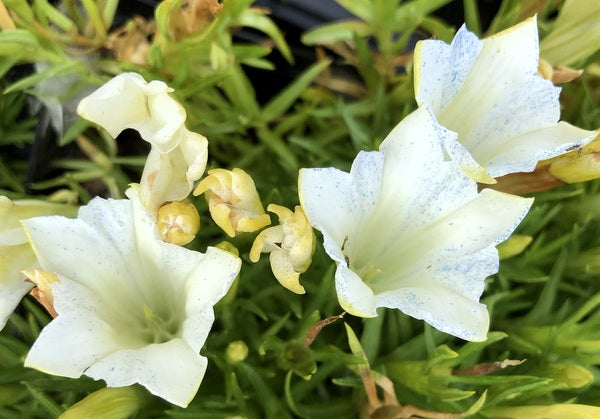
A classy selection we brought in from the UK as the pure white clone 'Serenity,' but turns out to be a dead-ringer for this Scottish selection with alternate petals dusted in light turquoise. Full sun in cool sun areas, or part sun in hot sun. Moist acidic soil please.

We understand if you have written off Hypericum entirely as a genus, but try not to judge this fella by the sins of his forefathers he's really quite an interesting chap once you get to know him. Eschewing the promiscuity and vigorous advances that has given its family a bad name this species native to Spain's Balearic islands stays quite small and contained, it maintains the redemptive golden flowers you know but the leaves are transformed into minute, lustrously evergreen ones that are not dissimilar to a crinkle-cut fry in silhouette. The stems add to the textural feast of the leaves with their scaly texture. Wants sharp drainage and makes a good rock garden or sandy spot addition.