1707 products
Sort by:
1707 products


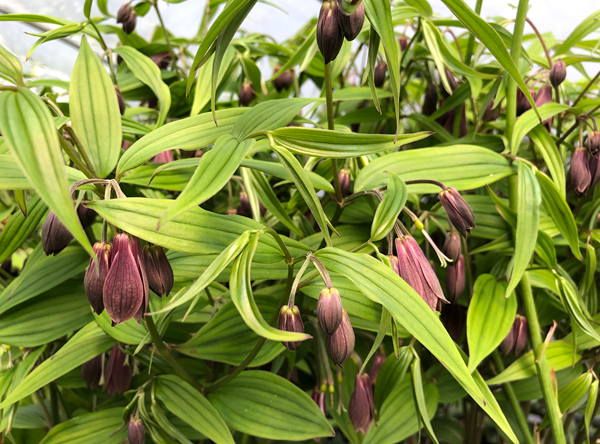
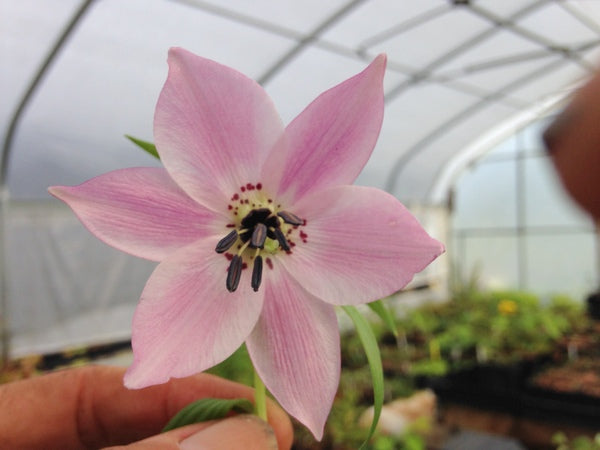


A very elegant species combining refinement of foliage and flower. Rounded leaflets softly tinted in flesh tones back the single pink goblet shaped flowers. Exquisite is a word not used lightly here. A denizen of the Japanese woodlands, this performs beautifully in full to part shade. The flowers, while small, are not to be discounted as the presentation is very good. What is better are the flamboyant starfish seed pods which open in fall to reveal a jewel box of glistening seeds like blue-black pearls nestled in the carnelian of infertile seeds. Fair to say this is the queen of our shade garden in the fall and all who view her display become instant loyal subjects. These are seedlings that are a few years from blooming size.

When ethnobotanical and ornamental interest collide it's always a plant worth investing in, and this one hits high marks in both categories. The common name paperbush refers to the use of the plant in making paper, notably that used in Japanese banknotes. Meanwhile the specific epithet of chrysantha foreshadows the unique clusters of early-blooming tubular yellow flowers with an incredible scent. Add to that the gently arching candelabra-like form and I can't see why this isn't in every garden possible.


This is the Award of Garden Merit form of the species which has a superior presentation in its fronds which are blessed with a long terminal pinnae. And really, who doesn't want a long terminal pinnae? The typical species is a familiar sight growing on the trunks of our native Bigleaf Maples here in western Washington but this form is rare.


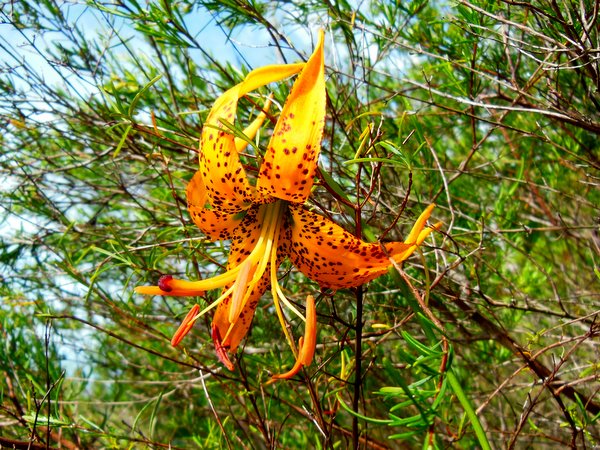
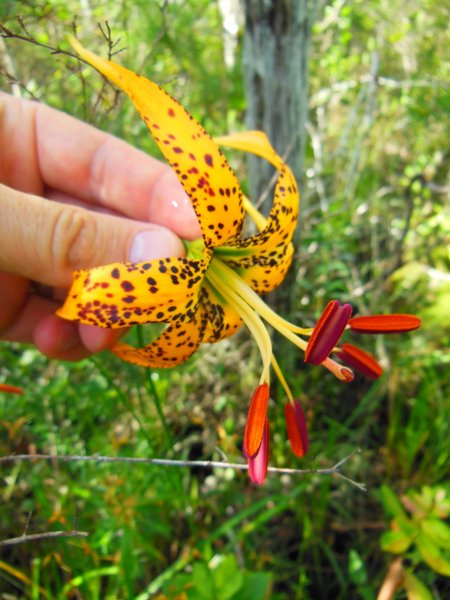
Extremely rare lily native to just a few sites in the southeastern US and discovered by Mary Henry in 1940. She found this growing in the Florida panhandle and it is known as the Panhandle Lily or as Mary described it, Pot of Gold Lily. This is virtually unobtainable, and we were lucky to receive ours from a botanist friend who is doing work on the genus. This is found growing along streams and particularly in association with pitcher plant bogs, so its habitat is threatened by human mismanagement. It is not all that common to find a lily species adapted to warm winters and high humidity but perhaps the moist conditions cools the bulbs.
This striking Turk's cap lily will be 3'-6' at maturity and have from 1-4 flowers in late July through August. The bulbs are very rhizomatous and will make a nice little colony when happy. Speaking of happy, these have a reputation for being finicky but we wonder if this was not a fault of tissue culture as most experience with this species were with tissue-cultured bulbs, a process which has since been discontinued. These are not from TC and obviously our friend grew these quite well in containers, in a mix of 50-50 peat moss and sand, as he sent us nice blooming size divisions. Mary Henry grew and flowered this from seed in a pot on her porch in Philadelphia and then to further douse this notion of being a persnickety bulb, our friend reports these being grown in an Ann Arbor Michigan garden quite successfully for several years. These are allied to Lilium superbum and apparently no more difficult to grow. The bulbs are naturally very small but increase well. An absolute must for the lily collector.


Waratah. This evergreen shrub in the Proteaceae hails from Tasmania and is a showstopper. Telopea is from the Greek telopos meaning “seen from afar” which perfectly describes the magnificent clustered red flowers quite unlike anything else we can grow here in the PNW and which are produced at the ends of gently ferruginous and leafy twigs. We were highly reluctant to chance planting out this hard-to-come-by beauty as we were quite sure our winter weather forays into 10F would be a terminal adventure. Were we ever wrong! It has come through the last 6 winters without a whimper and only a few nominal bits of leaf damage from the January 2025 Great Winnowing epic plunge. And deer resistant as if it needs further accolades – we have resolved to never garden without it. Sensitive to higher levels of phosphorous so go low in your NPK ratio. Some shade in hot sun areas.