
1707 products
Sort by:
1707 products

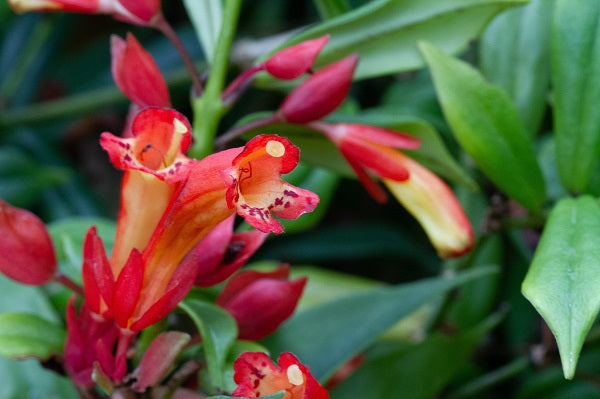
Our collection from the lower slopes of Mt Japfu in Nagaland at around 7000'. (NAPE= Nagaland/Arunachal Pradesh Expedition 2203) This is an epiphyte growing below the frost zone with showy red flowers and narrow petals. Best cool in loose, airy, mossy soil, treated like an indoor fern. A Far Reaches Botanical Conservancy Offering
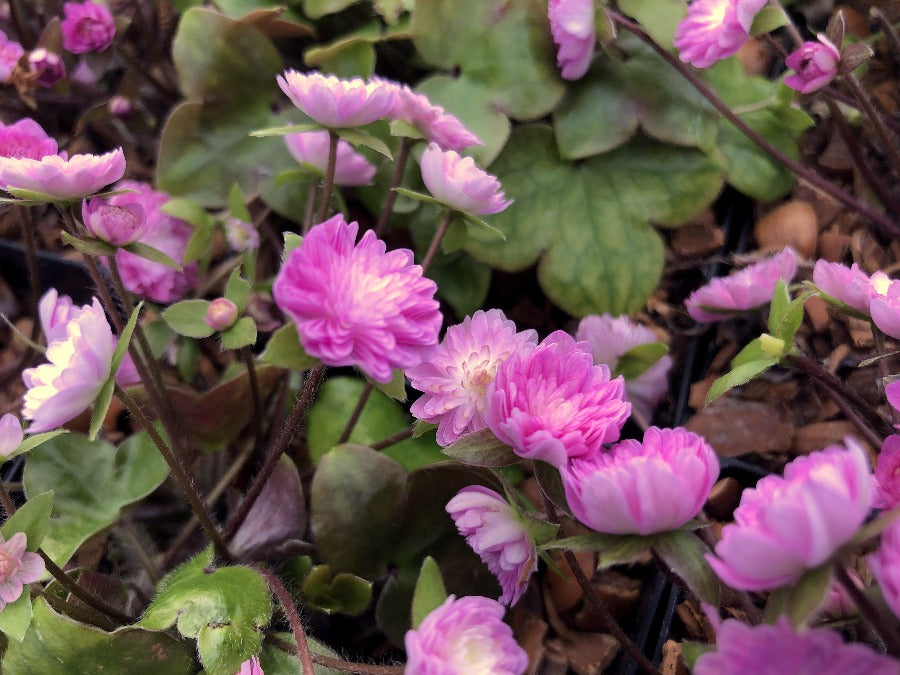


Named for the great English gardener, this evergreen flowering currant has pendulous fragrant creamy-white flowers in late winter-early spring. This is a very uncommon selection which is more compact than typical for the species and will give your garden chutzpah. Appreciates not having to bear winter winds and can take some dry shade.
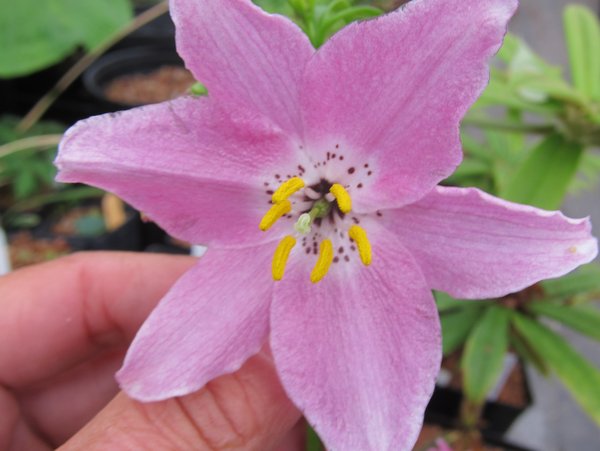
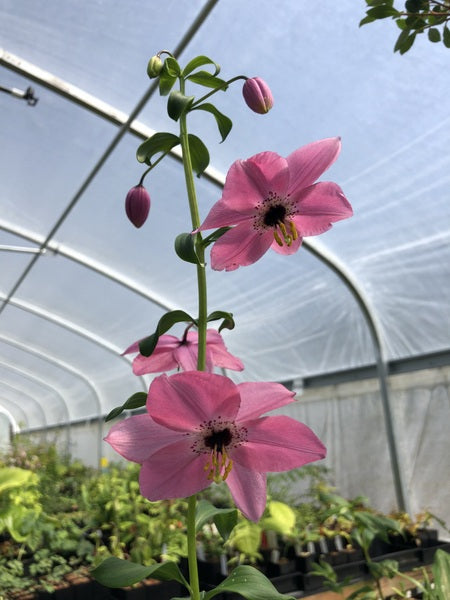


SHIPPING RESTRICTIONS MAY APPLY
One of the great Mahonia species or Berberis as they are now sometimes known. We saw this growing on Wawushan in Sichuan where it exhibited it's characteristic waxy white underleaf. Loose sprays of pinky-orange flowers in late summer and early fall are followed by nice fruit. Easy and a connoisseurs foliage plant.


We have not named many plants despite many opportunities to do so but this is one we are fairly puffed up about. We love Roscoea for their durability in the garden and their exotic, almost orchid-like flowers. We were pleased to offer the famed red-flowered Roscoea purpurea f. rubra known as 'Red Gurkha' for the first time in the US whose flowers are indeed luscious and our only quibble is that the plant is a bit short. We wanted to get the vibrant red tones of Red Gurkha carried on into a sizable flower on a taller plant with ideally some color to the foliage. We cranked up the in-house hybridizing using a number of parents and one cross in particular showed excellent promise.
The next year saw us focus on replicating that cross with good success and the resultant seedlings were lined out in our trial bed two years later. We were able to judge that bed with a dispassionate and calculating eye when every plant came into flower and the resultant evaluation received a positive check mark on the new category we had to create of Hell, Yeah!!! Vigorous plants with foliage variously shaded in coppery hues and flowers that defy easy description. The flowers in mid to late summer bewitch with prism jewel tones of ruby and amethyst which shimmer with an entrancing depth of color. This is a seedling group and not clonal so there is some small variation but pretty darned consistent. We hope to sell enough to defray chiropractic shoulder treatment from repetitive injuries stemming from patting ourselves on the back.


