1707 products
Sort by:
1707 products

Fairly old-school cultivar of the always-delightful Eastern US native dwarf Iris, and follows the equally old-school trend of calling vaguely indigo-ish plants "blue" in the pursuit of horticultural marketing. The historic name is perhaps more true to life, the flowers exchange their usual study in a variety of soft lavender tints for a more uniform pop of purple.


An uncommon New World subtropical blueberry relative native to the Andes. Can be epiphytic and has hanging thin branches up to 5' long but usually shorter with rounded pale green leaves. Just looks like it wants to be on a dripping cliff by a waterfall. Egg-shaped flowers that are white-pink with darker tips followed by translucent violet-tinged edible berries much like Agapetes. No frost. Way nifty.

An irregularly variegated form of wood anemone. Be not afraid of some green leaves, for as is true of our great heaving masses, not all can be special. While not every leaf is variegated those that are, are quite fetching with pure white sections often near the leaf edge providing an eyecatching contrast and complement to the standard white flowers. A shade perennial classic with an added surprise, what's not to like!


Native to Chile, this is in the Solanaceae and will become a 4'-6' evergreen shrub with drooping and narrowly tubular yellow flowers with long exserted stamens. The foliage is a bit unpleasant when crushed - and only then - which makes us think it will be deer proof. Has proved hardy outside in our PT frost pocket for a good decade now, may get cut back by the fiercest winters but bounds back quickly. Good for a sunny position and was given the Award of Garden Merit by the Royal Horticultural Society.

It's always a bit of a point of shame when we export a U.S. native from the UK, but we must say it certainly hurts a little less when it comes from someone like Sir Peter Cox of Glendoick. One can even forget the pain entirely when the plant in question is as dashingly handsome as this one. A bleeding heart with a real emphasis on the bloody side of the equation with the usually pink flowers donning a deep carmine robe that lends them a sultry romanticism. The rest is familiar but for good reason, finely cut blue-green leaves and a strong spreading habit.
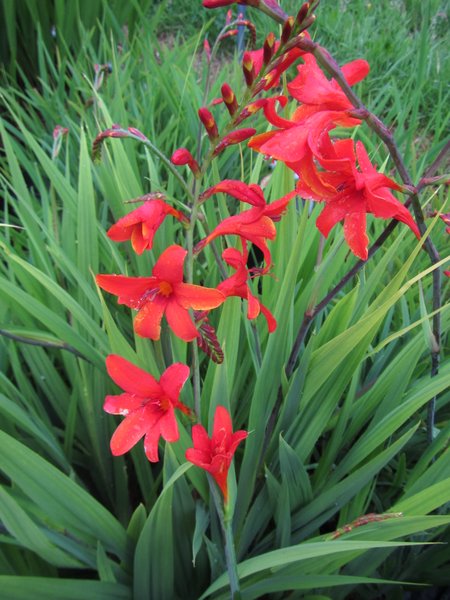
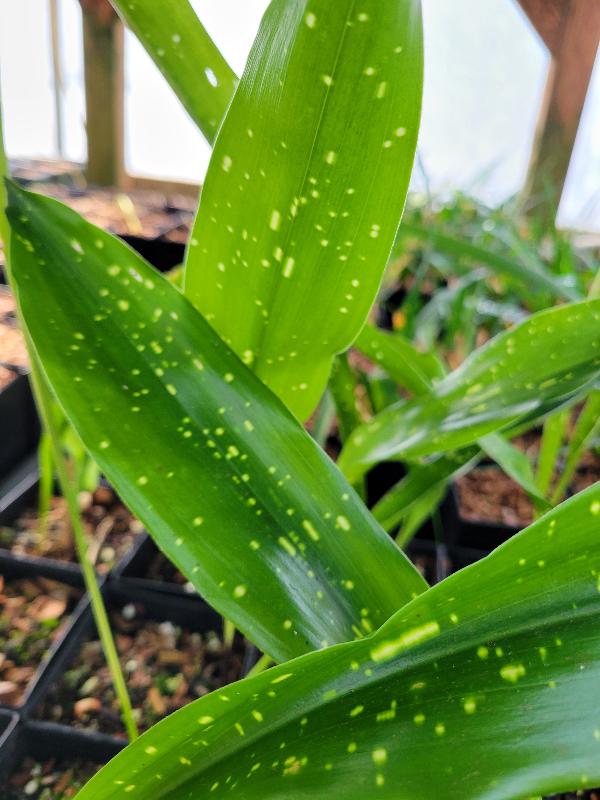


Our collection from Guizhou in an area famed for its vast diversity and density of Rhododendron species. It was really quite staggering to see the Rhododendrons dominate the landscape even in the fall when all was out of flower. This little Mondo Grass grew as part of the herbaceous understory and had narrow evergreen leaves to 6" with 8" flower stems bearing up to 7 glossy blue-black fruits. Part of our mission here at the nursery is to provide wild-sourced plants in genera that is confused taxonomically in hopes more light can be shed. A portion of the proceeds goes to the Far Reaches Botanical Conservancy.
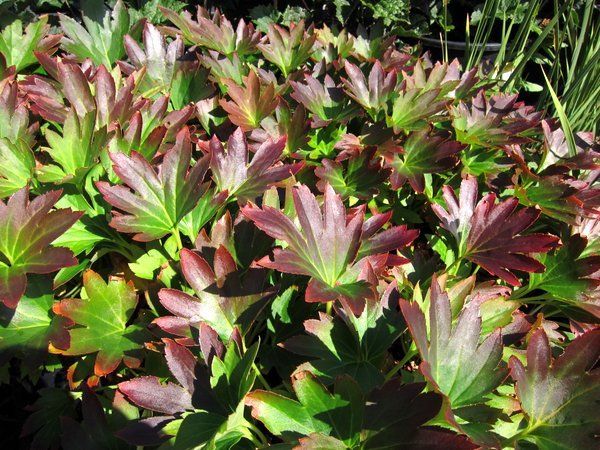

A. villosa is widely grown in the rock garden world and widely distributed in the world at large. This variety however is something a little more uncommon, and with the distinction amidst other varieties of being stoloniferous, reaching out red hairy tendrils tipped by a colonial rosette produced by the mothership. This sort of imperial behavior is rightly shunned in modern geopolitics, but quite welcome in the garden. This is particularly true when each silver fuzzy rosette which composes the expanding territorial mat produces it profusion of hot pink, yellow-eyed flowers. A great beginner rock or crevice garden plant which is easily shared or divided and spread around.

You know that friend who despite their nice but nothing-out-of-the-ordinary looks seems to inspire an inexplicable frenzy of devoted suitors? You know the one with the flirty charismatic air that you just can't place because you seem to be the only one not susceptible to their romantic magnetism? Well this is probably that friend to those of you on the other half of the country. Which is fine by us cause we don't need the competition in the DMs that are already chock full of a large diversity of nectar-hungry pollinators. What can we say, the tall elegance and up-for-anything attitude that sees V in both woodland edges and prairie meadows just has us hooked. Wild provenance plants from the Western edges (Iowa) of this Eastern U.S. native's range, these particular plants are hairy leaved and have flowers that start as bright pink buds that open to white. our friend Aaron made a mistake in introducing us to this one.

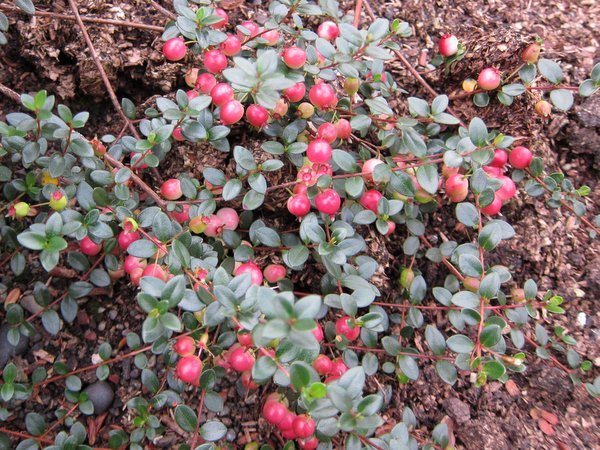

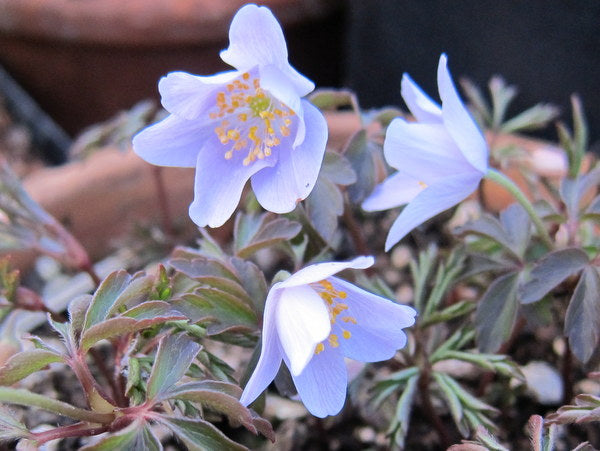
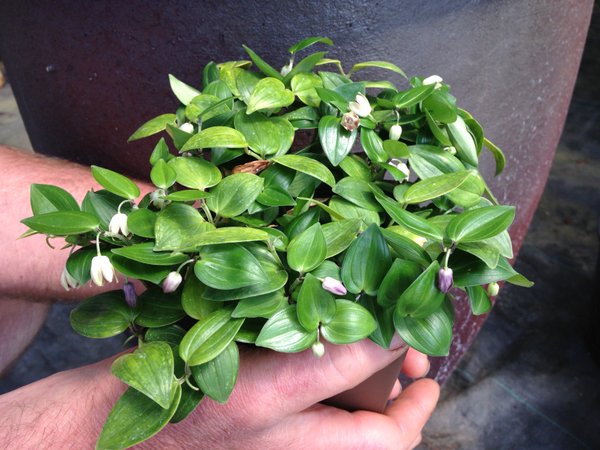


Potentially the first offering of this plant in the US we brought this back from Far Reaches sister city Pan-Global Plants, the stellar nursery of plantsman Nick Macer who wild collected these in Guizhou. Very unique look with dark green rosettes of leaves centered by a cluster of yellow flowers, will slowly spread to form a truly special groundcover Broader and fewer leaflets than the more often seen var. stenophylla.