
97 products
Sort by:
97 products
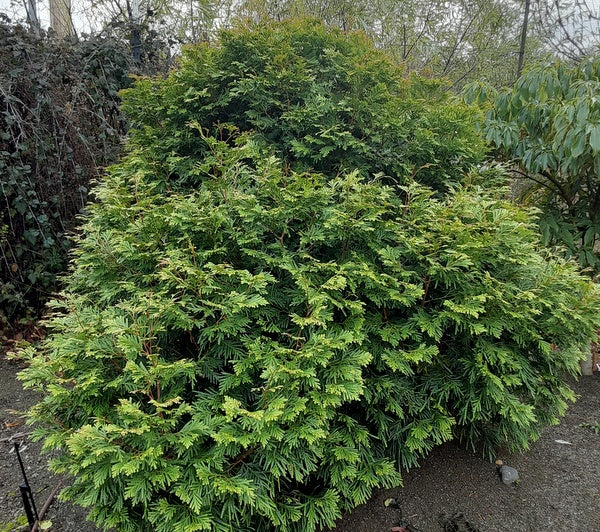
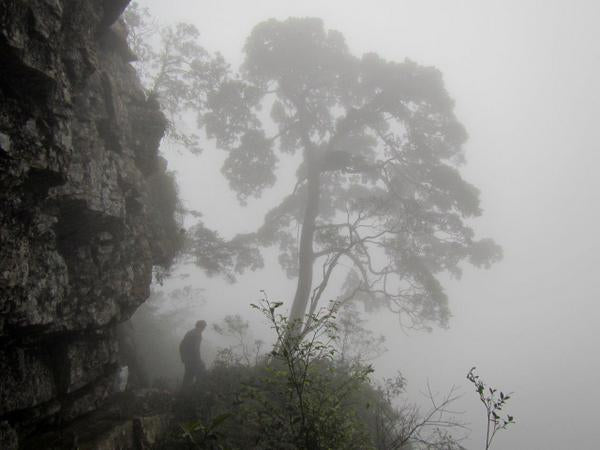
Distinctive Asian conifer forming impressively large trees up to 100' and we've been very fortunate to see large specimens in Guangxi Province. The dense branchlets are flattened much like a Thuja and extremely handsome. Ours is thriving in full sun/wind exposure. Recently moved to Chamaecyparis and then back. Young plants.
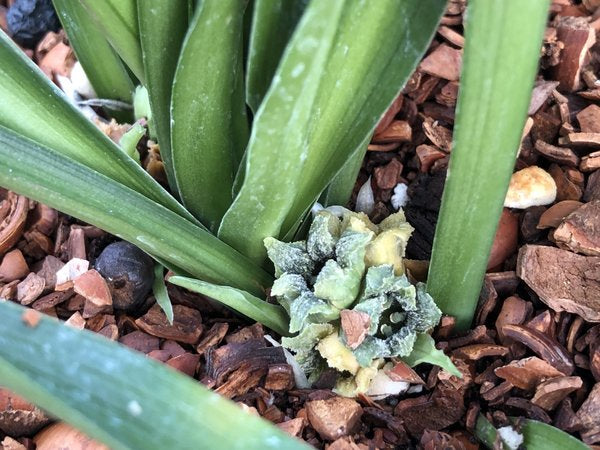
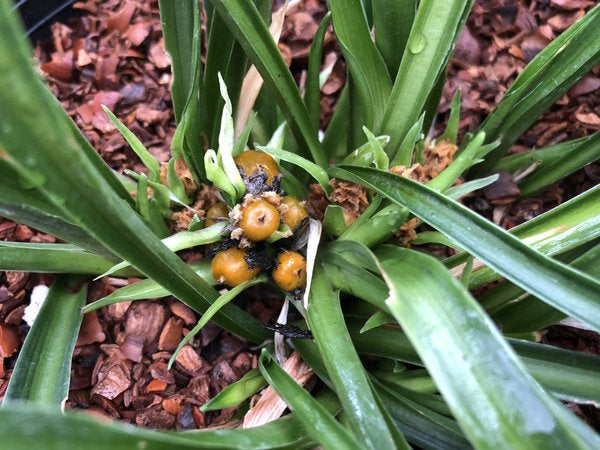
Collected as Tupistra in 1997 in the Cangshan above Dali at 10,000'. This was in a slump of debris on the road from the cliff above and located just past the 1981 SBEC collection of Rhododendron edgeworthii which was recognizable from expedition photos as the same plant growing on top of the same massive boulder. Narrow evergreen keeled leaves create a dense clump. Flowers a basal persistent cudgel of green buds which open to small strange green flowers turning to amber drops with age which delight the botanically inclined. This was fairly recently moved from Tupistra to Campylandra and in 2003 into Rohdea for those of you keeping taxonomic scorecards. A Far Reaches Botanical Conservancy Offering.
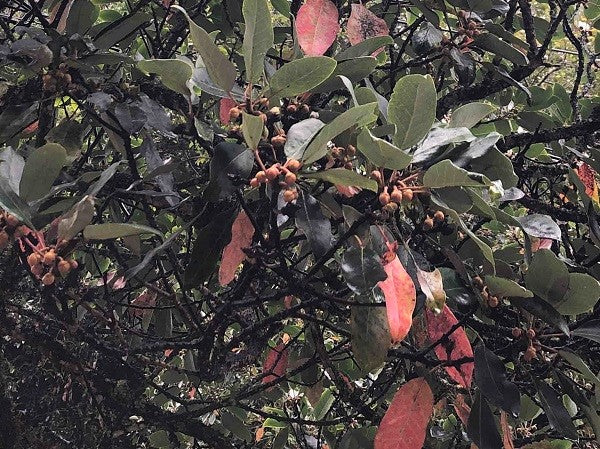
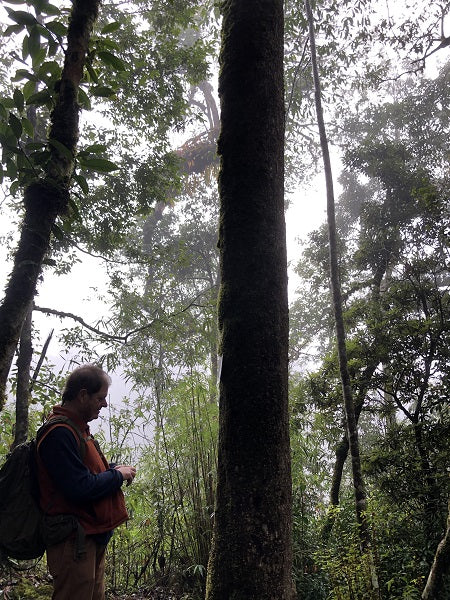
An impressive member of the witch hazel family with showy red flowers in the latter half of summer. We had our world-view of Rhodoleia shaken like a snow globe when we saw an imposing old growth tree of this species in southern Yunnan with a straight clean trunk going on and on. Evergreen leaves usually glaucous beneath. Wish it was hardier.
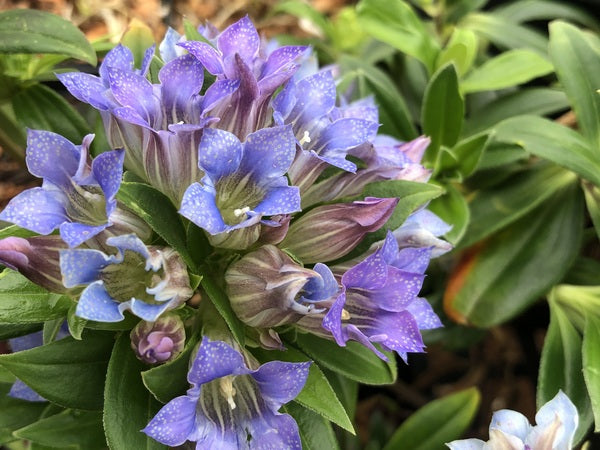
Our collection of this as yet unidentified Gentian from an isolated peak with difficult access. This was growing on steep open banks overhung with Schefflera fengii and Rhododendron sinofalconeri where it made rounded small shrublets with semi-woody stems covered in clusters of shades of blue flowers.
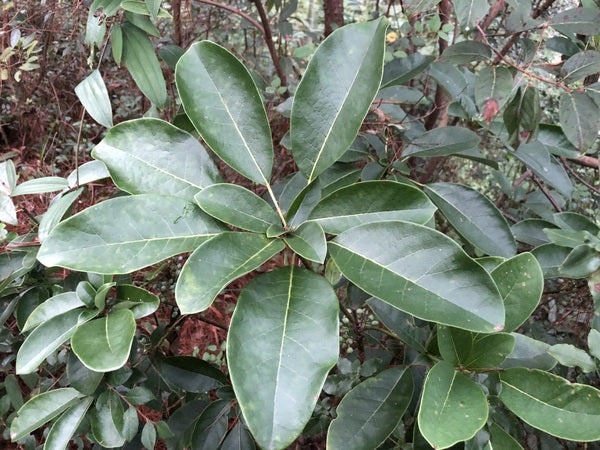
Young plants of this extremely rare species which we speculate will have only light frost tolerance so perhaps good for zones 9-10. Evergreen bold leaves bringing to mind an unholy union between a laurel and a rhododendron. Insignificant flowers at a relatively young age. A number of novel alkaloids have been isolated from this species if this makes up in any way for the lack of showy flowers. A Far Reaches Botanical Conservancy Offering
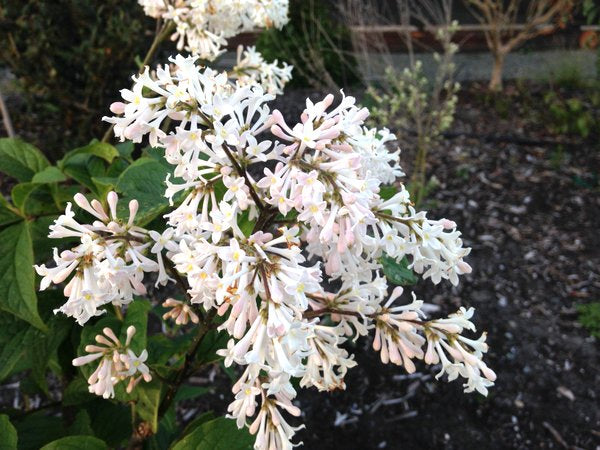
A multi-stemmed large shrub having a small tree appearance as it is quite upright from our Asian collection in an area of extreme ecological devastation. This had fallen from a cliff edge making seed capsules accessible. Narrow flower heads of whitish flowers have a graceful quality that is found in the wild species. Proceeds from this offering go to support the mission of Far Reaches Botanical Conservancy. Previously offered as Syringa aff. yunnanensis.

Tender South American shrubby succulent making a 3'x4' mound of thin stems with small fleshy leaves Flowers unknown and we are perfectly willing to accept that this might well be a different genus entirely! Pairs well with cactus, bromeliads and xeric shrubs. Let us know what it looks like when it flowers! A Far Reaches Botanical Conservancy Offering.
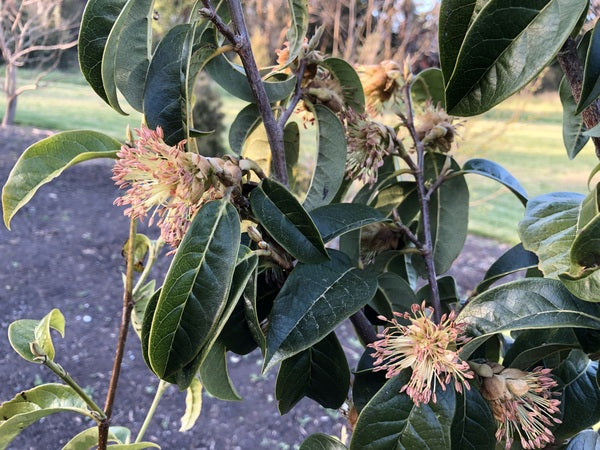
Our collection of this hardy evergreen, Asian Witch Hazel relative. This will become a small tree in time to 20'-30' and can be very useful as screening or a dark backdrop. Here, the Feb-March flowers forego any petal modesty and celebrate their sexual parts on full display. That brings back sadly distant memories. Undamaged by our winters in full exposure. A Far Reaches Botanical Conservancy Offering
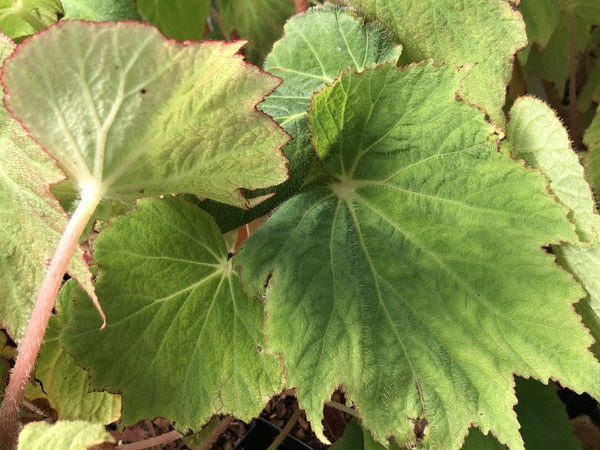
Asian seed collection from an area denuded of woody plants for firewood and hungry small goats. This Begonia found a tenuous asylum between boulders. Light pink flowers and leaves covered in light red hairs and is a rhizomatous type suited for milder gardens in the PNW if mulched in winter. A portion of the proceeds goes to the Far Reaches Botanical Conservancy. This is a different collection from the OJ10-VN140 collection we offer.
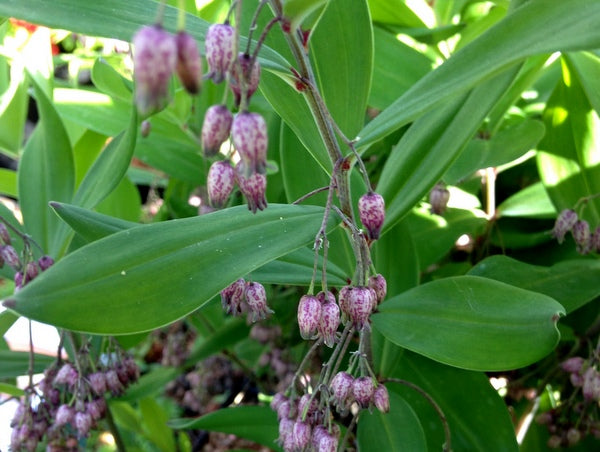
Impish little species to a foot or so which looked unremarkable in the wild but blossomed - literally and figuratively - in the easy livin' at the nursery. Clusters of small white bells heavily marked in magenta dangle from long pedicels at the base of each leaf which is likewise fetchingly daubed in a small spot of bright maroon. A Far Reaches Botanical Conservancy Offering. Graceful and attractive.

A Schefflera of smaller stature with a need to please. This flowers when quite young with spherical clusters of creamy-white flowers followed by even showier balls of black fruit. Self-fertile, this handles the reproductive function nicely on its own which is all the rage in this era of the pandemic. A Far Reaches Botanical Conservancy Offering. Nice gallon size. Of narrow habit, this is a good choice for smaller, mild gardens.

A wild collection introduced by Far Reaches Botanical Conservancy hoping to shine some light into the taxonomic murkiness that is these genera. Perhaps our unflinching ambiguity in assigning it to two possible genera is an indication. From a high elevation within its range, this should have good hardiness. Evergreen leaves 18" long by 1/2" wide with blue fruit. Flowers unknown. A portion of the proceeds goes to the Far Reaches Botanical Conservancy.
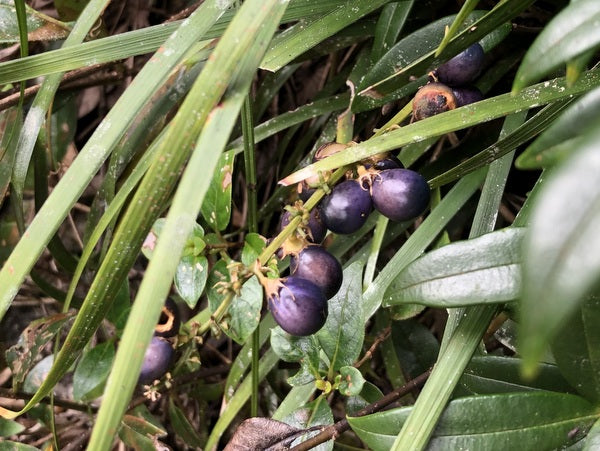
Our Asian collection of yet another Ophiopogon or Mondo Grass. Through the Far Reaches Botanical Conservancy, we are very keen on acquiring documented collections of this complex and taxonomically challenging genus as such collections are needed to get the genus properly sorted. Narrow grassy leaves to 15" and purplish fruit. Flowers unknown. A portion of the proceeds goes to the Far Reaches Botanical Conservancy.

A medium sized tree in the wild, this is from the same remote mountain which yielded the first introductions of Schefflera fengii and Rhododendron sinofalconeri some 25 years ago and has not been revisited since. Vigorous tree with copious white flowers we presume followed by nutlets. A Far Reaches Botanical Conservancy Offering

Any and all Styrax appeal to us and this was a necessary collection as a result. A vigorous tree of good size widely distributed in southern China and into adjoining countries to the south. This will have a lot of small, white bells in spring followed by pale nutlets clasped by a somewhat swollen green calyx. A very few of these gallon-sized plants. We will have to flower this to ID it for sure as China alone has nearly 40 species. Hardiness unknown but from relatively low elevation. A Far Reaches Botanical Conservancy Offering.
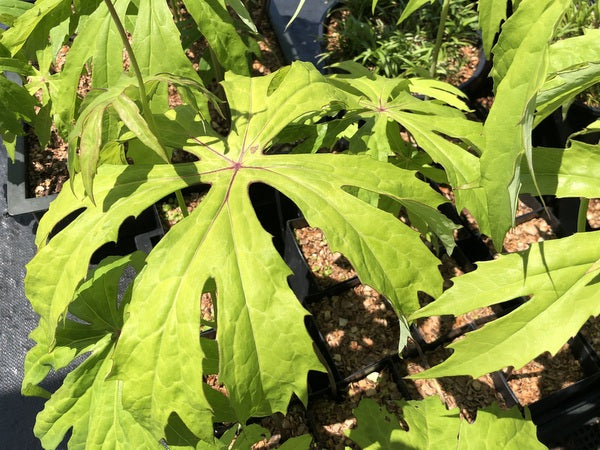
First introduction to cultivation! Our collection of this rare species in a genus of excellent foliage perennials. Sue spotted this on an evening plant reccy while Kelly took to bed nursing a rib fracture incurred earlier while collecting fruit on a Photinia. A Photinia of all things! A Far Reaches Botanical Conservancy Offering.
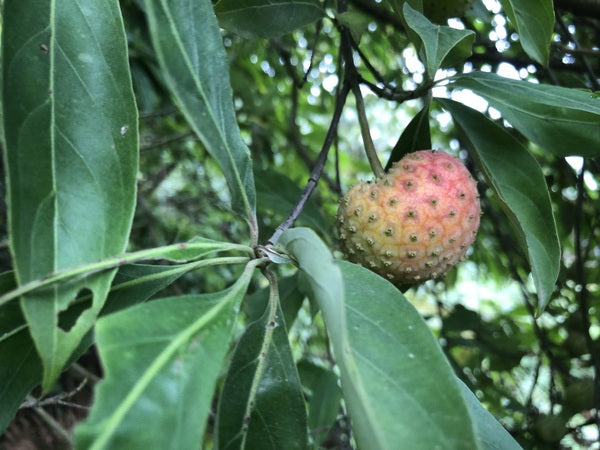
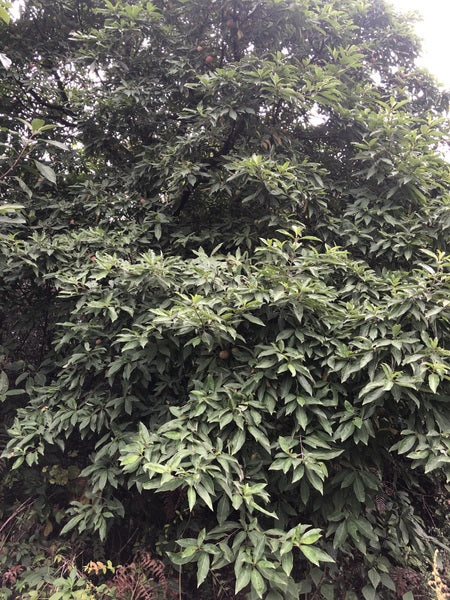
From the Yunnan-Vietnam borderlands, this small-leafed evergreen dogwood makes an attractive tree. Flowers not seen but if anything like the red fruit when ripe, then boom-shaka-laka! Even if the flowers are not as hoped, what a gift to focus on its many attributes and the modern plague of unrealistic expectation. Gallon pots. A Far Reaches Botanical Conservancy Plant