
1718 products
Sort by:
1718 products
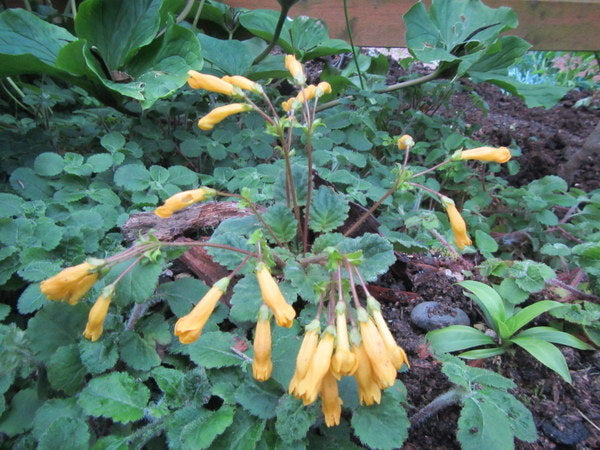
A collection from China of this surpirisingly hardy gesneriad whose identity remains a mystery. This was growing on a mountain summit in a shaded area with hard limestone outcrops coated in thick moss which proved ideal conditions for this little gem. Tubular yellow flowers are a delight and has handled 10F in our garden growing in a stump.
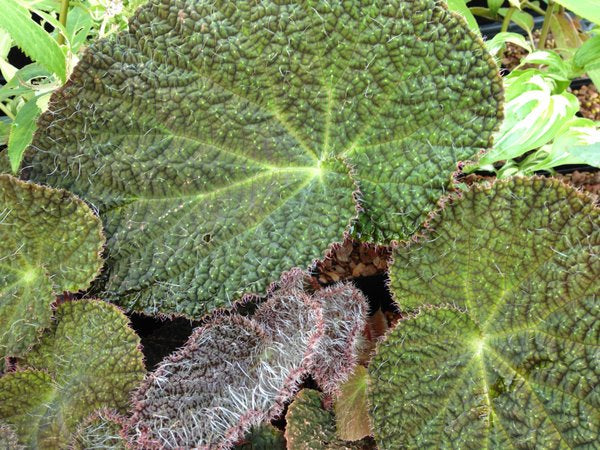
A Hinkley collection from Vietnam of this stunning foliage species whose bullate rumpled leaves are covered in imposing bristle-like hairs. A gorgeous container plant or if you live where the frost is light and infrequent - and you know who you are and just so you know, we hate you - then this is fine out in the garden. Flowers white if memory serves.
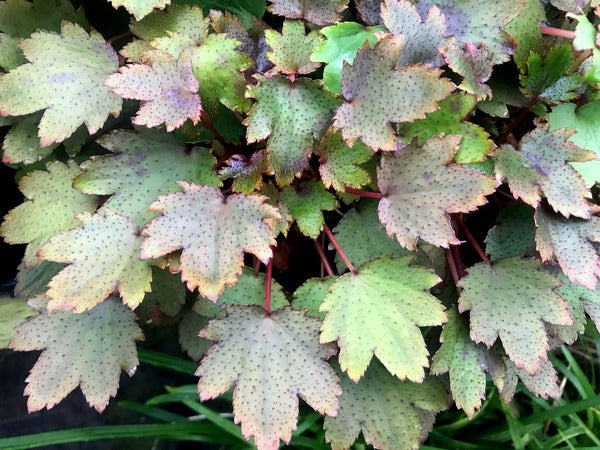
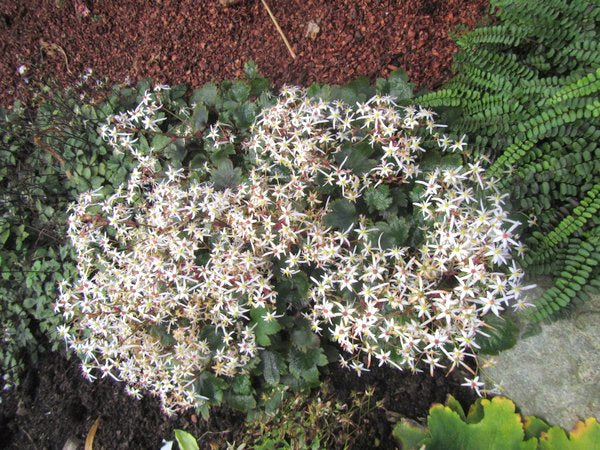
A superlative form of this Saxifrage which we got years ago from Wendy Perry at Bosvigo Plants in England who got it from Elizabeth Strangman at Washfield Nursery. Very compact with lots of short stems bearlng airy white flowers. A true connoisseur's plant for moist lightly shaded spots.
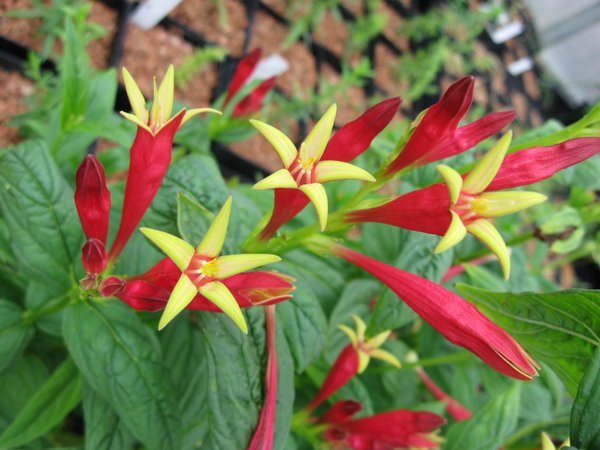
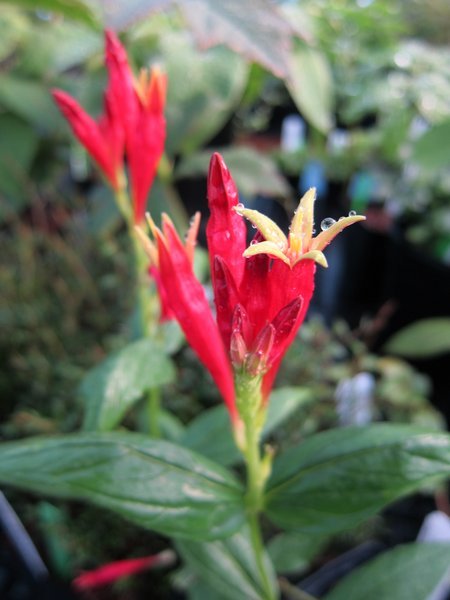
It is difficult not to like this plant and if you don't, then you may well have to wonder if you are a difficult person. I mean look at this! Tubular crimson flowers flaring to a yellow starry smile? Midwest to Southeastern native enticing hummingbirds and butterflies throughout it's range in late summer and fall.
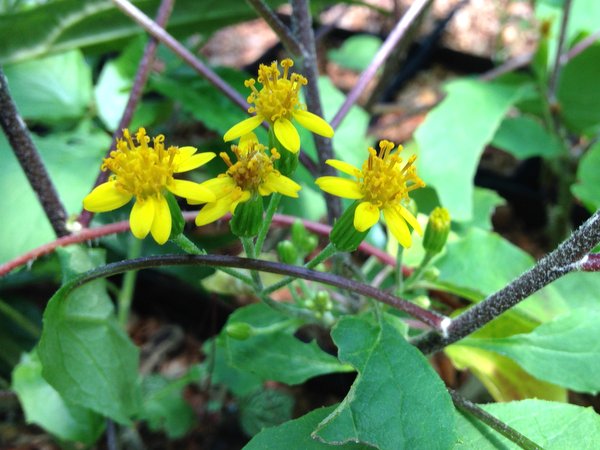
Thanks to Adam Black of Peckerwood for sharing cuttings of this shrubby winter-blooming Senecio. This is a collection from Mexico and has proved to be a good plant in Texas as well as hardy in North Carolina. Pretty new to us so we can't vouch for it yet in our maritime steppe climate but late season yellow flowers would be sweet.
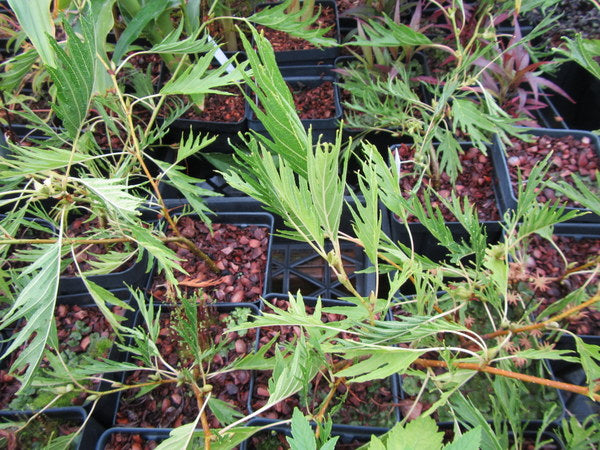
Awesome Cutleaf Alder. This selection of this European species makes our own native Alnus rubra weep in envy. The extreme ornament of the foliage makes us weep as well but with tears of joy. Rapid growth in rich moist bottomland, slower in average settings.
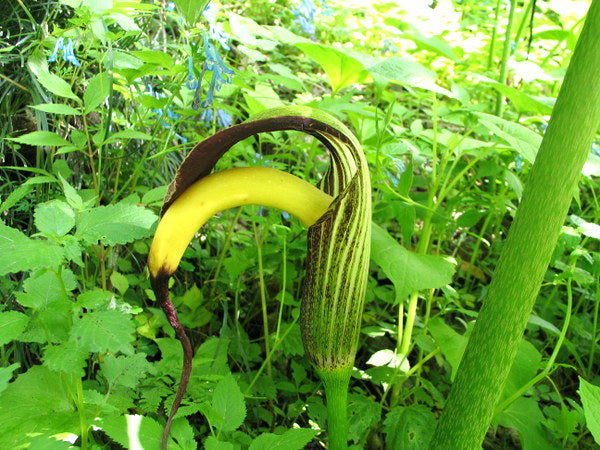
Excellent Chinese species which has grown and multiplied in our garden for 15 years. Broad trifoliate leaves with flowers sporting a swollen yellow spadix held below the foliage. Once pollinated, the stem bearing the fruiting head elongates until the red fruit is held well above the leaves. In Sichuan, we saw this flowering amidst carpets of Corydalis flexuosa in bloom - no wonder their spadices were dilated! Nice 1" or so seed-grown bulbs that are not flowering size but will get you started. This will also increase by offsets.
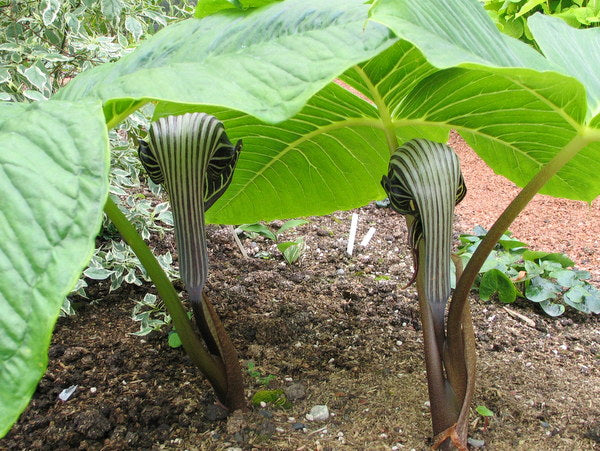
A bold species which we have seen and collected in China, this has a single impressive entire leaf until it hits flowering size and then it is impressively trifoliate. Lovely purple spathe with white stripes and best of all, an easy grower. Thanks to Jacques and Andrea Thompson for sharing seed which led to these bulbs. Hardy in Michigan!
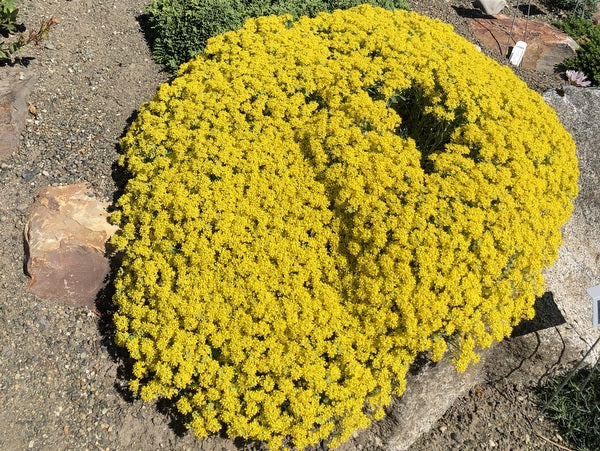
A serious bit of yellow on this rock garden gem. The dome of small silver leaves is completely obscured by the mass of yellow flowers in May and June here. We let ours go to seed so we can enjoy more seedlings. This is visually nearly identical to three other distantly related species in the Mediterranean and may reflect parallel evolution from similar habitats. Very good drainage. low organic matter component and dry conditions.
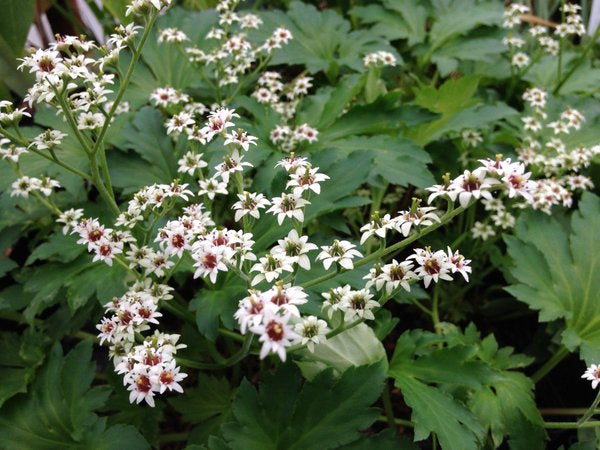
A very vigorous form from a Quarryhill collection that is much taller and has larger green leaves than any of the others we grow. The usual early spring white flowers in March and April here. We have a just a few of these from division here in late winter and these may not be fully rooted out on early orders.
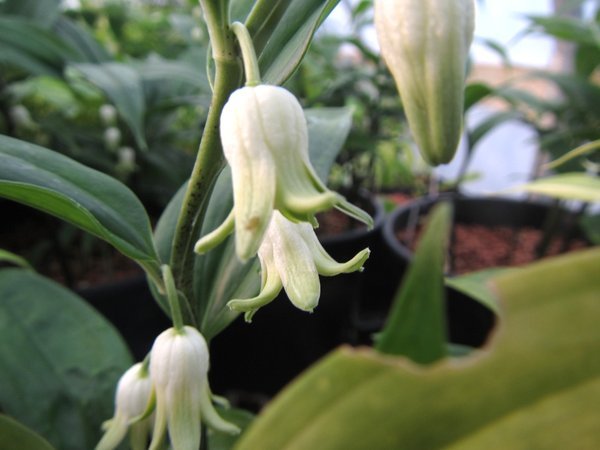
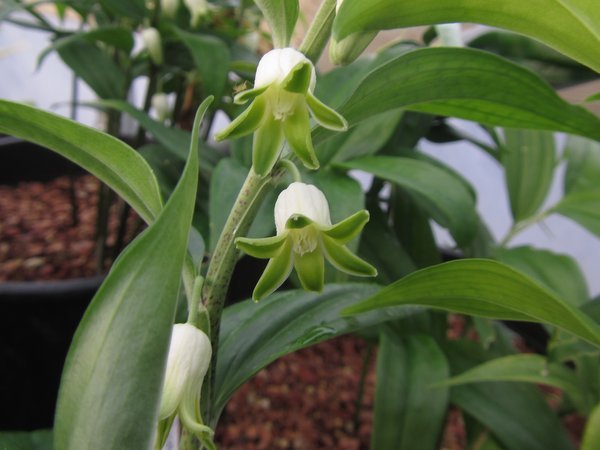
This is a clone from a wild collection in China which came to us from a friend and we have finally a few to offer. Evergreen leaves in our climate looking a lot like a Solomon Seal with similar white bells in spring. In all respects, this is quite similar to the clone we have from Washfield Nursery but if you are at all like us then you are obsessed with genetic diversity so bring on the clones! It is not a bad idea anyway as it usually helps with pollination to have more than one clone and the lavender fruits offer a subtle attraction in the shade garden later in the season. We clip the old stems off in spring as the new starts to grow and this likes a moist rich soil but will tolerate drier conditions with an occasional deep drink.
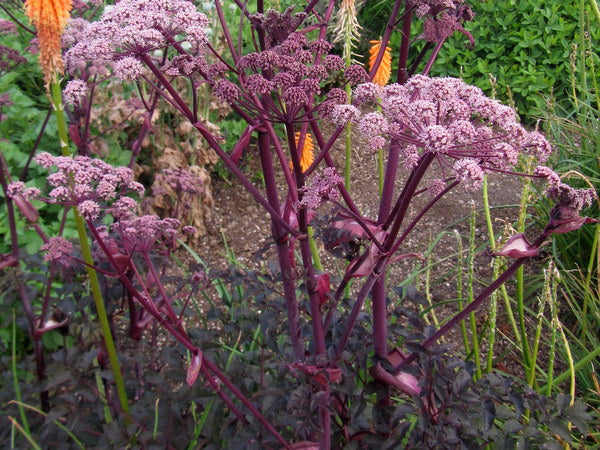
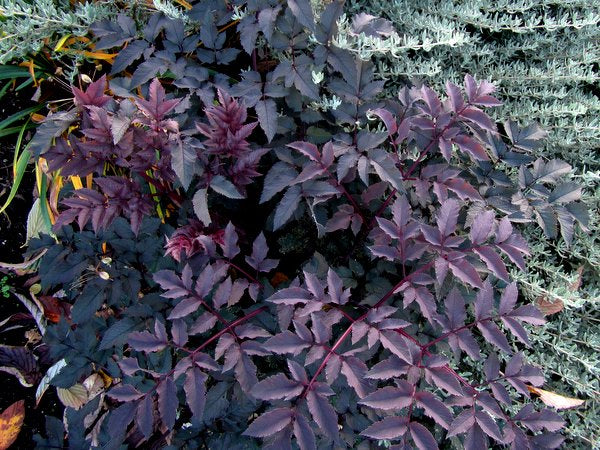
A striking Angelica for the sunny border. Finely dissected, deep purple to nearly black foliage is accented by purple buds revealing pink flowers in late summer. Biennial, but removing spent flowers before seed set will prolong its life a few years. Or if you have terrible timing, just collect and plant the seeds.
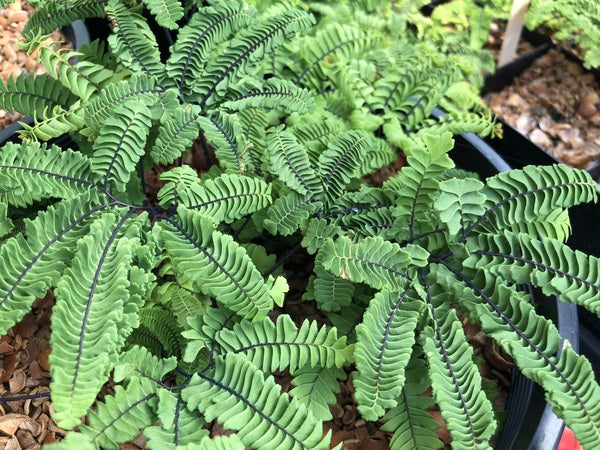
Ultra-choice dwarf form of our Western Maidenhair fern that is currently known from just a few coastal cliff sites on Vancouver Island and historically on the Olympic Peninsula. Short black stems hold dense perfection of classic maidenhair leaves on plants not exceeding 8" in height. These are established divisions from our plants originating from the Kruckeberg Botanic Garden. Often listed as 'Subpumilum', we're going with the Alverson revision.
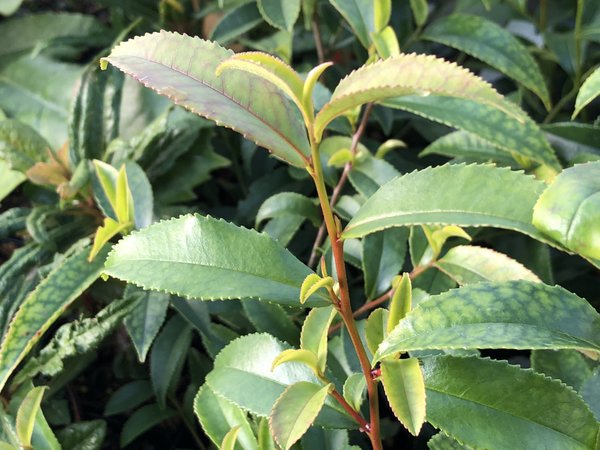
A small evergreen shrub in everyone's favorite family, the Pentaphylacaceae. This was collected in Taiwan by Mark Weathington of the famed Raulston Arboretum and is a rarity in cultivation. Best suited for mild gardens, this will have very small white flowers along the stems under the leaves followed by small black fruit. Best planted in a raised position to better view the flowers.
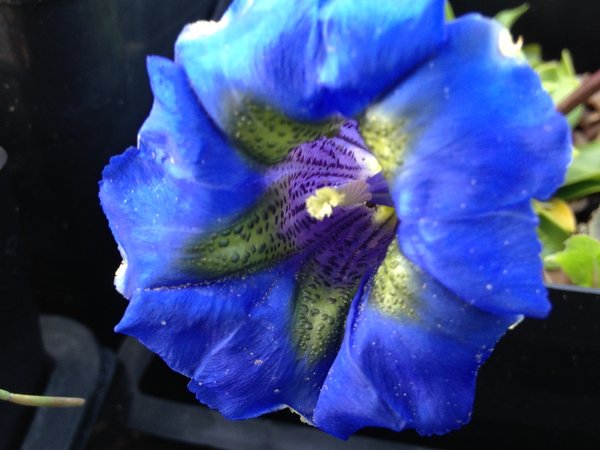
Selection out of Germany of this darned fine species. Evergreen tight mats of small green leaves with impossible azure blue trumpets standing at attention looking very superior and perfect. Well, it is a German selection after all and this shows a certain adherance to standards which the lesser gentians can only dream about attaining.
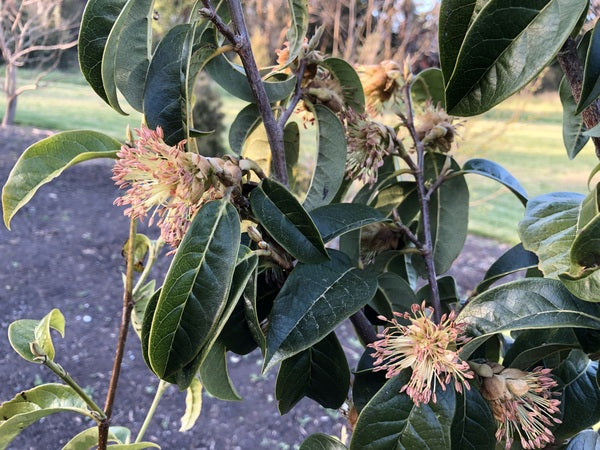
Our collection of this hardy evergreen, Asian Witch Hazel relative. This will become a small tree in time to 20'-30' and can be very useful as screening or a dark backdrop. Here, the Feb-March flowers forego any petal modesty and celebrate their sexual parts on full display. That brings back sadly distant memories. Undamaged by our winters in full exposure. A Far Reaches Botanical Conservancy Offering
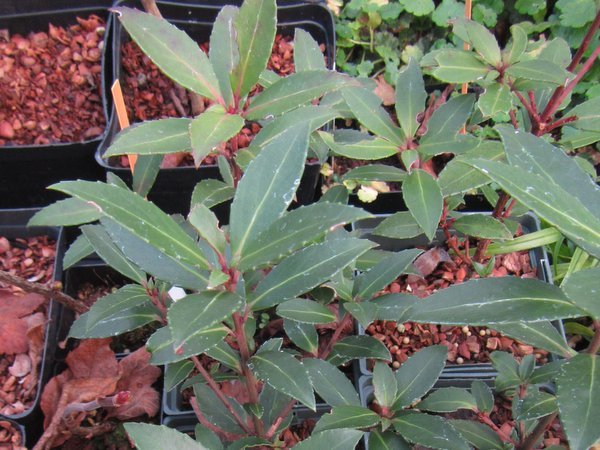
Quite the uncommon small evergreen tree to large shrub that has tiny little red flowers cladding the stems which individually are a bit of nothing but in their multitudes are really kind of fun. Native to Argentina through Chile down into windy Patagonia, this has not been trialed much here but is growing at the Arboretum in Seattle. Zone 8. Previously received as Maytenus chubatensis and offered as such but finally plowed through some South America floras and wait a minute - it's Maytenus magellanica! We down widdat since it is actually nicer and hardier.
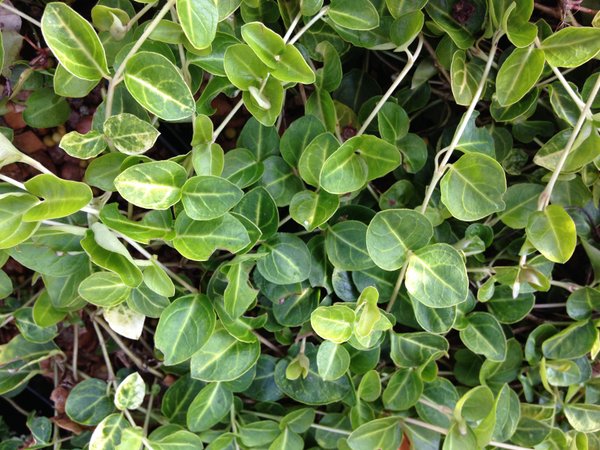
Partridge Berry. An introduction from Piping Tree Gardens Nursery in Virginia who made numerous selections from the rich local woodland flora. We can't attest to comparative sizes - too much like junior high locker rooms - but can say that this small-scale evergreen groundcover with small white fragrant flowers does have lovely red fruit.
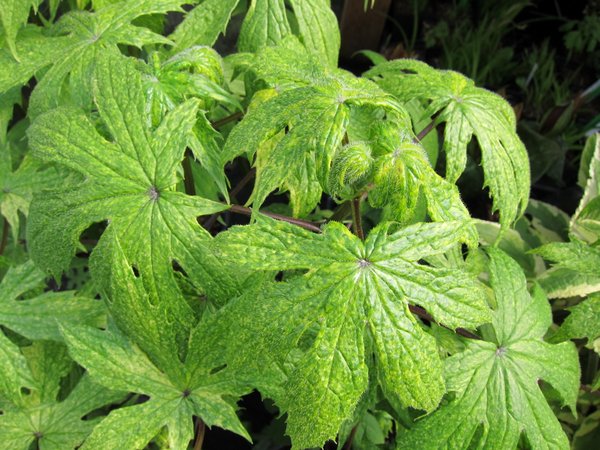
This variegated Japanese selection used to be in the genus Cacalia and has been recently placed in Parasenecio by the botanical powers that be. Broad foliage irregularly and finely streaked and spattered in cream like a monochromatic misting by Jackson Pollock on a green canvas. This will get to up to 30" with upright stems clad in this conversational foliage. Flowers are forgettable as is the case with most of these former Cacalians. We've grown this in light shade to good effect and hardy to zone 4.
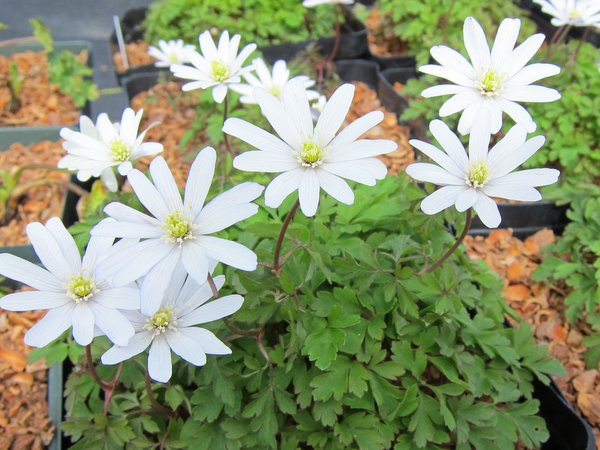
A necessary part of the woodland garden are the small European Anemones and this is one of the good ones. Fine foliage and nice white flowers in spring on a slowly spreading rhizomatous little bulbous plant. As you may have surmised, this is at home in the Apennines in Italy and into Croatia.