
1718 products
Sort by:
1718 products
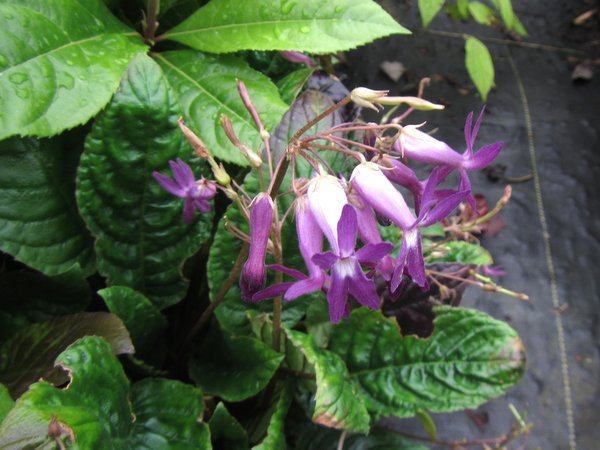
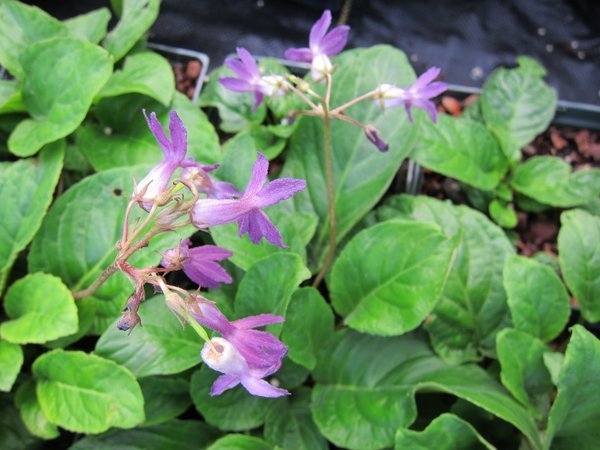
This is from seed collected in 2010 at 3500' from cliffs on the lower slopes of Fanjingshan in Guizhou. What fun it was to see this gesneriad in the wild! Purplish flowers are held on short 4" stems and this is a must-have if you fancy Afican Violets and Streptocarpus. Frost-free and good drainage.
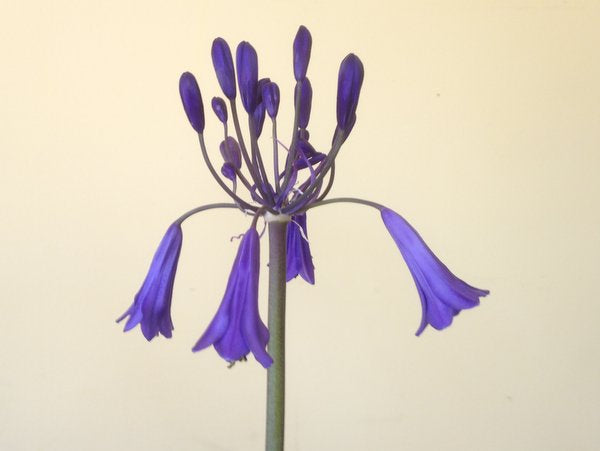
A hybrid out of New Zealand that is widely regarded as one of the best. A hardier deciduous species with big heads of purple-violet flowers with each petal boasting a darker central stripe. This is a performer which will not disappoint. This can be grown in zone 7 if deeply mulched for the winter. We typically mulch all of our Agapanthus just to be on the safe side as we can get cold here.
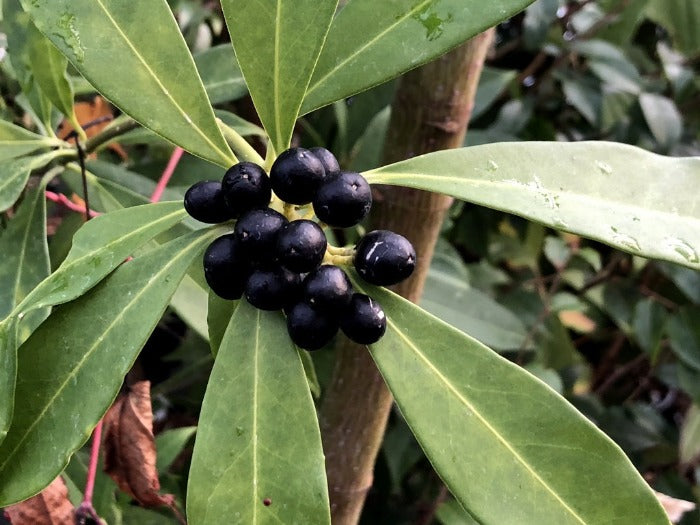
F2 seed-grown plants from the original wild collection of this plant which in the wild can reach fairly epic heights of 25'! We've seen one a few feet shorter in southern China and that memory is carved deeply into the memory banks. Quite upright and dense when young and eventually spreading out with age when in deep shade. Black fruit, flowers insignificant comparatively. The important thing is, you will have one and your friends won't! A portion of the proceeds goes to support the mission of Far Reaches Botanical Conservancy.
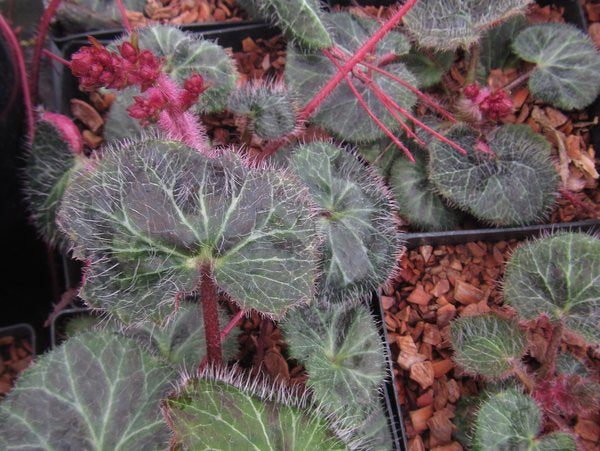
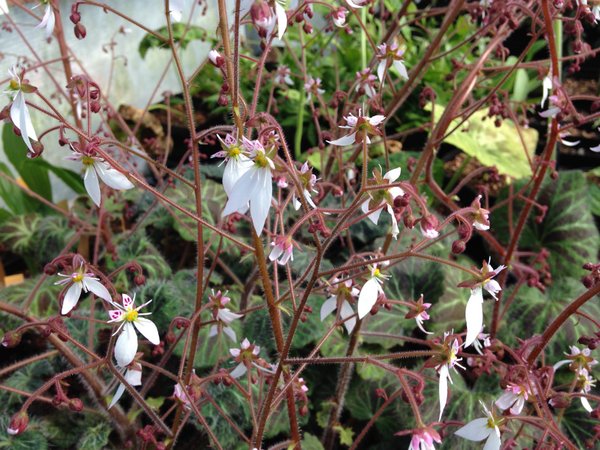
A collection from Japan by the Wynn-Jones from the higher elevations in the mountains of the Kinki Peninsula in central Honshu. This is very similar to the clone 'Maroon Beauty' which is no diminishment. Good purplish leaves with paler highlights and impressive flowers for a Sax with tall stems bearing flocks of white blooms. Moist and shade.

Katsura Tree. A collection in China by tres hombres, three Henrik's from Sweden's Gothenburg Botanical Garden. How could they not use HeHeHe as an expedition acronym? Fantastic ornamental tree species, this has rounded ovate leaves richly colored in spring with reds and purples and color persisting to some degree well into summer. Elegant habit and high marks for presentation, the insignificant flowers are not required, Yellow-orange fall color accompanied by a subtle burnt sugar or cotton candy scent from the fallen leaves. Eventually maturing at 40'-60' in the garden but old growth specimens in the wild are larger. Can be single or multi-trunked, ours is the latter after some nocturnal critter broke the top out when young and may have done us a favor as it looks stellar. Cutting-grown from single clone.
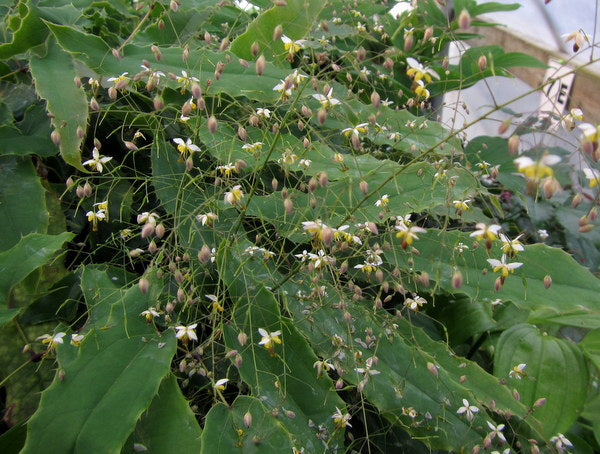
A mouthful we'll grant you, for this Epimedium from Guizhou, China. Vigorous evergreen species with long leaves in 3's in stems to 18" tall. This can get to 4' or more wide and will provide a mass of inspired texture. The mist of up to 150 tiny white and yellow flower motes per stem are curious contrast to the substantial foliage. Does well at Chicago Botanic Garden.
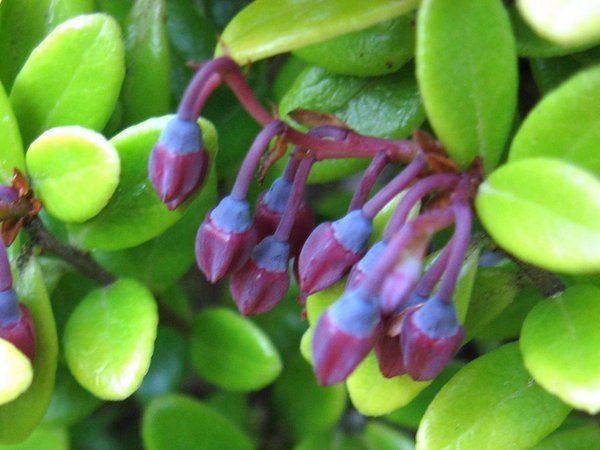
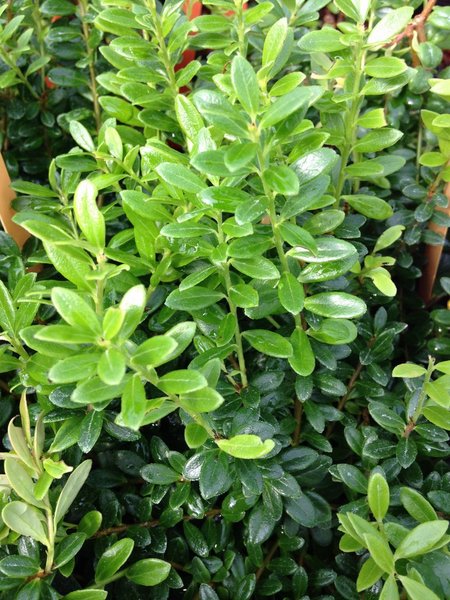
No shipping to the State of: OR A nice dwarf evergreen Blueberry from Yunnan and Sichuan where it is found growing epiphytically in large trees of evergreen oak and hemlock. This is a very good garden plant needing an airy organic soil. The foliage has salmon to red colors depending on the season. Fall small fruit.
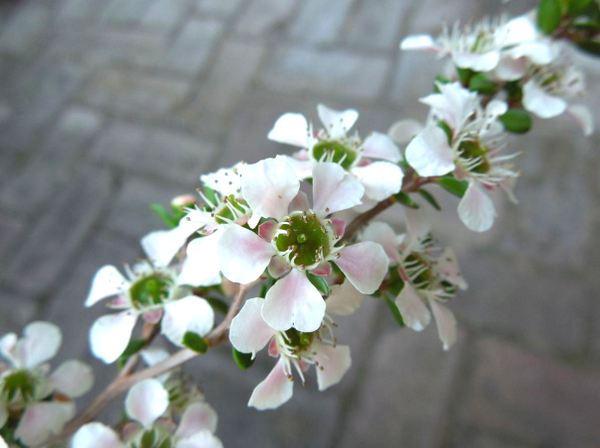
This is the first introduction in the US of this selection. We got cuttings from a friend in The Netherlands who is a rabid collector and he was very excited to send us cuttings. This is a hardy Tasmanian species that has a hint of pink in the flowers and dark pink new growth.
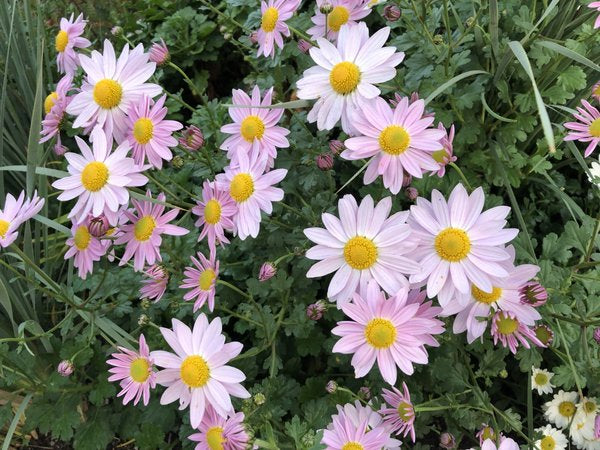
One of two similar but subtly different chance seedlings in our garden thanks to the tireless hybridization efforts of our various bee species. Apparently they visited the nursery and purloined pollen from 'Dixter Pink' or 'Cottage Apricot' and placed it on our Chrysanthemum yezoense - awesome! Why didn't we think of that? Softly pale pink flowers with petals flat to slightly reflexed.
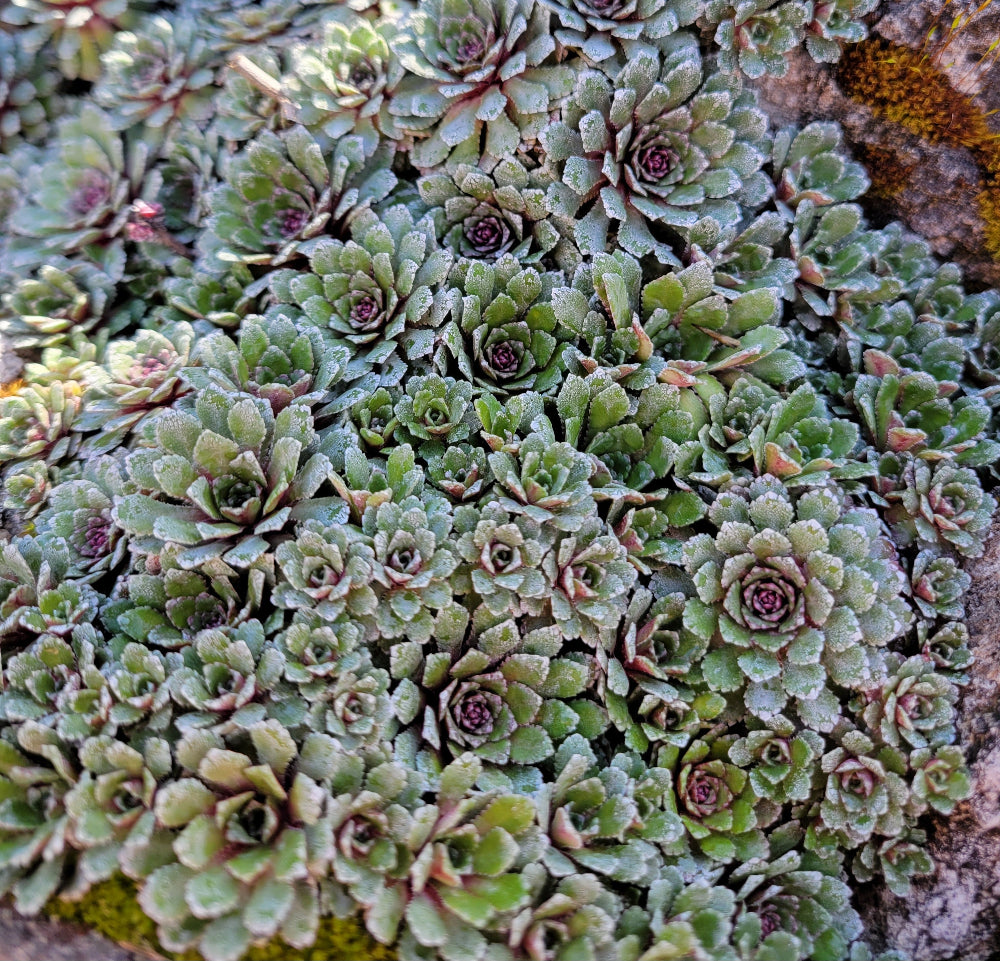
Choice little silver encrusted saxifrage which is a likely hybrid between S. paniculata and S. cochlearis. One of the delightful subtleties of this bit of botanical jewelry is the reddish coloring on the basal third of the leaves. The white flowers are nice but unnecessary as it is fine sculpture on its own. No hot sun.
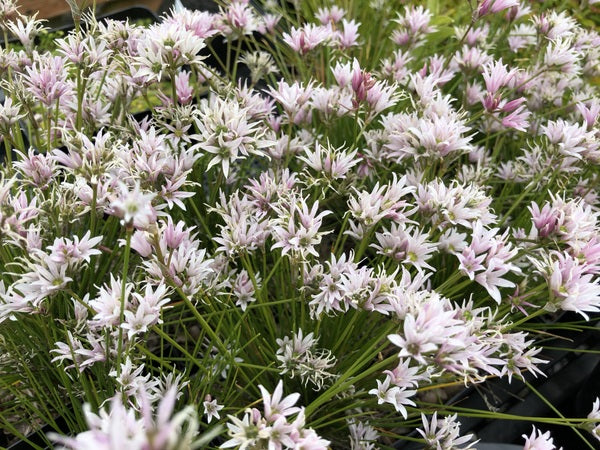
Hearkening back to our 1997 collection in Yunnan, this persistent little onion is testament to what keeping calm and carrying on can do for you. Thin, grassy clumps of leaves with small heads of pink flowers held above makes this daintily appealing. This likes a reasonably moist, rich soil. Often seen with the name "amabile" appended to it, which is an invalid synonym.
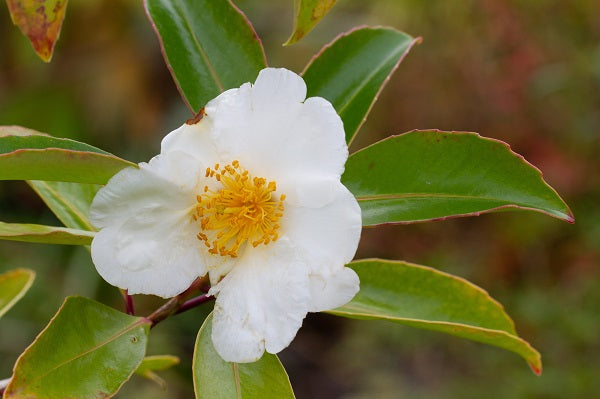
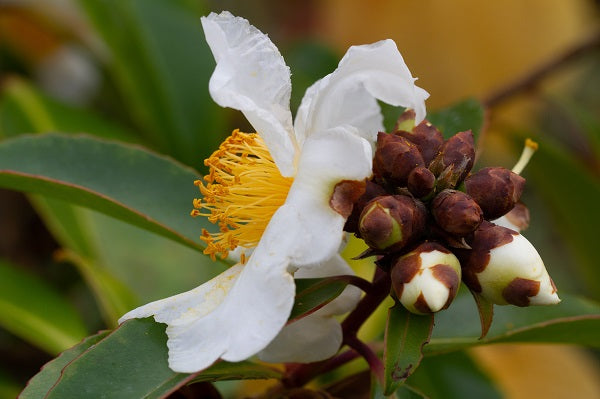
Second-generation plants from our original collection of this large shrub to small tree in southern China. Glossy evergreen leaves and large fried egg flowers - white petals with a yolk of yellow stamens - in October-November. A gorgeous plant for mild gardens where frost won't turn the white blooms Camellia brown.
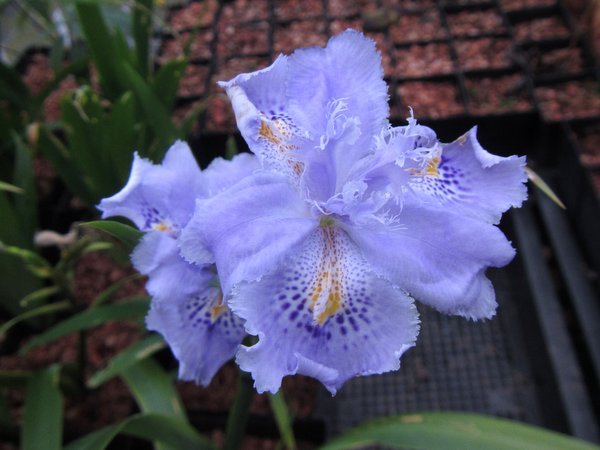
Iris maven Carla Lankow shared this nice form with us which is smaller in stature than most of its counterparts and has very prominent violet staining to the base of the leaves which is a most attractive feature and more pronounced than other clones we grow. Small blue flowers with a yellow thumbprint on the falls that are quite charming and have an orchid-like quality to them. This is evergreen and prefers a partly shaded to shaded position in moist soil that doesn't waterlog. Hardy through zone 7 and has been grown with coddling and judicious use of microclimates in zone 6 and even zone 5 although in the latter, it is a grudging survival.
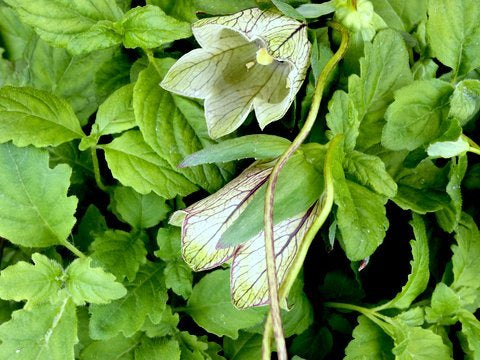
We haven't yet flowered this twining Campanula relative which we received as seed labeled Codonopisis - Royal Botanic Garden Edinburgh form. RBGE is Mecca for plantspeople with one of the finest collections of plants in the world. This is a herbaceous vine to 6' with likely blue flowers. Zone 6 at least.
Ok, update as of this summer 2016. This has pale yellow-green flowers netted heavily with purple veins and variable leaves ranging from ovate to ovate-lanceolate with leaf margins all over the map running from serrate to crenulate, entire to lobed. Historically this has been regarded as Codonopsis rotundifolia var. angustifolia but Hong in his recent taxonomic revision of the genus now places this in the new species, C. bomiensis. Fits perfectly with his description and photos in the monograph and our thanks to Bob Armstrong for assisting us with identification. Native to China and Tibet, zone 6 for sure and very likely lower.
Ok, update as of this summer 2016. This has pale yellow-green flowers netted heavily with purple veins and variable leaves ranging from ovate to ovate-lanceolate with leaf margins all over the map running from serrate to crenulate, entire to lobed. Historically this has been regarded as Codonopsis rotundifolia var. angustifolia but Hong in his recent taxonomic revision of the genus now places this in the new species, C. bomiensis. Fits perfectly with his description and photos in the monograph and our thanks to Bob Armstrong for assisting us with identification. Native to China and Tibet, zone 6 for sure and very likely lower.
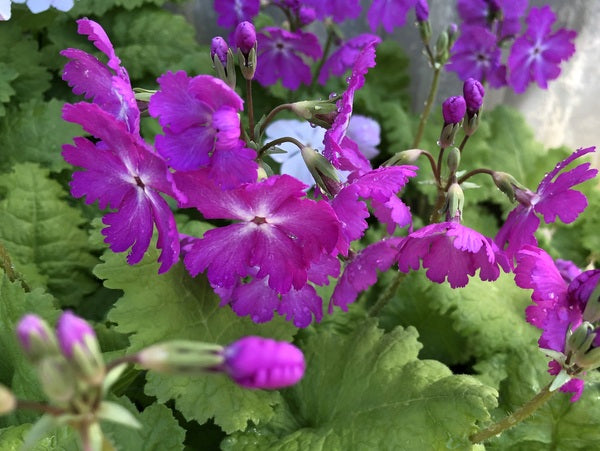
Pink flowers with a hint of violet that elevates this on the societal color palette preventing it from slipping down to the campy plastic flamingo. The broad petals have a small, white distant star for an eye and are nearly imperceptibly dusted with what could be airborne suspended particles of confectioners sugar lightly settling to rest. In our house, it would be a delicate white tracery as if from floating dog hair.
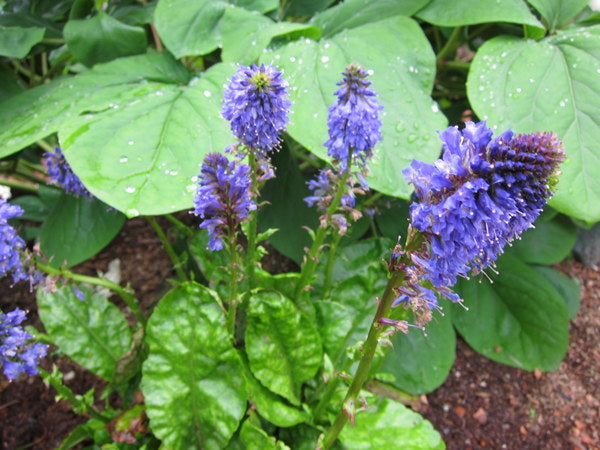
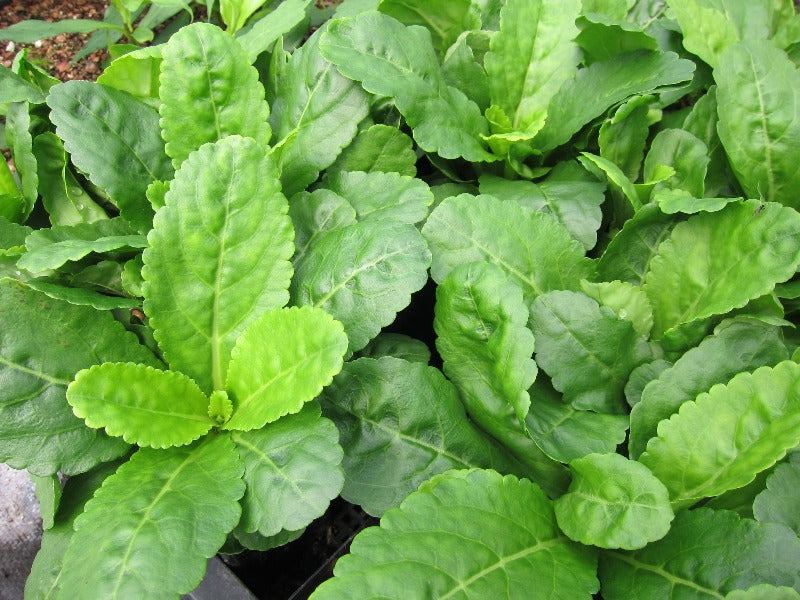
A must-have if you're Wulfenia obsessed. Endemic to the Carnic Alps, this has a limited range in the wild. Dense clusters of tubular, violet-blue flowers appear in mid-summer above glossy evergreen rosettes with scalloped-edged leaves. Needs a fertile, well-drained moisture-retentive soil but really, don't we all?
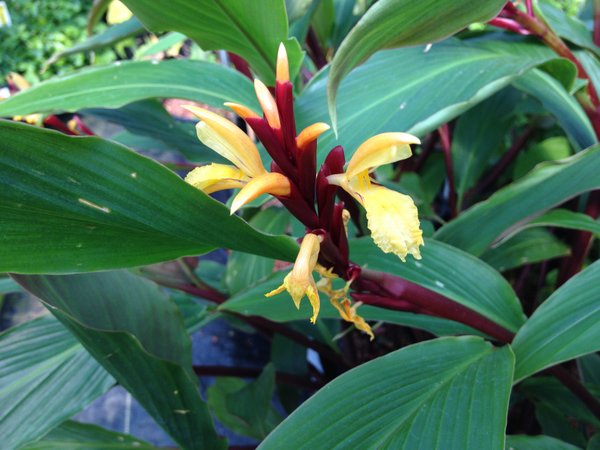
A collection from Nepal deemed distinct by Crug Farm Plants in Wales. From terminal bud cones in mid to late summer, yellow-orange flowers spout from prominent red bracts. The foliage is red-tinged underneath and is held on dark stems. Clumps nicely and the species as a whole is of elegant presentation. Moist, rich and mulch if winter is cold.
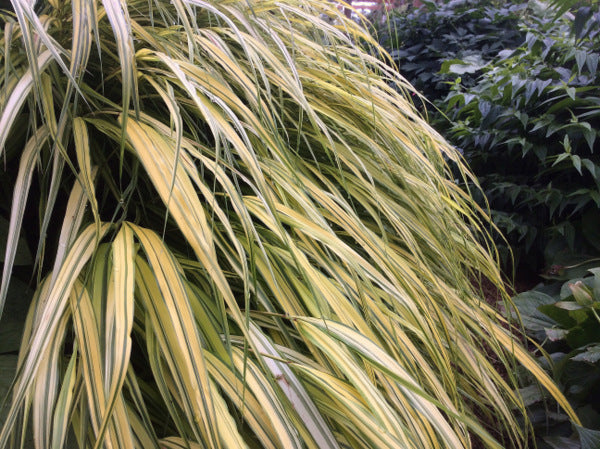
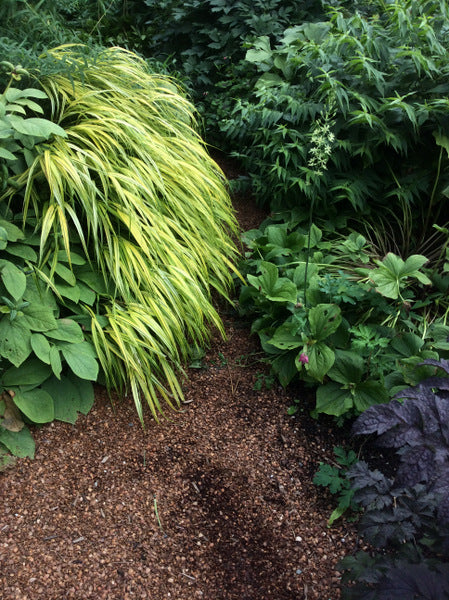
I have always been attracted to aureolas and this Aureola is one of the finest. One of the 10 best ornamental grasses and perhaps the best for light shade, this deciduous species from Japan forms a beautiful undulating surf of foliage when planted in drifts. It is simply a great plant.
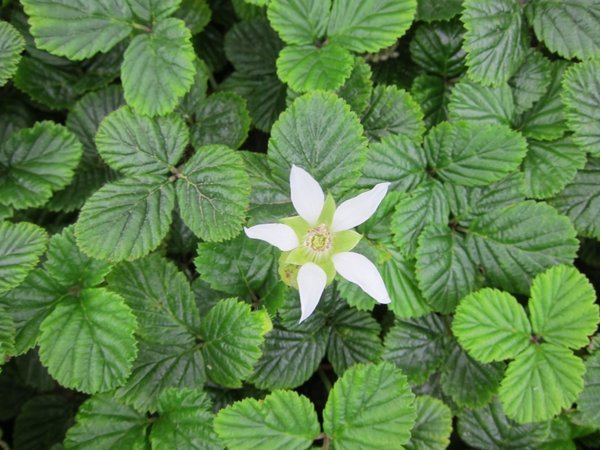
A choice little woodland groundcover from our collection in a high elevation coniferous forest in Yunnan where it grew not far from Primula sonchifola and Megacodon stylophorus. Slow carpeter with white flowers and small pale orange fruit nestled in the nicely textured leaves.. Choice and not invasive by a long shot.
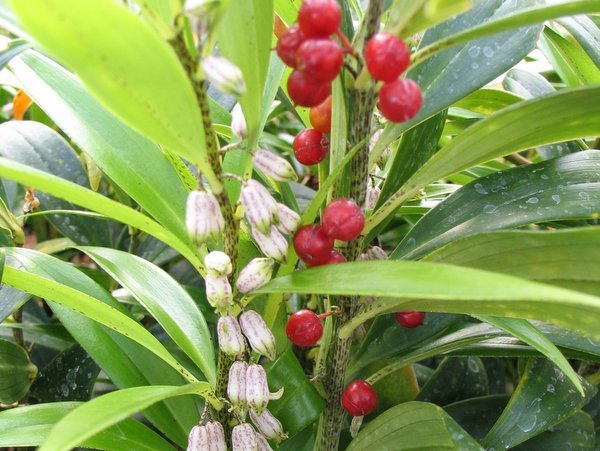
Rare in cultivation, this form from NW India of this Solomon's Seal is mainly an epiphytic species growing in mossy trees and on mossy, humus covered rocks. The speckled pale pink flowers hang as small bells as the new growth elongates and as the season progresses, the flowers turn into attractive red fruits. In frost-free areas, the fruit-bearing stems overwinter and overlap the flowering of the next year's growth which is very charming. This is an evergreen species in mild areas and is some years for us but of late has been deciduous due to cold winters with no ill effects. It has done very well in our raised shade beds and this is another plant we mulch in the fall as a winter precaution. Good drainage.