
1718 products
Sort by:
1718 products
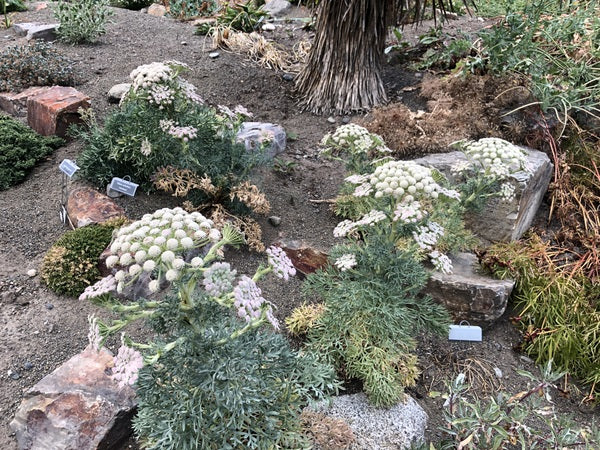
Moon Carrot. Freakishly good plant with gray-blue leaves with an impressive mid to late summer branched inflorescence sporting compound umbels touched in pink then maturing white. Plant nerdishness meets high-end design with this one. Immediate full disclosure - this is biennial but reseeds so do not fear. Good drainage is key such as a sandier soil.

This collection is from nearly 6000' in San Miguel Co., New Mexico and hardy down to Zone 5. This yucca relative makes dense clumps of thin grassy leaves to 3' tall and holds the dense plumes of creamy flowers nestled in the uppermost leaves. The brown seed heads evoke fat cigars. Young plants for dry situations with good drainage.
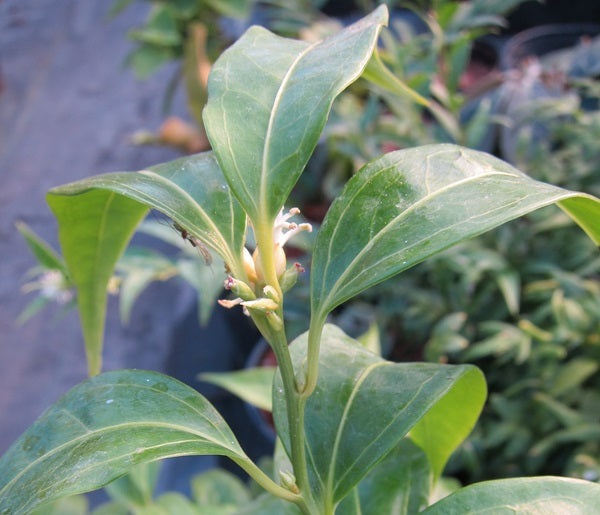
This species of the uniformly winning genus hails from Southeast Asia and India. Glossy evergreen foliage slightly longer than many of its fellows paired with fragrant white flowers nestled nicely in the leaf axils across much of the stem make it a solid choice of medium size shrub for a relatively mild spot.
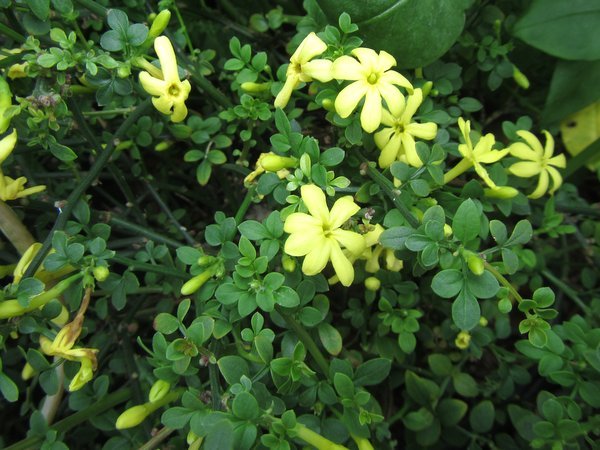
Hardy dwarf Jasmine from Himachal Pradesh in India. This is an ideal little rock garden candidate or if you are looking for a small shrub for that special nook, look no further. Small yellow flowers lightly scented are scattered among the evergreen leaves all summer. Tolerant of dry, deer aren't interested, no maintenance needed.
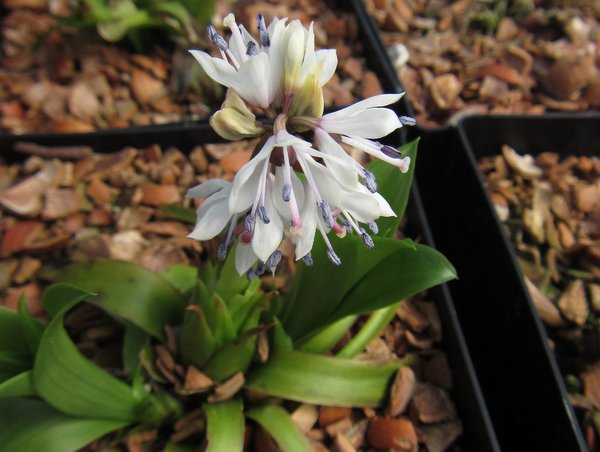
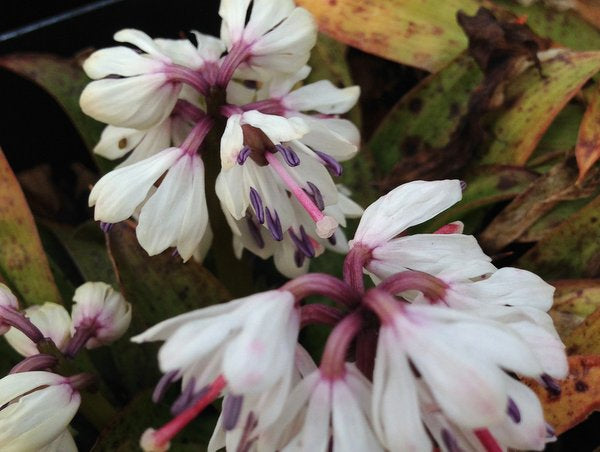
A Wynn-Jones collection from the Aso area of Honshu in Japan where there is a range of color variation in the species. We are wild about this genus and it combines beauty, rarity and growability in its appeal. Evergreen rosettes of flattened broadly lance-shaped leaves with spring whitish flowers accented by purple stamens. Zone 6.

This chance hybrid society garlic creates it's own perfect color pairing, no paint swatches necessary. The bright yellow central corolla of the flower plays ever so nicely with the classic pinkish purple outer tepals reminiscent of T. violacea. While we can't confirm its ability to grow in interplanetary conditions, or it's popularity with Carl Sagan its bright pop of color contrast, and impressive hardiness to about 23°F are worthy of at least one orbit of the mind.
Shipping restrictions may apply
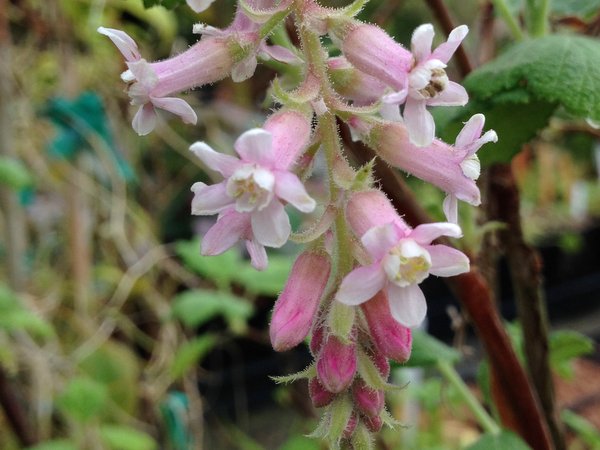
A selection from the mountains of Orange County CA notable for its rose colored flowers. This species has somewhat viscid green leaves that tend to drop in late summer but reappear with the rains of autumn and have handled temps to 15F here. Late winter-early spring flowers in our area, these delight our overwintering Anna's hummingbirds and in warmer areas, this will flower all winter. Good drought tolerant plant just needing an occasional deep watering.
A selection from the mountains of Orange County CA notable for its rose colored flowers. This species has somewhat viscid green leaves that tend to drop in late summer but reappear with the rains of autumn and have handled temps to 15F here. Late winter-early spring flowers in our area, these delight our overwintering Anna's hummingbirds and in warmer areas, this will flower all winter. Good drought tolerant plant just needing an occasional deep watering.
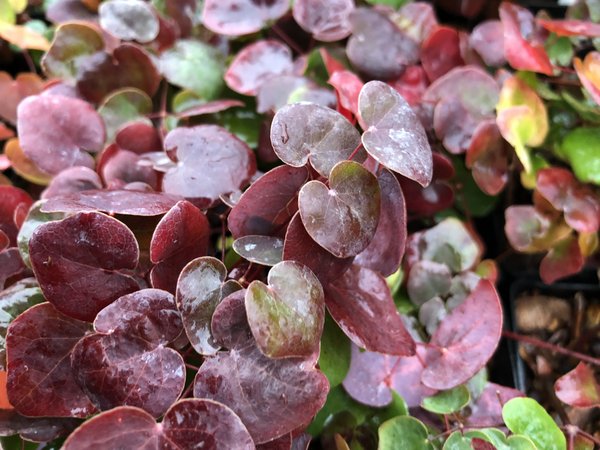
A collection from northern California where this mingled with Pseudotrillium rivale and Rhododendron occidentale among other tantalizers. This one has flowers noticeably larger than the other forms we grow which means the tiny white flowers make the leap from speck to mote. Vigorous evergreen groundcover for mostly shade that tolerates dry which slows its spread. The leaves will take on burnished purple to red colors in winter.
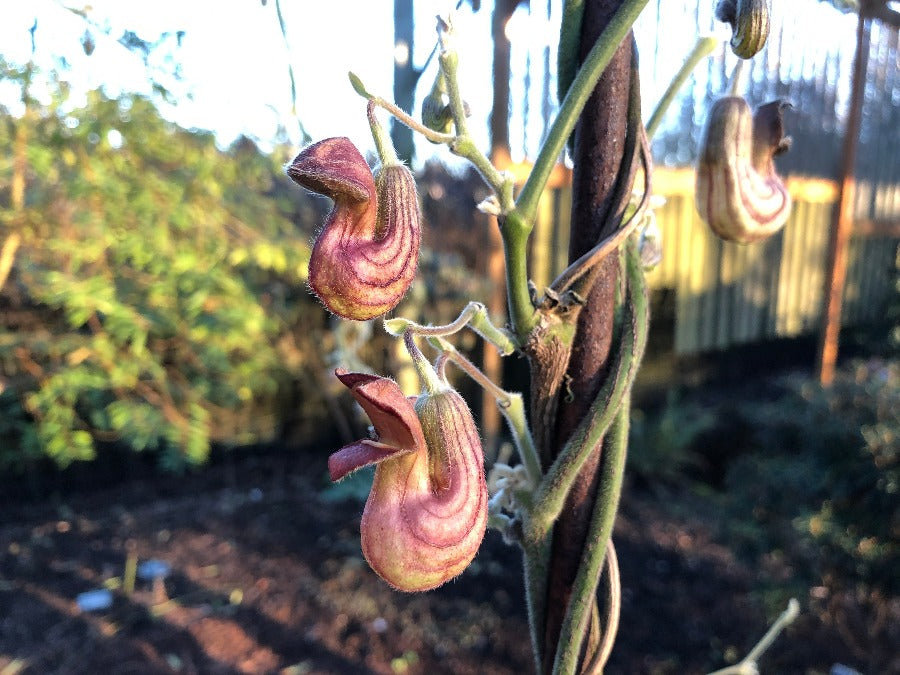
Northern California endemic representative of the incredible pipevine genus. For those with an interest in evolutionary life history, or who love to bore their friends with biology fun facts there is a lot to love here. The pairing of distinct pipe-shaped flowers and musty odor may be an example of plant life imitating human life, but scientists instead tend to think it has something more to do with attracting fly pollinators through deception, with the confounding curves ensuring enough time spent to ensure a pollen packet pickup. Then there's the fact that this plant provides the sole food source for the pipevine swallowtail butterfly, whose caterpillars use the ingested toxin of the leaves as a defense mechanism. For the less trivia inclined, the elegantly arrowhead shaped leaves and intriguing purple and beige striped flowers are sure to be reward enough.
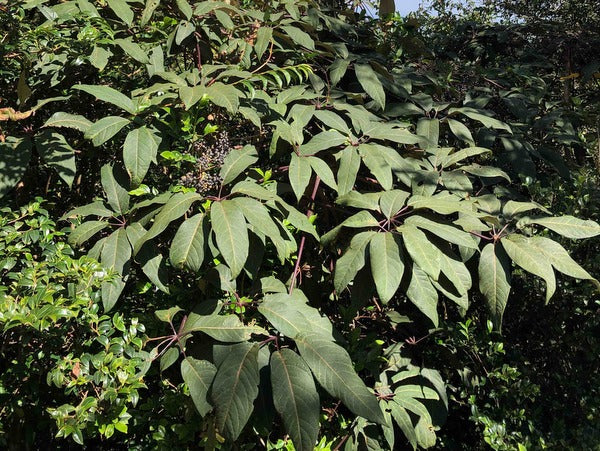
A reintroduction of this rare species that has been introduced just once by Steve Hootman in 1995. This is from the same population but does provide a bit more genetic diversity as the ones cultivated from the 1995 introduction come from just one or two plants. Hardy in Seattle. These are young plants. A Far Reaches Botanical Conservancy Offering
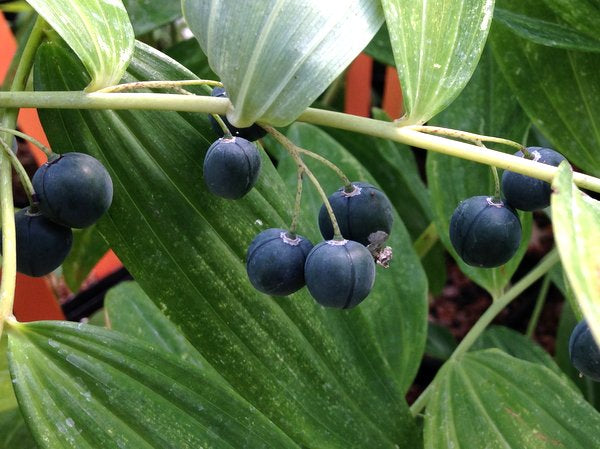
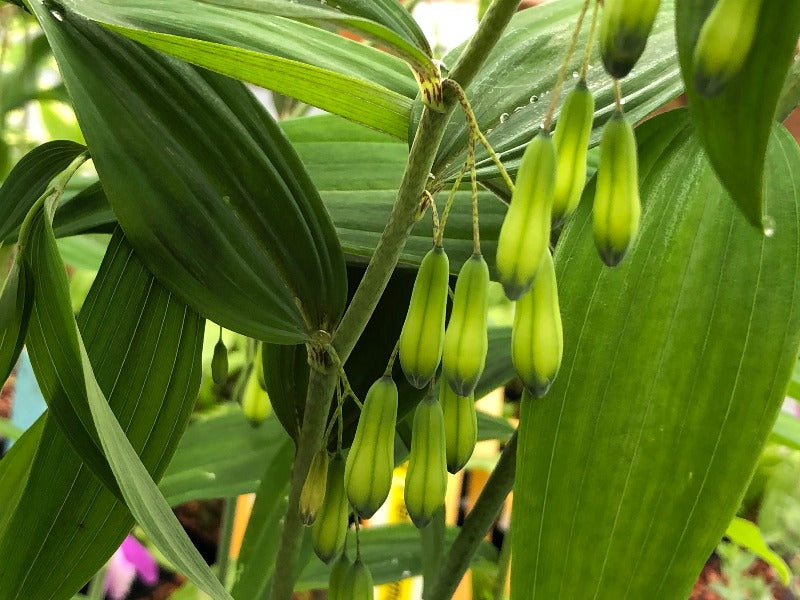
From Guizhou Province in China where this mingled with Disporum cantoniense, Tricyrtis, Codonopsis, Enkianthus, Magnolia and Meliosma to name but a few of the amazing floral diversity. Graceful species with dusky new growth expanding to broadly lanceolate leaves with the white bells hanging beneath. Good show of black-purple fruit.


An awesome - and I don't use this word lightly - hardy Impatiens from Eastern Africa. John Grimshaw in the UK speaks highly of this species. To 6' tall in morning sun or light shade with awesome (there i go again) 3" wide flat-faced white flowers with a red throat. Gorgeous. Perennial big tuberous roots. Not a seeding bully.

Shipping restrictions may apply
Hardy as heck variegated currant which has yellow foliage turning more lime-chartreuse as the season moves along. This is a pretty compact little deciduous shrub making a tangle of twigs to eventually 3 feet tall and as wide. We have ours out in full sun - that is coastal Washington sun mind you - and have seen no foliage burn. We've seen references to it being hardy to zone 2 so assume it is as unaffected by cold as a chunk of basalt. Little reddish fruit can be expected but it is the leaves you are after.
Hardy as heck variegated currant which has yellow foliage turning more lime-chartreuse as the season moves along. This is a pretty compact little deciduous shrub making a tangle of twigs to eventually 3 feet tall and as wide. We have ours out in full sun - that is coastal Washington sun mind you - and have seen no foliage burn. We've seen references to it being hardy to zone 2 so assume it is as unaffected by cold as a chunk of basalt. Little reddish fruit can be expected but it is the leaves you are after.

We're smitten by gesneriads - the African Violet family - and especially those with some hardiness, which can be grown outside in our area with some consideration to siting and winter protection. This was shared with us by Peckerwood Gardens in Texas where it is very happy. White flowers red inside in the fall are bit of flora exotica. This Taiwan native can take dips into the teens especially with some mulch.
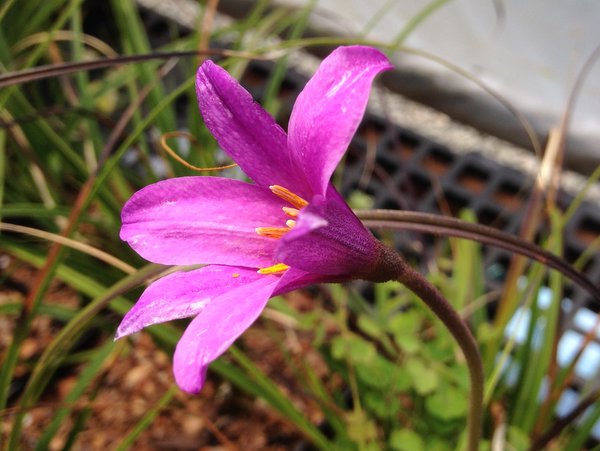
Resurrection Lily. Incredibly tough South African species in everyone's favorite family, the Velloziaceae. Slow-growing tussocks of grassy leaves and showy bright mauve flowers. This is the subject of much research for crop drought tolerance as this can totally dry out (to 5% water) for months and then revive in days with rain. Hardiness is not personally known to us although our source for this said zone 6 but we have the skepticism of years. Fire tolerant, one South African key refers to the blackened lower stems from persistent fires. These are divisions from our one clone we have had for years. Ideal rock garden candidate - good drainage.
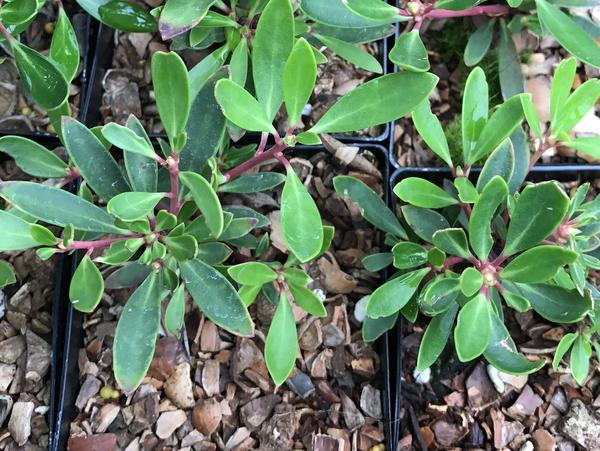
We have just a scant few of this dwarf form of the Tasman Mountain Pepper which we presume to be from an exposed high elevation site on Mt Wellington. This is ideally suited to rock gardens where it will make a slow and low ball of reddish stems bejeweled with white flowers and oh so peppery black fruit. We were given this plant by the late Michael Wickenden of Cally Gardens in Scotland. Possibly the first introduction to the US. Small plants of this small rarity.
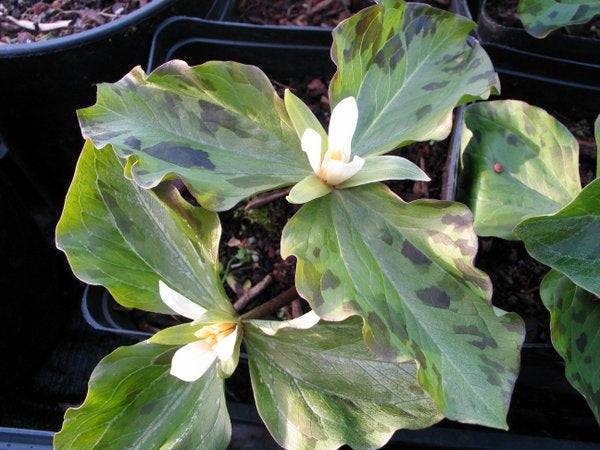
Our rarely offered native west of the Cascades from the Fort Lewis/Spanaway area just south of Tacoma down into northern Oregon. These are darn nice plants we grew from seed. Small sessile white flowers atop mottled foliage.
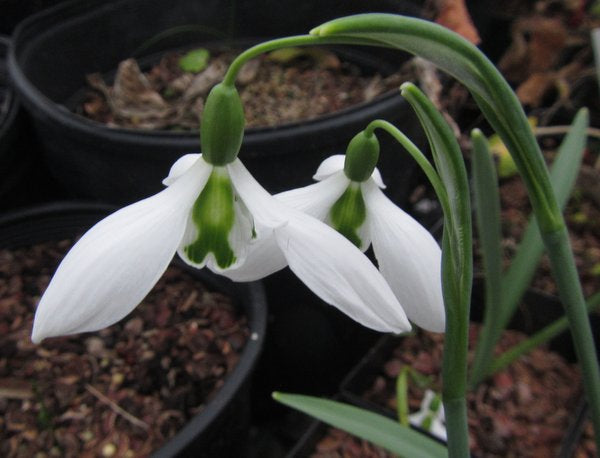
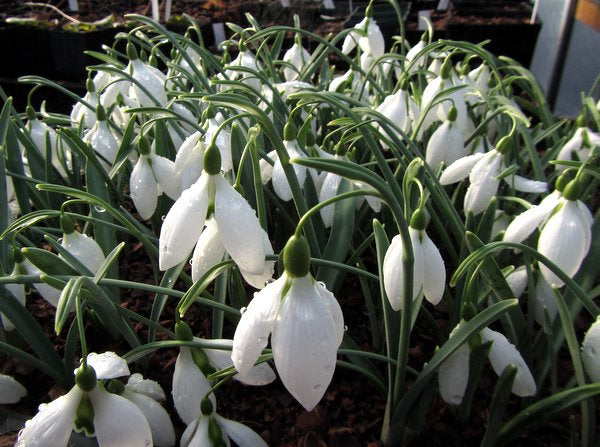
A choice Snowdrop with very large single flowers and one of the earliest to bloom. This was found in the garden of John Gray in England and is a hard one to come by. Increases moderately well and seems to be a survivor with a good constitution as it is going strong here while more effete selections have dwindled.
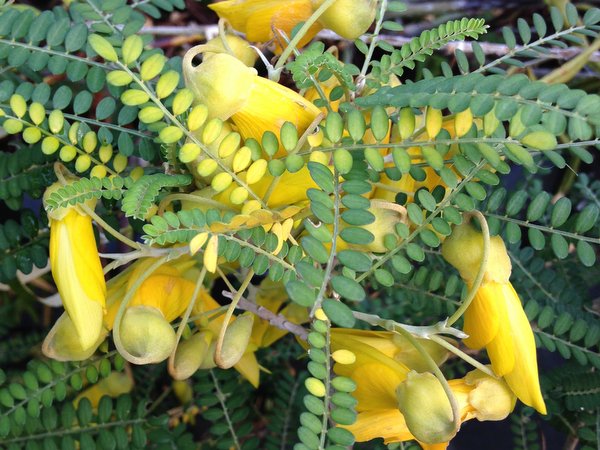
These are from seed from the good hardy form at the UW Arboretum. This makes an impressive multistemmed shrub to 10 or 12 feet fine textured in foliage but what a knockout in bloom. Loads of heavy textured hanging yellow flowers like Kirengeshoma followed by ornate knobbly long bean pods.
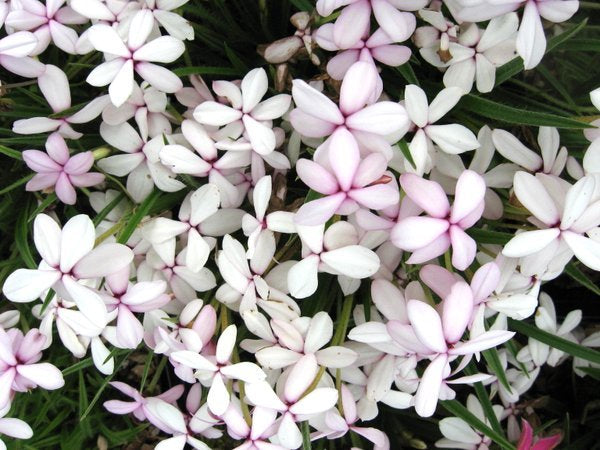
A little densely clumping bulb with grassy leaves and a plethora of flowers of white blushing with pink shades which when it is full on can completely obscure the leaves. This likes that illusive moist but well-drained soil and is a classic little goody for the rock garden. Mulch if a severe winter.