Sort by:
138 products
138 products
{
Alpine.store('xUpdateVariantQuanity').updateQuantity('template--25070855422234__product-grid', '/products/anemone-ranunculoides-subsp-ranunculoides');
});">
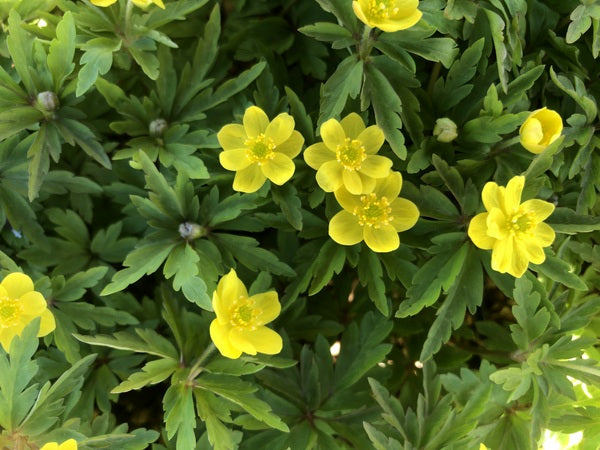
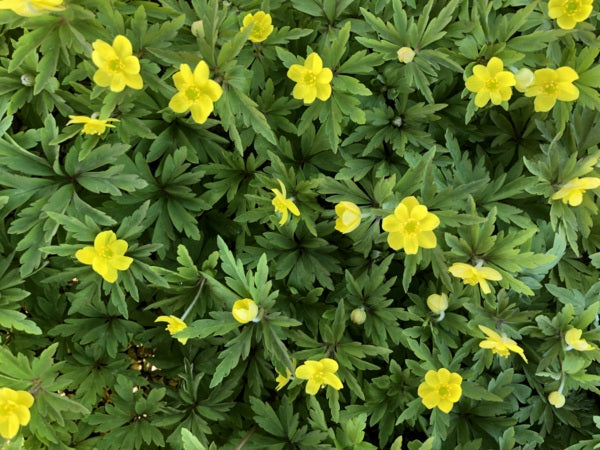
A choice woodland creeper to 6"-8" tall for the shade or partly shaded garden where it behaves like Anemone nemorosa - making a mat of ferny foliage but in this case, it has vibrant yellow flowers. A patch of this is to be coveted and the twiggy rhizomes can be easily divided or broken in winter to spread about. Very hardy and goes mid to late summer dormant.
{
Alpine.store('xUpdateVariantQuanity').updateQuantity('template--25070855422234__product-grid', '/products/anemone-nemorosa-leeds-variety');
});">
This has been a star in our shade garden with it's extra large flowers which most regard as the largest of the Anemone nemorosa cultivars. We have this planted at the base of Disporum longistylum 'Night Heron' whose dark stems and foliage contrast nicely. "Contrast nicely"? We damn with faint praise - this totally rules as it is the perfect underplanting and this will translate to many other plants as well as the Anemone is but 10" high or less and creeps on twiggy rhizomes to make a fine, dense patch. We have always forgotten to divide this and have never had it when folks have asked for after seeing it in the garden but we have potted some up this winter. If you get these early spring of 2014, the little rhizomes won't have rooted out but no worries - they will take off in your garden!
{
Alpine.store('xUpdateVariantQuanity').updateQuantity('template--25070855422234__product-grid', '/products/anemone-nemorosa-lychette');
});">
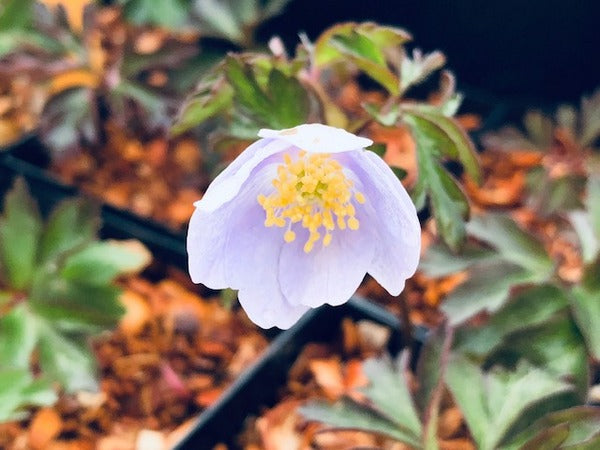
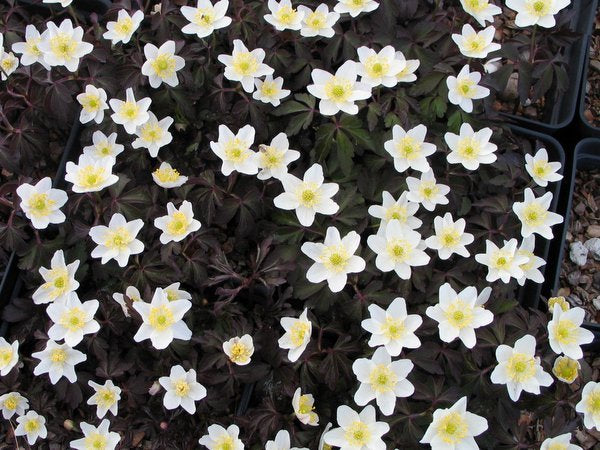
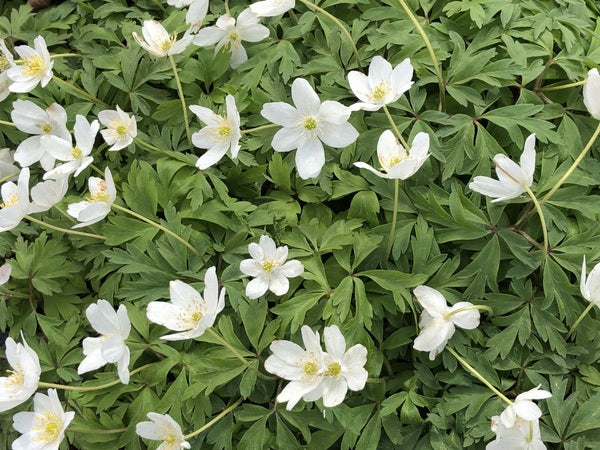
This excellent clone of the Wood Anemone has larger than usual white flowers held nicely above the foliage with better than usual substance and poise. Hard to describe precisely but like some things that are elusive in definition, you know it when you see it.
{
Alpine.store('xUpdateVariantQuanity').updateQuantity('template--25070855422234__product-grid', '/products/anemone-nemorosa-tomas');
});">
Have trouble picking between the albas and roseas of the woodland shade perennial world? Never fear 'Tomas' is here! This selection of wood anemone opens pure white and fades to pink as the season progresses. Plan your spring break wisely and you can pretend you got two plants for the price of one!
{
Alpine.store('xUpdateVariantQuanity').updateQuantity('template--25070855422234__product-grid', '/products/anemone-nemorosa-hilda');
});">
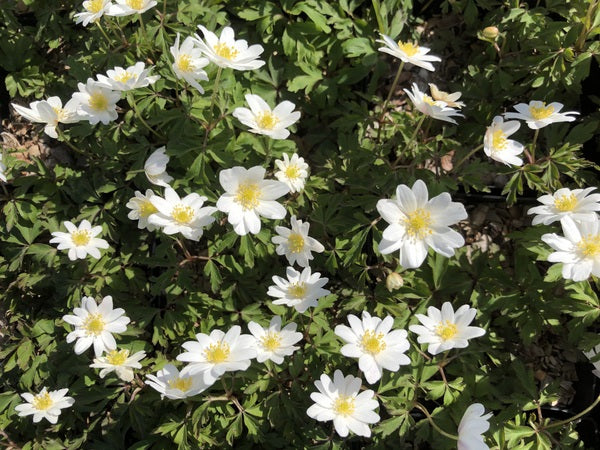
A fine little European woodlander which can tolerate some sun as well. Spreading by twiggy rhizomes, this will make a good patch in time when happy, The semi-double white flowers adds extra petals to the mix, giving lie to the "less is more" maxim because don't we all know in our publicly inaccessible heart of hearts that "more is more"? Hilda, you work it, girl!
{
Alpine.store('xUpdateVariantQuanity').updateQuantity('template--25070855422234__product-grid', '/products/anemone-nemorosa-wilks-white');
});">
One of the larger flowered varieties of Wood Anemone, this has excellent white flowers which are more than enough to stand alone or perfect in a supporting understory role to larger shrubs and perennials.
{
Alpine.store('xUpdateVariantQuanity').updateQuantity('template--25070855422234__product-grid', '/products/anemone-nemorosa-blue-eyes');
});">
Choice selection of the Wood Anemone with flowers densely packed with numerous small white petals which appear all white at first but as the flowers mature or awaken, a central blue eye is revealed which is quite delightful. I go through a similar slow process every morning and tell myself that it is the same delightful end result.
{
Alpine.store('xUpdateVariantQuanity').updateQuantity('template--25070855422234__product-grid', '/products/anemone-nemorosa-atley');
});">
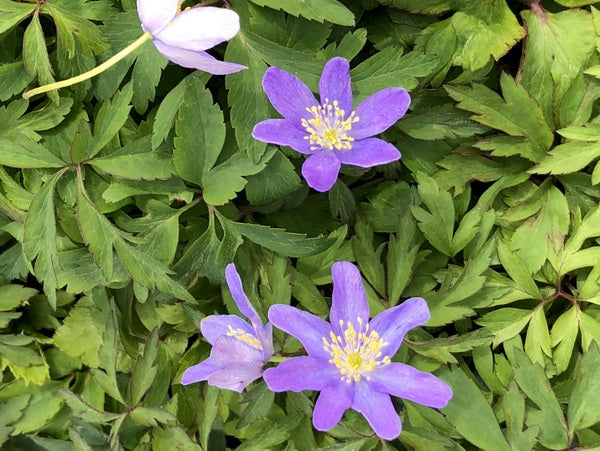
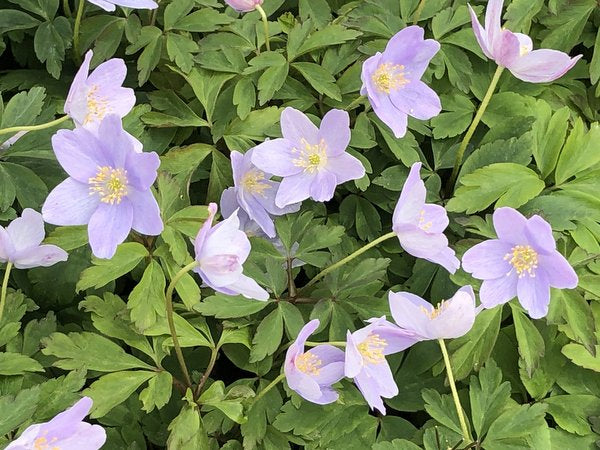
A lovely form we brought home from Scotland a few years back. This varies from the norm of mid-blue flowers by embracing the blending nature of Impressionist pastels with its goes-with-anything non-confrontational light lavender-blue flowers in April and May. Not surprisingly, this form is a Libra.
{
Alpine.store('xUpdateVariantQuanity').updateQuantity('template--25070855422234__product-grid', '/products/anemone-nemorosa-bowles-purple');
});">
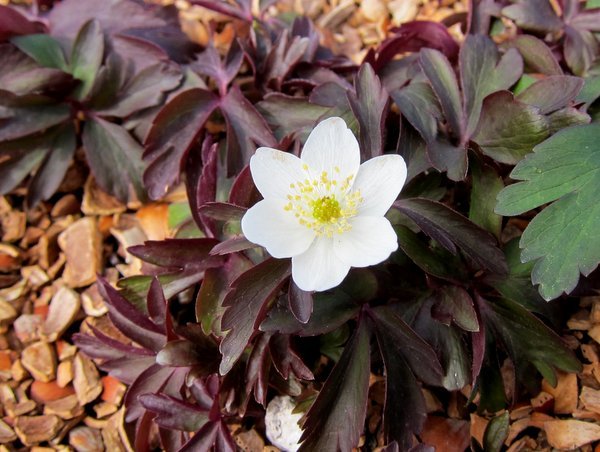
Named for British plantsman E.A. Bowles, this variety of wood anemone sports attractive lavender to purple flowers. For the true purple lovers, the foliage is an added bonus emerging with a purple tinge or margin that nicely delineates the prettily dissected leaves and provides a purple haze that would make Jimi proud.
{
Alpine.store('xUpdateVariantQuanity').updateQuantity('template--25070855422234__product-grid', '/products/thymus-serpyllum-red-elf');
});">
Uncommon and choice dwarf Thyme we introduced to the US when we brought this little gem home from an alpine nursery in Scotland. A very fine plant of compact habit and the expected profusion of flowers which while not red, are a vividly intense neon fuchsia-infused magenta. Find that on a paint chip!
{
Alpine.store('xUpdateVariantQuanity').updateQuantity('template--25070855422234__product-grid', '/products/soldanella-sp-cf-rhodopaea');
});">
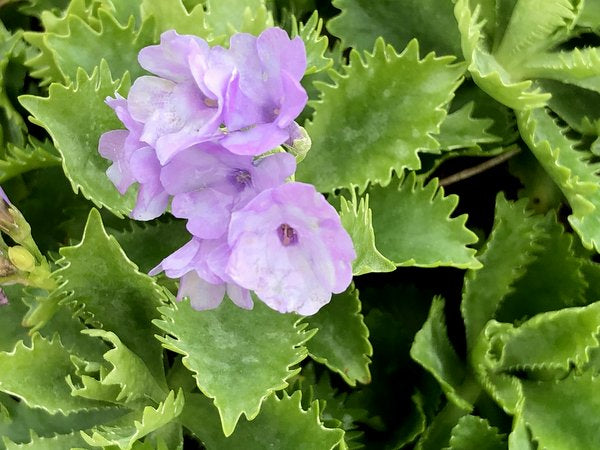
This is what we have offered previously as Soldanella species. It looks to be a match to the Bulgarian Soldanella rhodopaea and the seedlings come true so we are reasonably confident of the identification. Soldanella is a Primrose relative native to the high meadows in the mountains of Europe. This is one we received from Collector's Nursery with dark violet flowers - very choice! Evergreen and clumping, this takes the same conditions as Primroses.
{
Alpine.store('xUpdateVariantQuanity').updateQuantity('template--25070855422234__product-grid', '/products/soldanella-carpatica-alba');
});">
Least Alpine Snowbell. Perhaps the daintiest Soldanella, we have this from three different sources as Soldanella minima 'Alba', S. austriaca 'Alba' and S. carpatica 'Alba' and can see no difference between the three and are putting them under the umbrella of Soldanella minima 'Alba' based on the "minima" size of the leaves and plant. How's that for technical taxonomy? Allied to Primula and native to the eastern Alps where it grows in low turf, rock outcrops and crevices. This is the less-common white form and while smaller by half or more than the more familiar species, it is just as tough as the full-sized versions, despite being an ideal choice for the fairy garden. Light shade to morning sun.
{
Alpine.store('xUpdateVariantQuanity').updateQuantity('template--25070855422234__product-grid', '/products/veratrum-lornas-green-seedling');
});">
Grown from seed given us by the originator, Dr. Keith Ferguson and named for his wife, Lorna. They have grown this spectacular, heavy flowering selection for over 40 years in their garden in the Cotswolds. From the Maritime Alps, this resembles our native Veratrum viride with similar bold pleated leaves and green pendulous flowers but this elevates that look to a ridiculous level with its sheer volume of flowers on stems that can reach 8 feet! We have been also gifted seed from the late Michael Wickenden of Cally Gardens and our friend, the redoubtable German plantsman Christoph Ruby. The fact that this trio holds this in valued esteem, should be ample endorsement. Long-lived, hardy as the bejabbers (been wanting to use that for years) and deer resistant. These are young plants not of flowering size but give them a rich moist soil and a bit of amply rewarded patience.
{
Alpine.store('xUpdateVariantQuanity').updateQuantity('template--25070855422234__product-grid', '/products/cardamine-trifolia');
});">
A no-fuss restrained yet refined evergreen Cardamine which is nearly faultless. We haven't found a fault yet but most overachievers are hiding something deep under that charm and industry. Rest assured, this will never go postal in your garden. Dark green dense leaves set off flowers of of purest white in early summer.
{
Alpine.store('xUpdateVariantQuanity').updateQuantity('template--25070855422234__product-grid', '/products/primula-marginata-jimmy-long');
});">
Good blue-flowered marginata selection named for Primula enthusiast Jimmy Long. The species is native to European alps and is found in rocky cliffs often under overhangs. These have been easy in pots in the open nursery and are great container or rock garden plants.
{
Alpine.store('xUpdateVariantQuanity').updateQuantity('template--25070855422234__product-grid', '/products/hepatica-nobilis-cremar');
});">
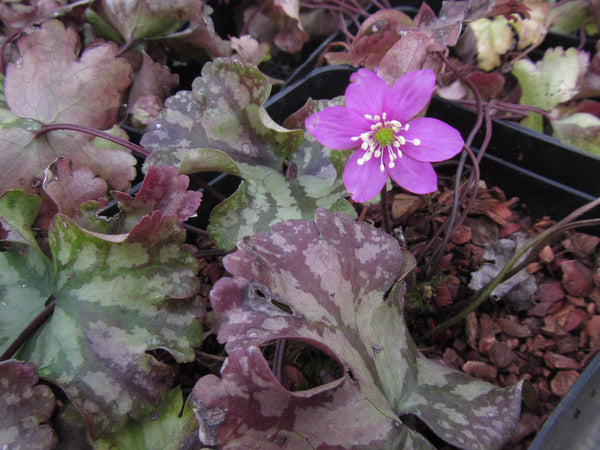
Choice selection with ruffled heavily marbled leaves and light pink flowers. You normally grow Hepatica for the early spring flowers and any foliar enhancement is pure gravy but with Cremar, flowers bow their heads to the majesty of the leaves. Quite a choice plant and does well in light shade with decent drainage.
{
Alpine.store('xUpdateVariantQuanity').updateQuantity('template--25070855422234__product-grid', '/products/polygaloides-syn-polygala-chamaebuxus');
});">
This native of the Alps is one of the premier little shrublets in the world and one we have seen in the Swiss Alps. Slow-growing evergreen spreader with profuse pea-like flowers carrying purple-pink wings and a yellow keel reminding me somehow of candy corn when I was a kid. I guess because they don't look real. Doing fantastic in our sunny garden.
{
Alpine.store('xUpdateVariantQuanity').updateQuantity('template--25070855422234__product-grid', '/products/dianthus-barbatus-monksilver-black');
});">
Awesome Sweet William selected by John Grimshaw from seedlings at Monksilver Nursery and is notable for the foliage which turns maroon-black providing the perfect foil for the velvety maroon clustered flowers which smells of chocolate in warm weather - damn! Cut back after flowering for another go around. John personally gave us a piece from his garden so we have a fond attachment. A Far Reaches Botanical Conservancy Offering. Proceeds from this offering go to support the mission of Far Reaches Botanical Conservancy.
{
Alpine.store('xUpdateVariantQuanity').updateQuantity('template--25070855422234__product-grid', '/products/polystichum-setiferum');
});">
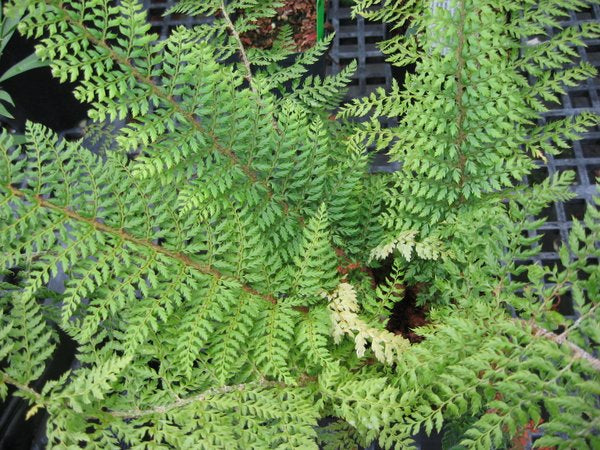
Soft Shield Fern. These ferns are excellent textural additions to the shade garden as they make broad mounds of dense, fine evergreen foliage. Even though they become substantial plants with an obvious visual weight, it retains a daintiness of appearance. Tough and easy to please.
{
Alpine.store('xUpdateVariantQuanity').updateQuantity('template--25070855422234__product-grid', '/products/trifolium-pannonicum');
});">
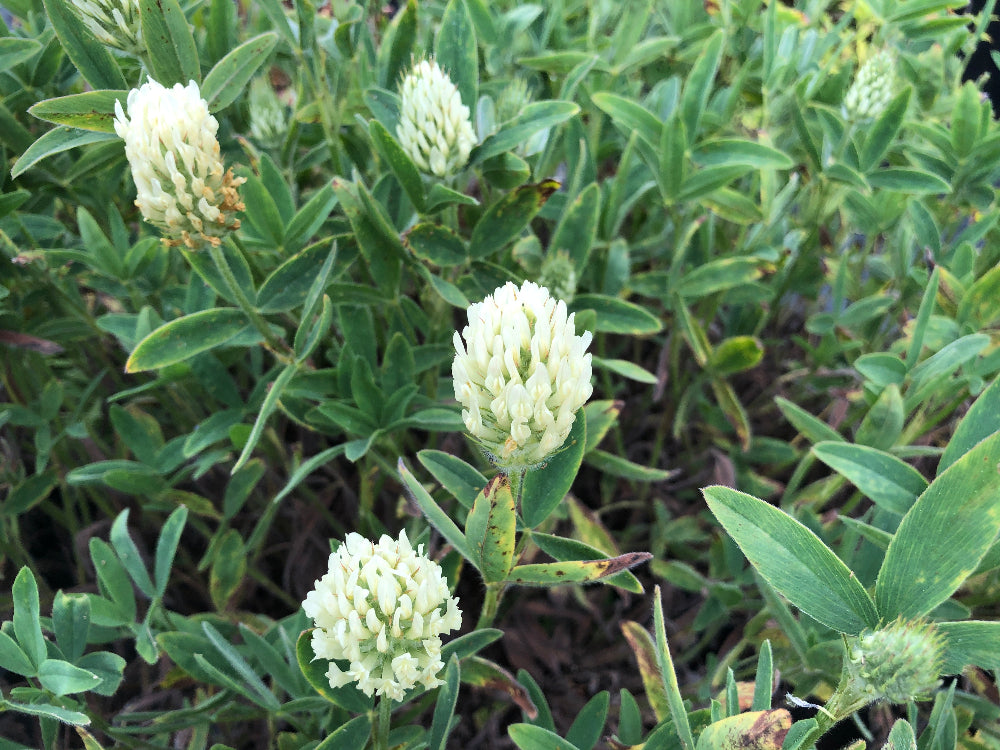
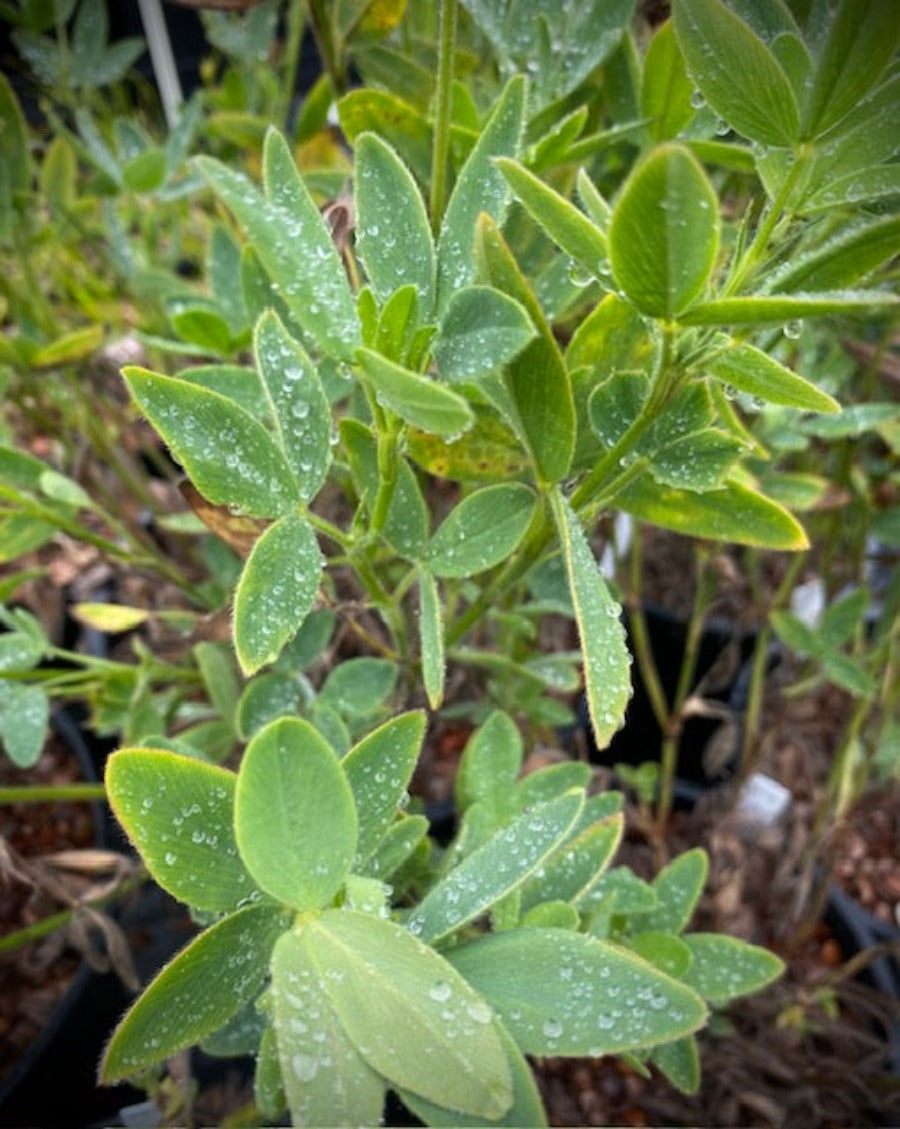
Hungarian Clover. Why should I buy a Clover? What are these yayhoos trying to pull? I didn't just fall off the turnip truck. Well, if you get this you will be in Deep Clover and that is a very good thing. This has mondo white flowers and trashes the ballyhoo and acclaim of this week's plant darling.