
438 products
Sort by:
438 products
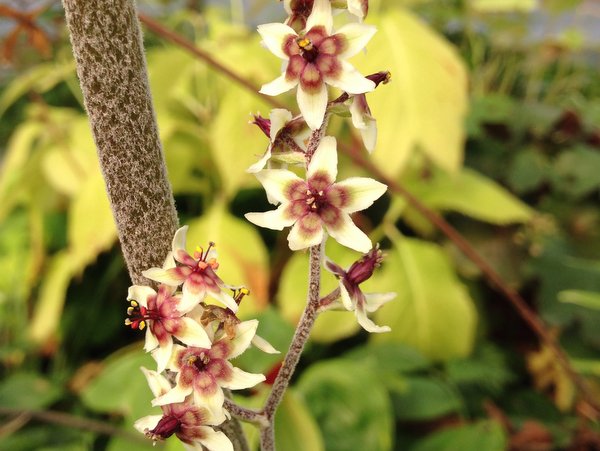
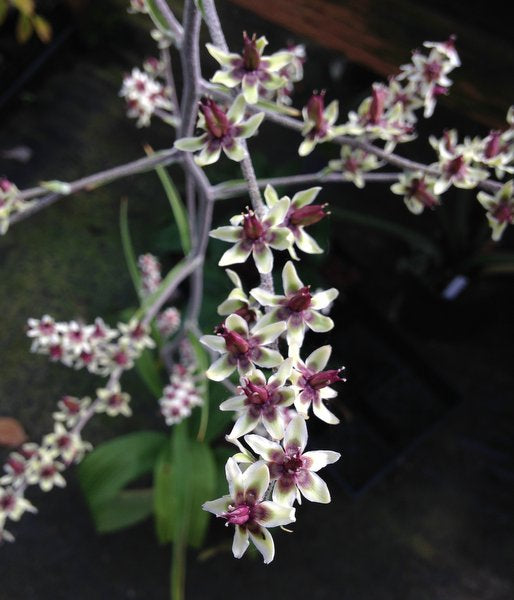
Young plants derived from Tom Mitchell, likely via Crug Farm, and came to us from Aaron Floden - now there is a chain of custody! We first listed this as V. schindleri but now have learned differently with the thought that these might be a hybrid with V. formosanum due to the variation in color, size and tendency to flower young which is a hallmark of the species.
V. schindleri is a very attractive species that is highly variable in flower color in the wild which makes a definitive call on hybridity difficult, especially as we have not observed schindleri in the wild except in the fall as dormant plants with withered foliage which is little help. We can say for sure these young plants will show variation - send us pics when yours flowers - and pictured is one of our older plants in flower. This is quite interesting with the pale petals and darker eye pattern to the center which turns reddish as the seed capsule begins to develop. This will have the familiar albeit fairly narrow pleated leaves and aforementioned flowers in an open and airy arrangement on the 3' flowering stem. A rich moist soil in part shade will be just the ticket and this should be quite hardy.
V. schindleri is a very attractive species that is highly variable in flower color in the wild which makes a definitive call on hybridity difficult, especially as we have not observed schindleri in the wild except in the fall as dormant plants with withered foliage which is little help. We can say for sure these young plants will show variation - send us pics when yours flowers - and pictured is one of our older plants in flower. This is quite interesting with the pale petals and darker eye pattern to the center which turns reddish as the seed capsule begins to develop. This will have the familiar albeit fairly narrow pleated leaves and aforementioned flowers in an open and airy arrangement on the 3' flowering stem. A rich moist soil in part shade will be just the ticket and this should be quite hardy.
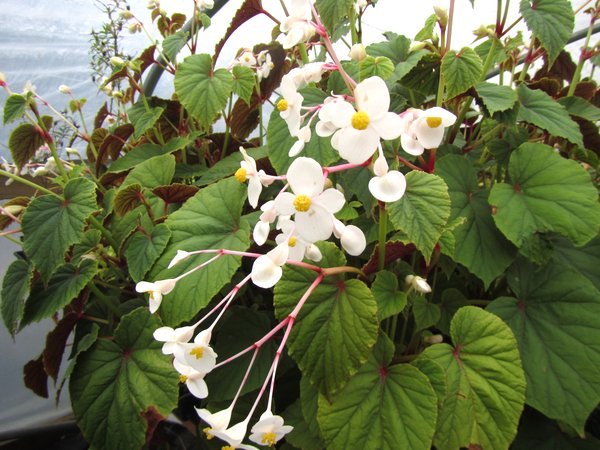
Yes indeed it is a hardy Begonia. Hardy if you plant it in the ground - it won't be happy with you if you let it freeze it in its pot. Good soil that retains moisture in shade to filtered light and everyone will be happy. Dormant in winter and coming back from tubers in early summer.
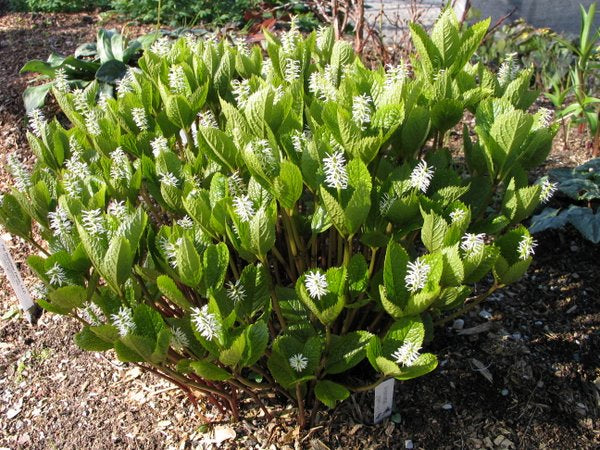
Choice and uncommon Japanese native making a many stemmed plant with lots of white bottle-brush flowers in spring. The glossy green and nicely textured leaves are pleasant the rest of the season.
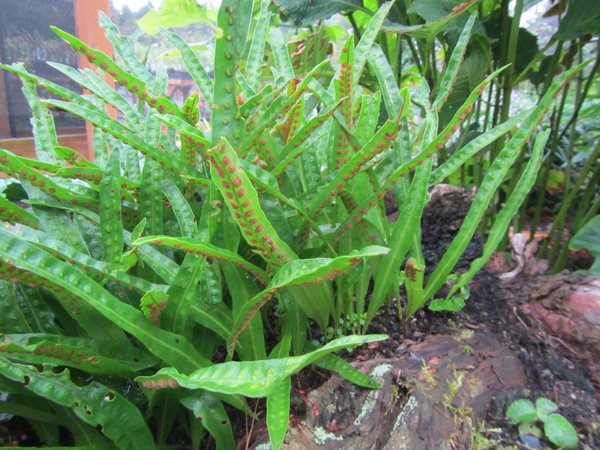
Superb and hardy fern from our collection in Mogecuo, Sichuan found growing in thick moss atop a large boulder shaded by Rhododendron bureavioides. Pretty sure on the genus and obviously floundering on the species. The genus has undergone recent revision and names may not yet be finalized. Hardy for us and deciduous.

This is a collection by Wynn-Jones in 2000 from near Baoxing Sichuan who thought at the time it was an unusual form, but it is well within the gradient for typical Reineckea carnea. This is a must for the shade garden along with every other one Reineckea you can lay your hands on! Good to zone 6 and likely 5.
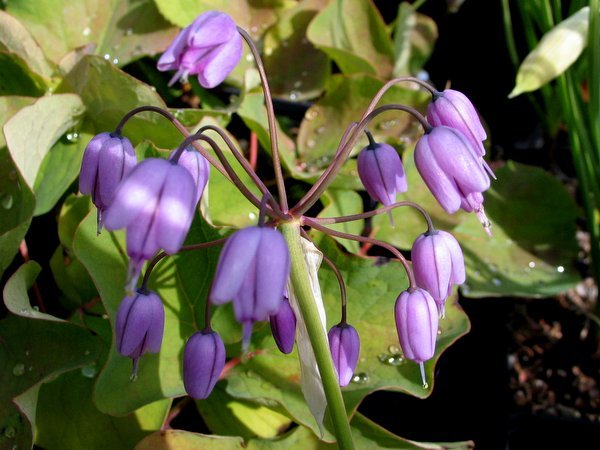
A collection from Tibet by Daniel Winkler of this ornamental onion. This is one of the Asian rhizomatous types making a nice clump of broadly grassy foliage in this case with leaves some 12"-15" long. The flowers are in shades of pink and are open rounded umbels whose drooping florets look a bit like some of the fireworks seen in a Fourth of July evening sky. Altogether an attractive species whose flowers usually coincide with the 4th so perhaps this year we will compare flowers to pyrotechnics. Hardy to at least zone 6 and likely lower.
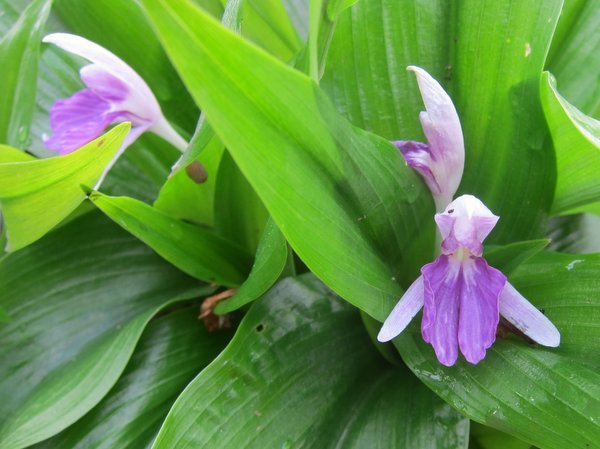
This is a little charmer from a Diana Reeck collection in Yunnan which is quite short to just a few 6" tall but with very lovely pinkish and white flowers. When we see this bloom it takes us back to those same woods where saw this same species a year after Diana collected its seed in 1996, This is a sturdy little fellow increasing each year by offsets and reseeding a bit. We're terribly fond of this one.
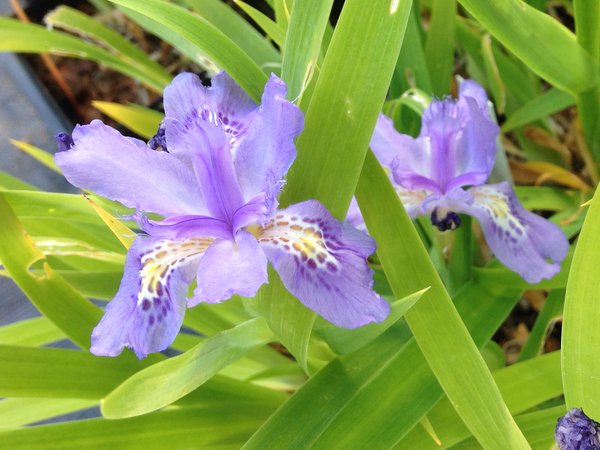
Seed collected at 3200 meters in Sichuan in an open grazed small meadow area adjoining low scrub. Tightly clumping, deciduous and allied to Iris japonica but is something totally new. Small blue flowers are laddered down the stems in the leaf axils. This has baffled some of the top authorities on Chinese Iris both here in the US and in the UK which quite honestly makes us very happy. Nothing like introducing a species nova to quicken the pulse! We expect this to be hardier than the zone 6 we are giving it but are being our usual conservative selves until we learn differently from those of you who will try this in colder zones.
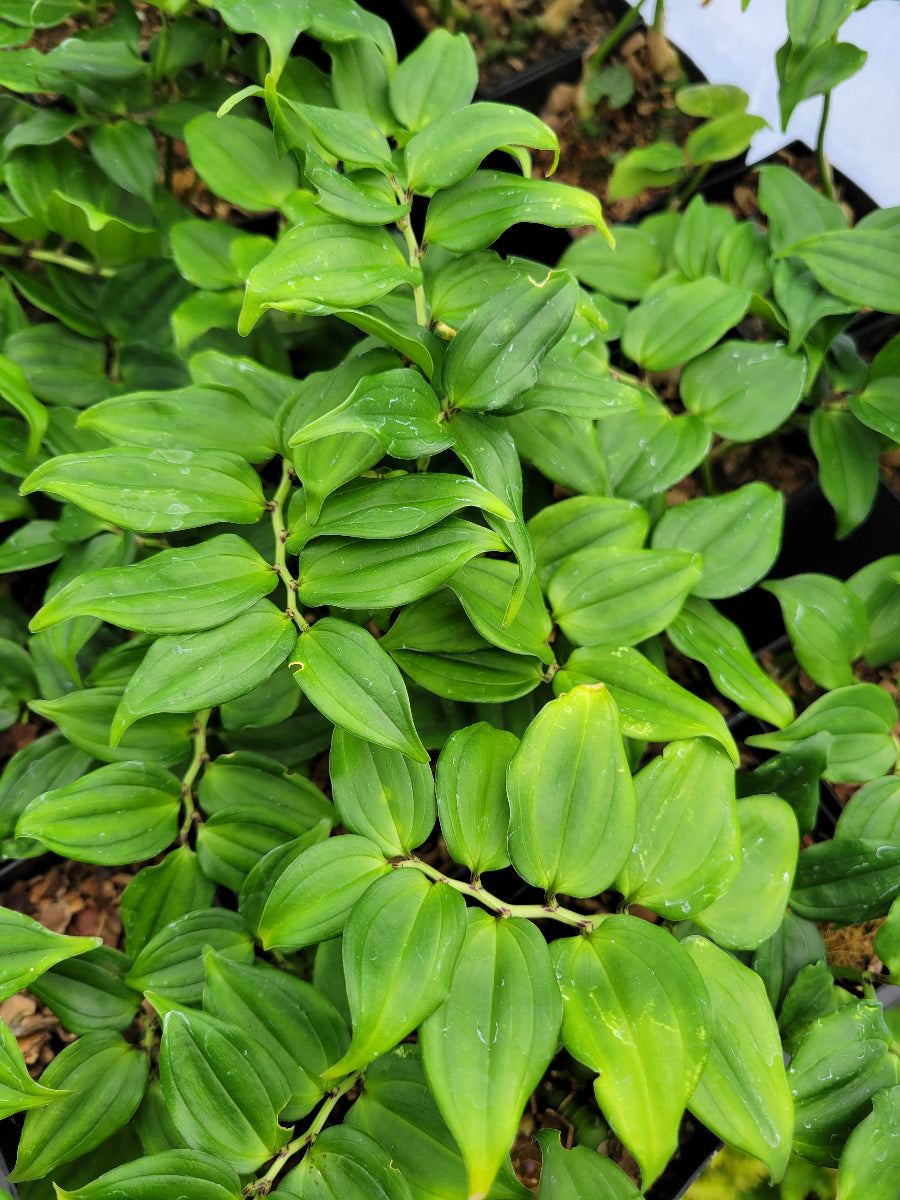
The form matching best with the species description. This is a low-growing evergreen Solomon Seal ally from China and has a more refined look than other forms of this species which we grow. Nice white flowers with a bit of caramel amber added and purplish fruit that follows.


Chinese Bleeding Heart. While we miss Dicentra, we do enjoy this new name and the "ichtyo" reference to the fishtail flowers. This clone probably hails from a Sichuan Mt Emei collection by Don Jacobs. This is a vigorous and impressive plant growing in shaded moist sites in the wild. Taking that into account, that is where we grow it here in our shade garden where it grows under an Ilex fargesii with the odd Lilium nepalense poking through. Broad leaflets on 20" tall foliage with large palest yellow flowers. In exceptionally rich moist soil this can really get a head of steam going and perhaps be too much of a good thing but in our shade garden we have been nothing but happy for the seven years it has been growing.

Pretty awesome evergreen fern because not only is it cool, but it increases fast enough to make a statement in the garden before you are in your dotage and have forgotten why you bought this, yet not in that rampaging acreage-eating Borg-assimilating manner that is sometimes described as "a good nursery plant".
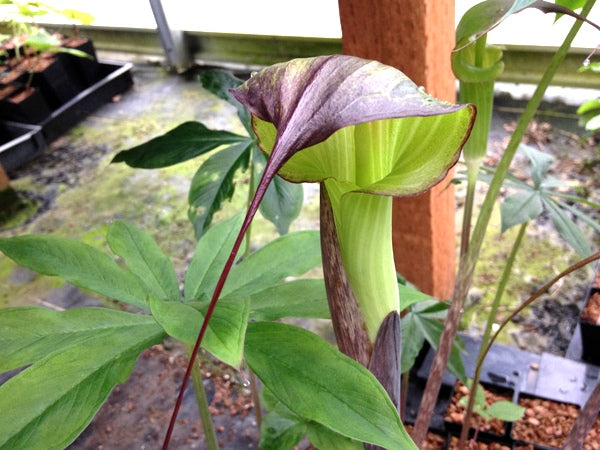
Neat species widely distributed from Thailand to China and into the Himalaya to Bhutan. This has stout stems that can reach 4' on old large bulbs with many leaflets arrayed like the spokes of an umbrella. Large green flowers often tinged with purple followed by red fruit. With such a broad range, there is variation in the species but a constant seems to be consistently good growers in the garden. Ours often don't appear above ground until early June so be patient! These are medium-sized bulbs and yes, we agree with you that we should have these sized by centimeters.

Chinese version of this species which gets into the Himalaya as we've seen in Arunachal Pradesh. Softly banded in mocha as the new green leaves emerge, the white flowers show nicely below the expanding leaves. Late summer, round orange fruit appears. A different collection from what we've offered previously.
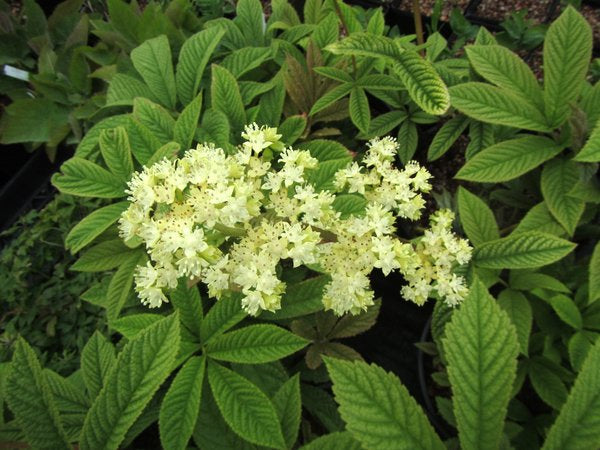
Our collection from the Gang Ho Ba in Yunnan at around 10000' back in '97 during our first plant hunting trip to China. This was growing in open woodland up against a massive rock the size of a dump truck with Arisaema consanguineum, Paeonia delavayi, Primula forrestii and Dipelta yunnanensis as companions. The big pinnate leaves were impossible not to notice. This has tall stems 36"- 44" with nice layers of white flowers.

Our collection from a wet alpine meadow in Sichuan at 10,000 feet where this mingled with lepidote Rhododendrons, Primula and Polygonum. A tantalizing array of forms of sino-ornata, but this one's veitchiorum gestalt with its dark blue flowers and somewhat broader foliage kept resisting positive ID, so we are open as always to outside confirmation. Pretty sure there are no papillae on the stems but have not taken a lens to them, so likely just a good dark sino-ornata. Amazing how running a nursery cuts into your hand lens time!
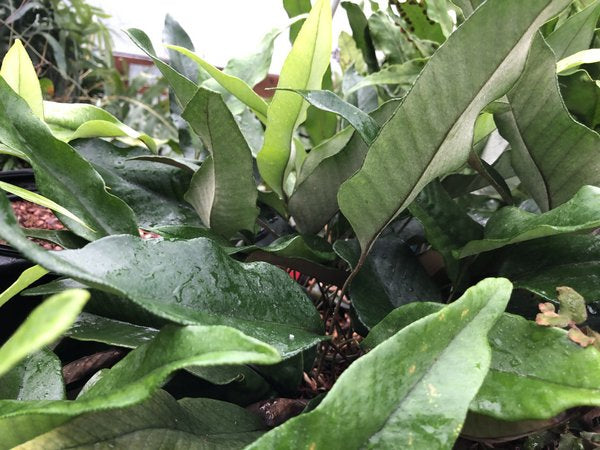
Our collection from Asia of this foremost member of one of the supreme evergreen fern genera. A great introduction to epiphytic fern growing this glossy fronted, and felt-backed tongue fern trails on thin rhizomes to cover rocks and stumps, though its equally happy in a pot. This formed an impressive colony on the bluff overlaying a partly shaded large rock slab where it would endure periods of dry. Vigorous! Good drainage is important.
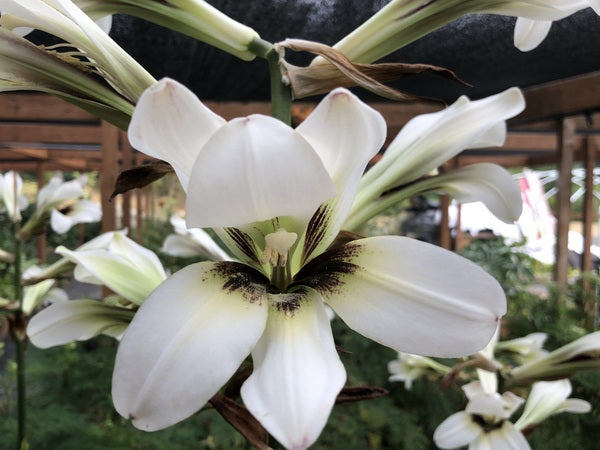
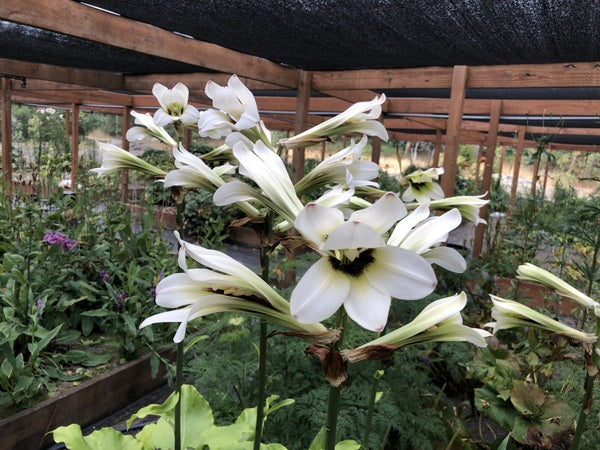
The correctly named true species as what is generally seen in gardens are forms of Cardiocrinum giganteum. The only deviation from the key of 3-5 flowers are some with up to 9 flowers which we attribute to easy living in our garden and variation within the species. This is most closely allied to C. cordatum from Japan, Sakhalin, and the Kuril Islands and has similarities in height at 4'-7' tall along with the distinctive grouping of leaves in the middle part of the flowering stem. New growth in spring is a brilliant copper-red and non-flowering bulbs go dormant quite early in June. White tepals are greenish-white at base with interior first touched in soft yellow-green and then deep within, purple. And fragrant late in the day. These are small bulbs perhaps 3 years from flowering. A Far Reaches Botanical Conservancy Offering,
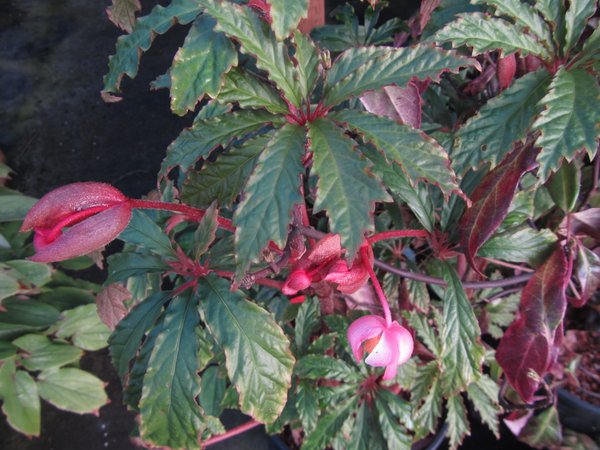
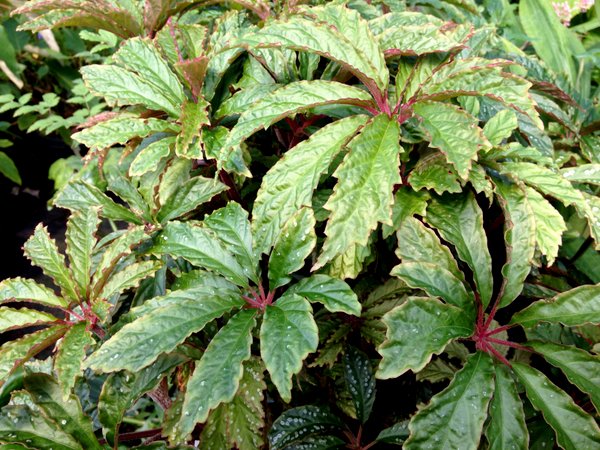
Eye-catching species from China with palmate leaves spritzed with white on top and a bright maroon underneath. The pink flowers are just another layer of adornment which always come as a bit of a surprise to us as we are always completely satisfied with the leaves alone. Another surprise is the hardiness which is zone 8. If winter is going to push the lower limits of that zone for any length of time, be a bud and take care of your homie with a little mulch. This is slow to go in the spring, waiting until June but it catches right up.

This former Anemone is one we first became acquainted with in John Massey's impeccable garden at Ashwood Nursery. We didn't know what it was but it grabbed our attention which is saying something in that candy store of a garden. A small plant that would be well-suited for a moist rock garden setting, it has simple, soft yellow flowers and distinctive green leaves.

Very nice Chinese member of the African Violet family that is surprisingly hardy and well suited to milder gardens here in the Northwest. We have friends in North Vancouver BC who have grown this beautifully for years in their moist woodland garden. This would typically grow on mossy rocks in the wild. Yellow tubular flowers. Not that we're big fans of the genre but having watched the movie 'Transformers' on a flight back from the UK, we think Tremacron would be a great name for one of those big robot things.