Sort by:
455 products
455 products
{
Alpine.store('xUpdateVariantQuanity').updateQuantity('template--25070855422234__product-grid', '/products/cardiocrinum-giganteum-var-yunnanense');
});">
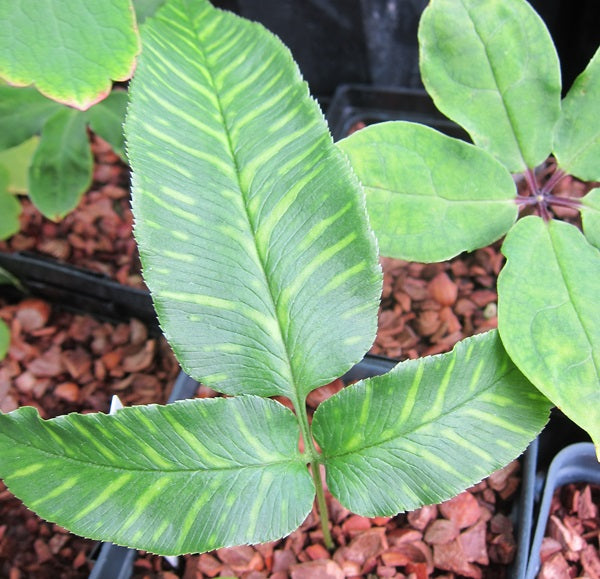
Cardiocrinum is exciting enough but variety yunnanense with its burnished copper new growth causes pulses to elevate along with dilated pupils and flaring nostrils. When this is blooming it is almost as good as sex. It takes a few years but purple flushed white flowers on 12' stalks - oh yes!
{
Alpine.store('xUpdateVariantQuanity').updateQuantity('template--25070855422234__product-grid', '/products/drynaria-sp-md-12-32');
});">
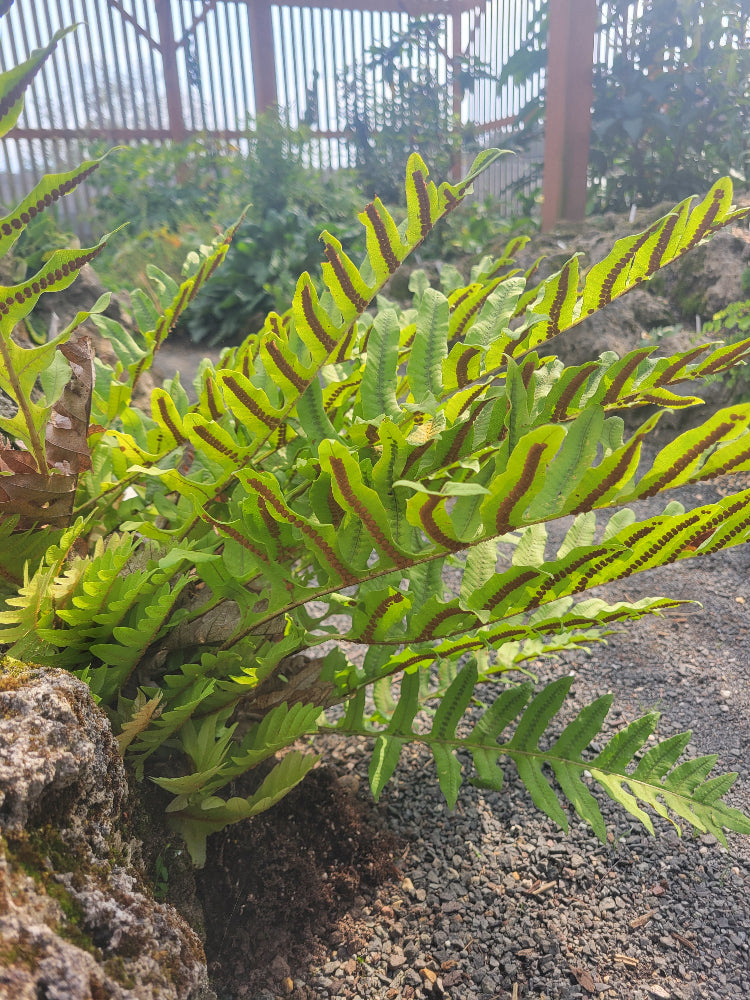
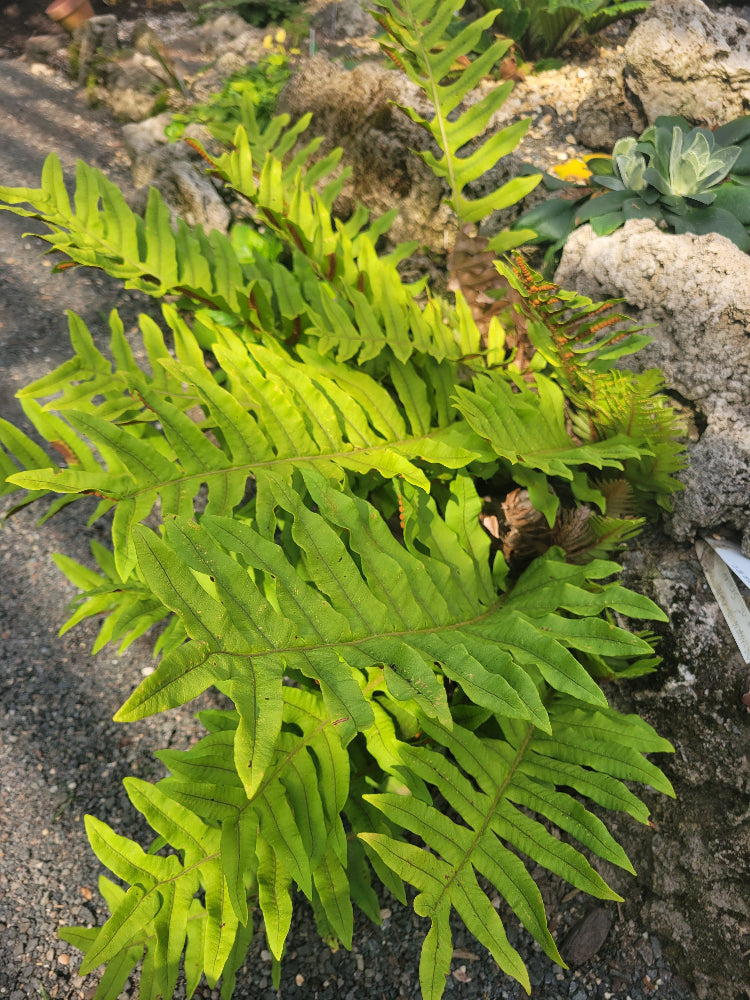
This basket fern was fairly coating the host tree from whence it was collected on the slopes of the ominously named Daheishan or black mountain in Sichuan. This has shown good vigor in pots and has also proved hardy outside in our tufa wall thus far, shockingly good performance for this usually tropical genus! Desirous of good drainage and a bit of room for its chunky rhizomes. The green fertile fronds will go dormant during winter leaving the skeletal sterile basal fronds to collect food for next year.
A Far Reaches Botanical Conservancy
{
Alpine.store('xUpdateVariantQuanity').updateQuantity('template--25070855422234__product-grid', '/products/polygonatum-pratti-cgg-14036');
});">
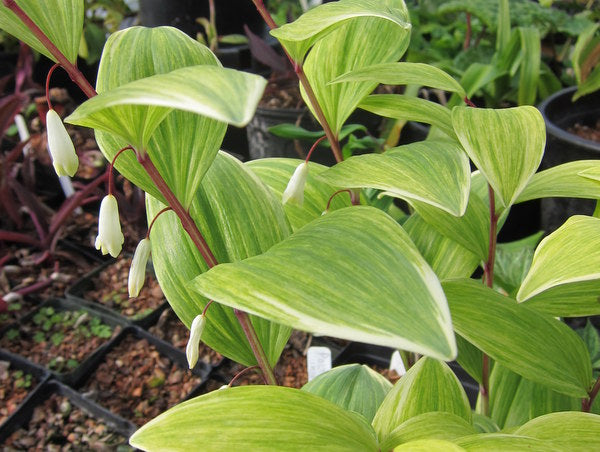
Tall form of Polygonatum prattii from our collection in Asia. This has pink tinged stems especially when young and nice small rounded leaves with pettily delicate yet tubby pink urn-shaped flowers. We like all the prattii quite a lot and the sweet vanilla scented flowers contribute to the allure.
{
Alpine.store('xUpdateVariantQuanity').updateQuantity('template--25070855422234__product-grid', '/products/ficus-pumila');
});">
These are cutting-grown from a plant Steve Hootman found growing in a garden in Philadelphia where it was defying conventional wisdom as to its hardiness. Being a savvy sort of fellow, he snagged a few cuttings thinking this might prove to be very useful. We think so too although we have not yet trialed it out in our garden. So many plants, so little space. This does seem promising and if your are looking for a small-leafed evergreen creeper that will cling to rocks or a wall, then this might be just the ticket.
{
Alpine.store('xUpdateVariantQuanity').updateQuantity('template--25070855422234__product-grid', '/products/saxifraga-stolonifera-maroon-beauty');
});">
This Strawberry Saxifrage has rich colored leaves quite maroon underneath and intricately marked in silver on top. This sends out runners like a strawberry which makes new plants at the tips & makes a great groundcover for moist shade. Dandy and delicate white/pink flowers on 18" stems. This has proved itself in our shade garden.
{
Alpine.store('xUpdateVariantQuanity').updateQuantity('template--25070855422234__product-grid', '/products/roscoea-tibetica-md-12-64');
});">
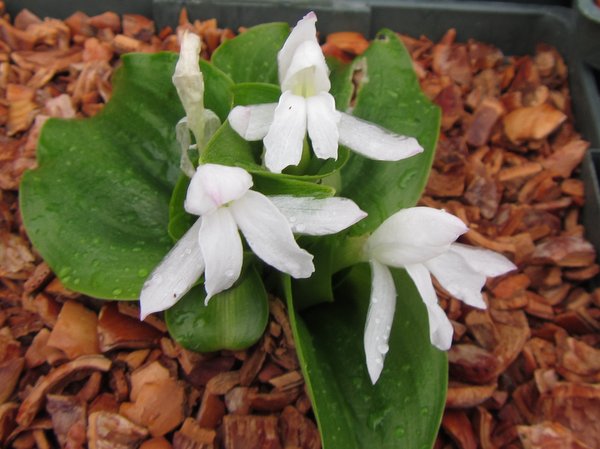
Our collection of this small Roscoea species where it grew in alpine turf. This sports wider leaves than R. scillifolia and with flowers of similar size. I realize this only helps if you are familiar with that species but the muse has disabled the backspace button. A 2020 study by Chinese researchers proposed that this be split from R. tibetica into a new species, R. lingbaoshanensis but we have not seen any formal description and this name has not been currently accepted. A hardy tuberous Asian genus in Ginger Family, Zingiberaceae, this will self-sow if allowed, to create a small turf itself.
{
Alpine.store('xUpdateVariantQuanity').updateQuantity('template--25070855422234__product-grid', '/products/heptapleurum-syn-schefflera-fengii-yugu-029');
});">
A reintroduction of this rare species that has been introduced just once by Steve Hootman in 1995. This is from the same population but does provide a bit more genetic diversity as the ones cultivated from the 1995 introduction come from just one or two plants. Hardy in Seattle. These are young plants. A Far Reaches Botanical Conservancy Offering
{
Alpine.store('xUpdateVariantQuanity').updateQuantity('template--25070855422234__product-grid', '/products/polygonatum-martini-cgg-14107');
});">
From Guizhou Province in China where this mingled with Disporum cantoniense, Tricyrtis, Codonopsis, Enkianthus, Magnolia and Meliosma to name but a few of the amazing floral diversity. Graceful species with dusky new growth expanding to broadly lanceolate leaves with the white bells hanging beneath. Good show of black-purple fruit.
{
Alpine.store('xUpdateVariantQuanity').updateQuantity('template--25070855422234__product-grid', '/products/ophiopogon-sp-cdhm-14679');
});">
Mondo Grass. Our collection from Asia. This was shorter-growing than the other species we observed in the area and the leaves were comparatively glossier. The autumn blue fruit was oval shaped and we could only hope the flowers would be good. Our hopes were not misplaced as the white flowers are large for an Ophiopogon and different than our other collections. This is a dense carpeter rather than a clumper.
{
Alpine.store('xUpdateVariantQuanity').updateQuantity('template--25070855422234__product-grid', '/products/oreocharis-auricula-cgg-14083');
});">
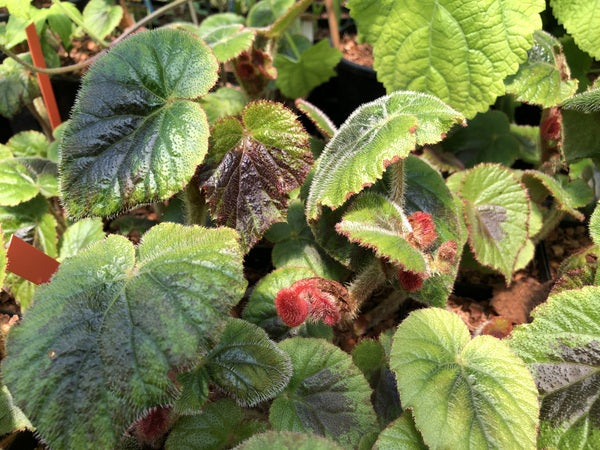
This is from seed collected in 2010 at 3500' from cliffs on the lower slopes of Fanjingshan in Guizhou. What fun it was to see this gesneriad in the wild! Purplish flowers are held on short 4" stems and this is a must-have if you fancy Afican Violets and Streptocarpus. Frost-free and good drainage.
{
Alpine.store('xUpdateVariantQuanity').updateQuantity('template--25070855422234__product-grid', '/products/saxifraga-stolonifera-kinki-purple-bswj-4972');
});">
A collection from Japan by the Wynn-Jones from the higher elevations in the mountains of the Kinki Peninsula in central Honshu. This is very similar to the clone 'Maroon Beauty' which is no diminishment. Good purplish leaves with paler highlights and impressive flowers for a Sax with tall stems bearing flocks of white blooms. Moist and shade.
{
Alpine.store('xUpdateVariantQuanity').updateQuantity('template--25070855422234__product-grid', '/products/ficus-tikoua');
});">
We first encountered this species in the fall of 1997 when we were on the mid to lower slopes of the Cangshan Mountains looking down to the barely discernible 3 Pagodas of Dali fronting the broad expanse of Lake Erhai. This groundcover species formed broad carpets of evergreen foliage covering the large rocks on the boulder-strewn slope so as to give the impression of a tumultuous green sea frozen in place. The day sounds much better than it was, for back in 97 there was but a rough single track road to the higher elevations and on that day our jeeps were blocked by a massively overloaded lorry whose driveline had failed under the weight of massive marble blocks quarried from the higher reaches. The truck was gradually sinking into the mud with just a few inches of clearance and a young skinny boy had been fetched from downslope to slither underneath and effect repairs, which was going to take many hours at best. This meant we were stranded at low elevation with a bunch of botanically fascinating, marginally hardy plants which was not our goal. We made the best of it and one of our new acquaintances was this Ficus.
We were pleased as punch when our friend Jim Fox gifted us with cuttings he took from Roy Lancaster's garden where it is growing as a foundation plant against his home. It was not a stretch to think that this plant was from the same population we had seen as Roy had traveled this same road years earlier as part of the Sino-British Expedition to Cangshan. Sadly we can't grow this outside here in our gardens but if you are lucky enough to have only very light frosts or none at all, then this would be a fine groundcover. This does have small reddish figs but stick to the ones you get at the store.
{
Alpine.store('xUpdateVariantQuanity').updateQuantity('template--25070855422234__product-grid', '/products/cercidiphyllum-japonicum-hehehe-316');
});">
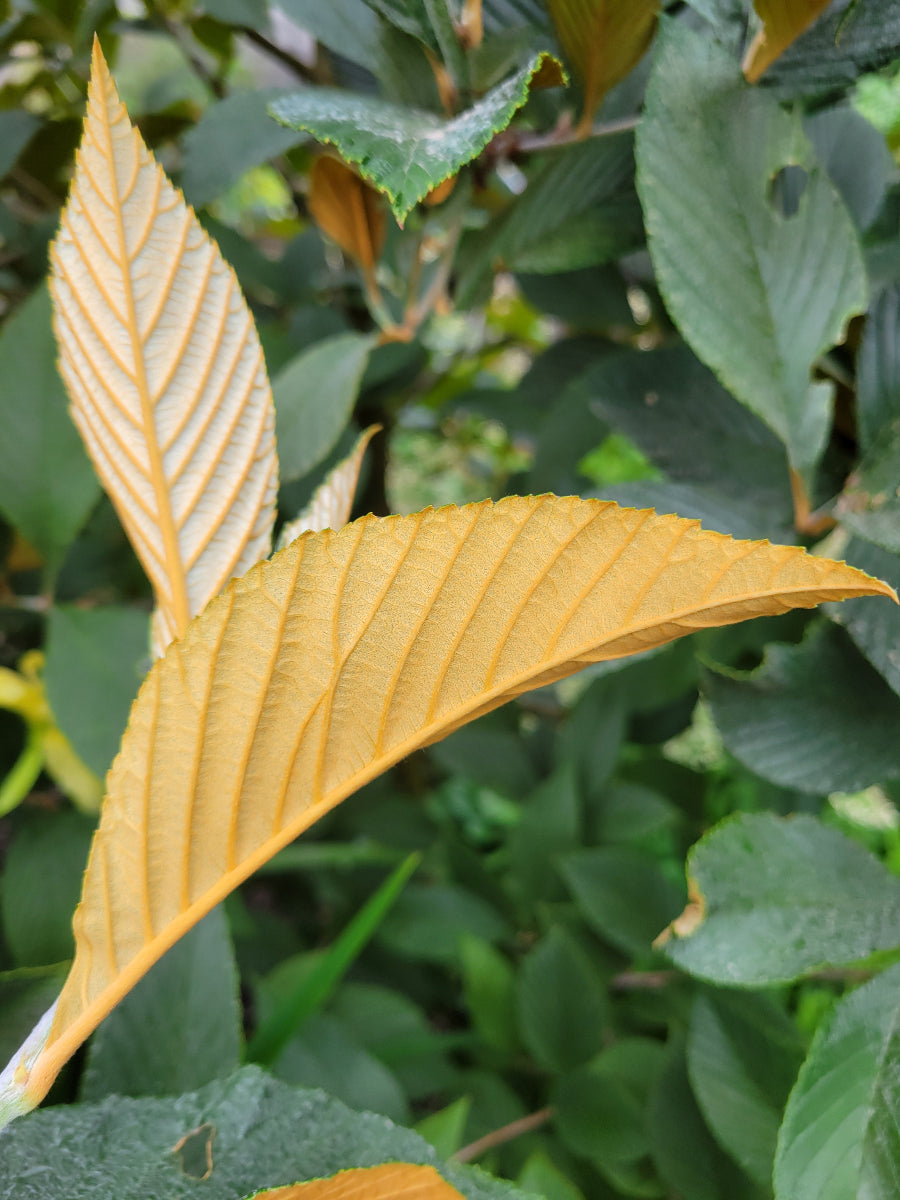
Katsura Tree. A collection in China by tres hombres, three Henrik's from Sweden's Gothenburg Botanical Garden. How could they not use HeHeHe as an expedition acronym? Fantastic ornamental tree species, this has rounded ovate leaves richly colored in spring with reds and purples and color persisting to some degree well into summer. Elegant habit and high marks for presentation, the insignificant flowers are not required, Yellow-orange fall color accompanied by a subtle burnt sugar or cotton candy scent from the fallen leaves. Eventually maturing at 40'-60' in the garden but old growth specimens in the wild are larger. Can be single or multi-trunked, ours is the latter after some nocturnal critter broke the top out when young and may have done us a favor as it looks stellar. Cutting-grown from single clone.
{
Alpine.store('xUpdateVariantQuanity').updateQuantity('template--25070855422234__product-grid', '/products/epimedium-borealiguizhouense');
});">
A mouthful we'll grant you, for this Epimedium from Guizhou, China. Vigorous evergreen species with long leaves in 3's in stems to 18" tall. This can get to 4' or more wide and will provide a mass of inspired texture. The mist of up to 150 tiny white and yellow flower motes per stem are curious contrast to the substantial foliage. Does well at Chicago Botanic Garden.
{
Alpine.store('xUpdateVariantQuanity').updateQuantity('template--25070855422234__product-grid', '/products/vaccinium-moupinense');
});">
No shipping to the State of: OR A nice dwarf evergreen Blueberry from Yunnan and Sichuan where it is found growing epiphytically in large trees of evergreen oak and hemlock. This is a very good garden plant needing an airy organic soil. The foliage has salmon to red colors depending on the season. Fall small fruit.
{
Alpine.store('xUpdateVariantQuanity').updateQuantity('template--25070855422234__product-grid', '/products/allium-mairei');
});">
Hearkening back to our 1997 collection in Yunnan, this persistent little onion is testament to what keeping calm and carrying on can do for you. Thin, grassy clumps of leaves with small heads of pink flowers held above makes this daintily appealing. This likes a reasonably moist, rich soil. Often seen with the name "amabile" appended to it, which is an invalid synonym.
{
Alpine.store('xUpdateVariantQuanity').updateQuantity('template--25070855422234__product-grid', '/products/polyspora-axillaris-md12-808');
});">
Second-generation plants from our original collection of this large shrub to small tree in southern China. Glossy evergreen leaves and large fried egg flowers - white petals with a yolk of yellow stamens - in October-November. A gorgeous plant for mild gardens where frost won't turn the white blooms Camellia brown.
{
Alpine.store('xUpdateVariantQuanity').updateQuantity('template--25070855422234__product-grid', '/products/codonopsis-bomiensis-previously-listed-as-codonopsis-sp');
});">
We haven't yet flowered this twining Campanula relative which we received as seed labeled Codonopisis - Royal Botanic Garden Edinburgh form. RBGE is Mecca for plantspeople with one of the finest collections of plants in the world. This is a herbaceous vine to 6' with likely blue flowers. Zone 6 at least.
Ok, update as of this summer 2016. This has pale yellow-green flowers netted heavily with purple veins and variable leaves ranging from ovate to ovate-lanceolate with leaf margins all over the map running from serrate to crenulate, entire to lobed. Historically this has been regarded as Codonopsis rotundifolia var. angustifolia but Hong in his recent taxonomic revision of the genus now places this in the new species, C. bomiensis. Fits perfectly with his description and photos in the monograph and our thanks to Bob Armstrong for assisting us with identification. Native to China and Tibet, zone 6 for sure and very likely lower.
{
Alpine.store('xUpdateVariantQuanity').updateQuantity('template--25070855422234__product-grid', '/products/rubus-fockeanus-md-97118');
});">
A choice little woodland groundcover from our collection in a high elevation coniferous forest in Yunnan where it grew not far from Primula sonchifola and Megacodon stylophorus. Slow carpeter with white flowers and small pale orange fruit nestled in the nicely textured leaves.. Choice and not invasive by a long shot.
{
Alpine.store('xUpdateVariantQuanity').updateQuantity('template--25070855422234__product-grid', '/products/aconitum-hemsleyanum-h2md-056');
});">
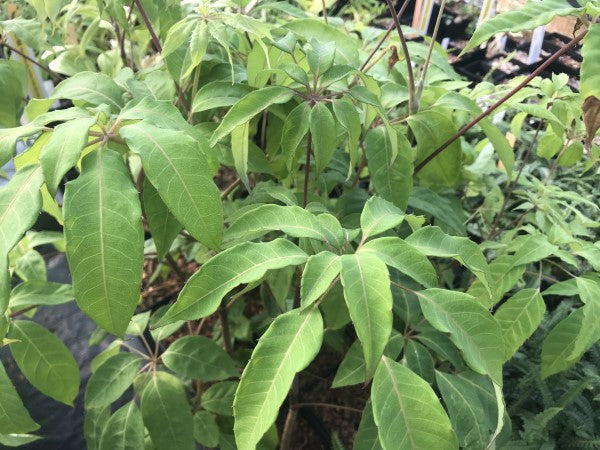
Our collection of this most impressive vining Monkshood. Sumptuous flowers of a good blue with a white interior This one is a real cracker and these will easily grow 8'-12' or even 15' tall provided they have something to twine onto. An immense treat in August and September. And deer resistant!