
Search results
33 results
Search results
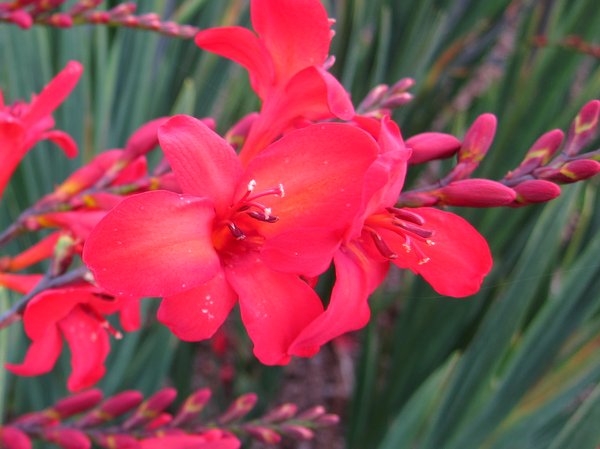
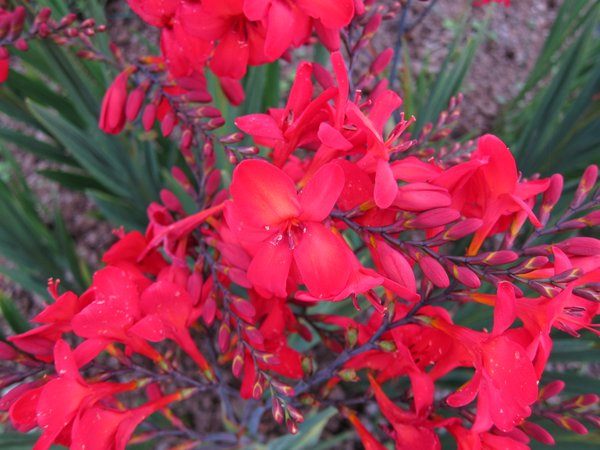
We believe Rhett, this Crocosmia is no lady. Really, are you looking for some refined creature when you buy a Crocosmia? I think not - it's hussies, hotties, tramps and trollops that get's it done in the garden during the dog days of summer when we need some over the top flamboyance - save the demure for spring 'cause it clashes with Mojitos! This has big heads of bright red flowers which are spaced closely together amplifying the floral impact. Nicely compact just 24" tall at best and remains in a tight clump. This is from David Tristram of Walberton Nursery in the UK.
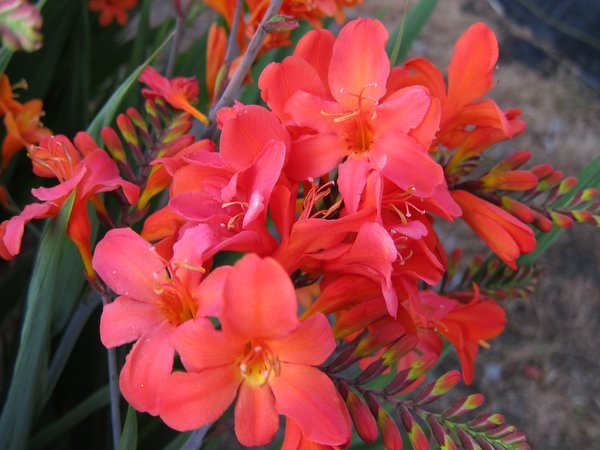
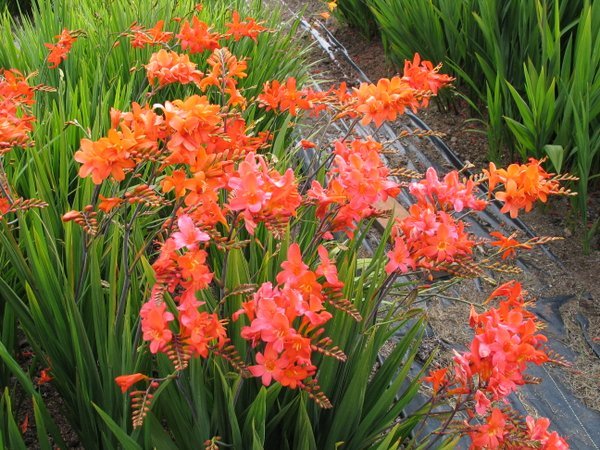
From the breeding work of Bob Brown comes this crazy good plant. On very stout stems, the big flowers with broad rounded tepals are bunched together in nice fat heads and the flowers are a melange of peachy apricoty pink hues. One of the very best of the recent introductions. Expect this to get 36"-40" and it is a slow clumper so it will be awhile before you need to divide it.
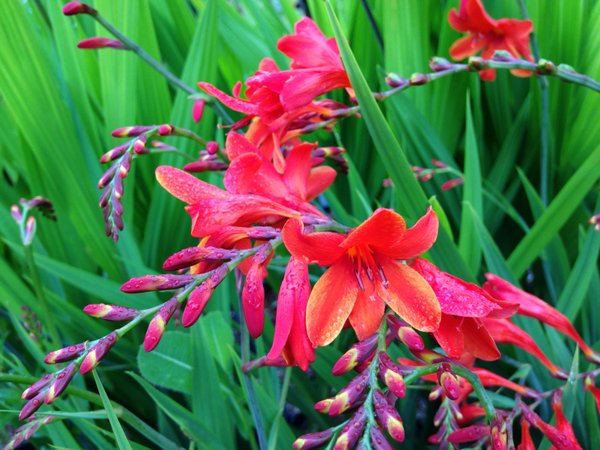
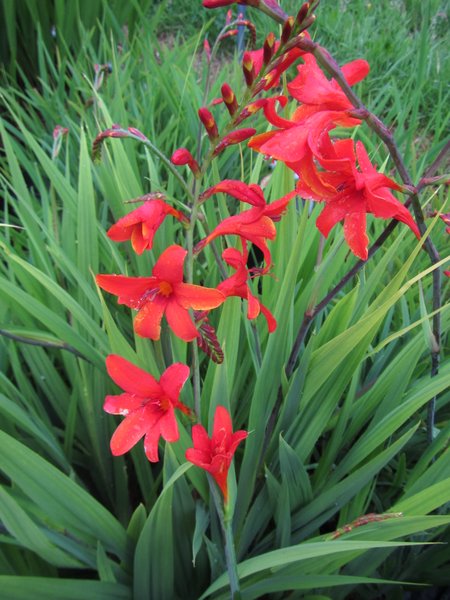
Nice red-orange flowers really puts on a show later in August which comes at a time when some of the other reddish varieties have finished flowering. Named for Phillipa Browne who is a Crocosmia hybridizer in the UK. We're certain she didn't name this after herself and that a fellow nurseryman chose to honor her work in this way.

This is a fine plant and another of the Bressingham Gardens introductions. Good ripe tomato red flowers arrayed nicely on the stem and held out to maximize viewing. Very accommodating those Brits. The flowers are nicely ranked with some overlap on each side which creates a showy floral synergistic effect. This is a compact grower to just a couple feet tall and very useful where you need a shorter plant that can still pack a punch. No doubt a sister seedling to 'Bressingham Blaze' from the same cross of C. masoniorum x C. paniculata as both were introduced in 1970.


This exceptionally large flowered selection is going to be a star in any sunny garden where it's unrivaled flower size leaves most other Crocosmias wishing they hadn't been mired in ethical dilemmas and just gone ahead and done the testosterone injections. Introduced in 1910 by George Davison and was a sensation at the time garnering every accolade and award available at the time. 100 years old and it is still showing the newcomers a thing or two as it has few rivals for size of flowers and stoutness of stem. Timeless excellence. Our plants came from NW icon Russell Graham some years back.
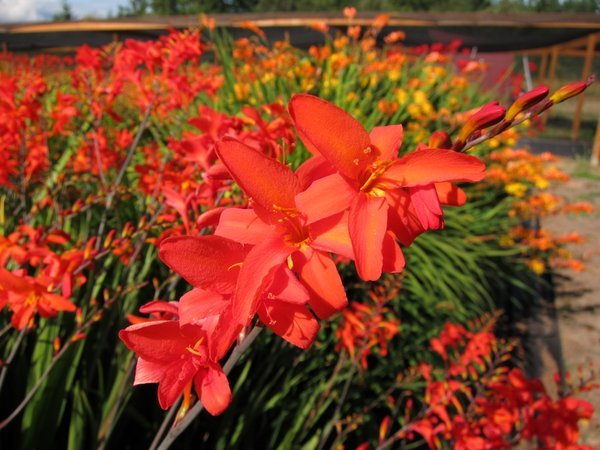
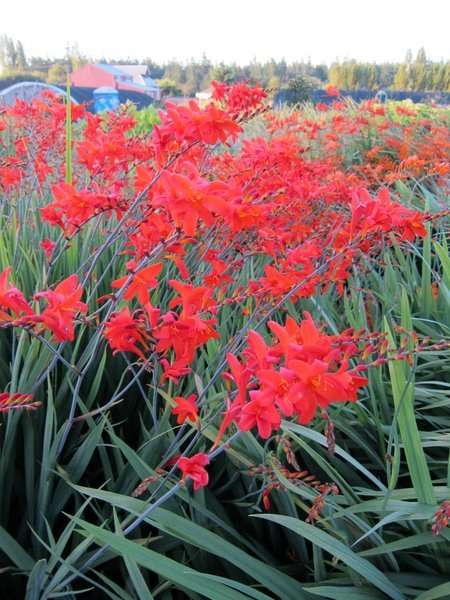
A bright flare of rich red flowers makes this is an excellent garden plant which puts on a good show and was named for a woman of no small means and substance. To bestow such a namesake upon a plant of anything less than the first rank would be folly in more ways than a simple flatlander such as myself could conjure so that alone should speak to its merits. The spawn of breeding Crocosmia xcrocsmiiflora x 'Lucifer' in the late 1980's by A.J. Hogan in Cornwall resulted in some excellent seedlings. This was the cream of that crop and was named in 1993 and bears little resemblance to 'Lucifer'. A robust plant to 3' tall or so.
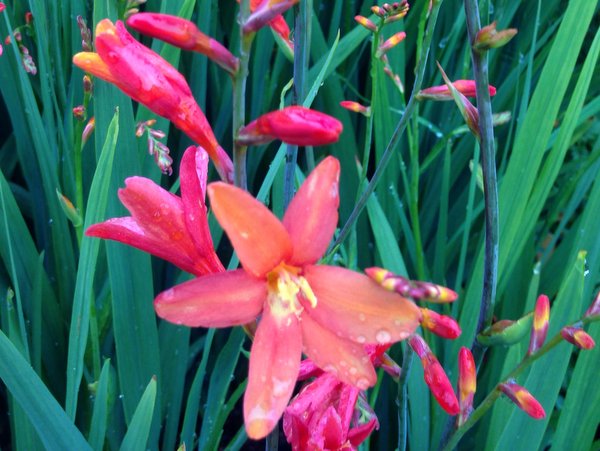
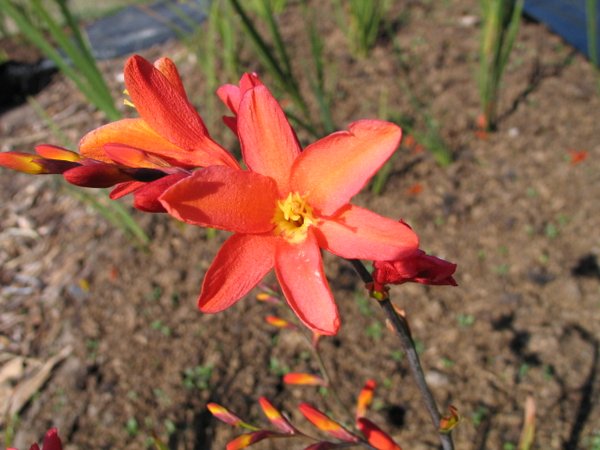
As neither of us were lucky enough to be debutantes ourselves, growing this 'Debutante' is ample solace. The flowers are small but tend to face upwards opening orange but fading rapidly to a soft pink in the interior which is accented by a yellow eye while the exterior retains a deeper orange-red coloring. To 30" of tidy habit with conservative values until it blooms with a rate of increase that might be best described as restrained with the weight of past generations measuring the suppression of potential impropriety.


Everything good about this yellow hybrid from David Tristan in the UK. Densely clumping and quite respectful of its allotted space in the garden. Flowers are a rich clear yellow with a good open flared aspect and rounded petals of distinct substance. There is a lot of flower for a compact 24" plant!


Aptly named, a Crocosmia of truly majestic proportions and grandeur of flower. Arguably the finest large-flowered cultivar, this indeed has the largest flowers among the dozens of varieties we grow. Wide open rich orange yellow faces with dark red-orange backs on 40" stems. It totally rules. It's no despot but a kindly monarch who just likes to party hard in late summer. It needs a little room to spread so grant it the space and allow it to bestow upon your garden a late summer bonfire of color. A George Henley introduction from 1918.
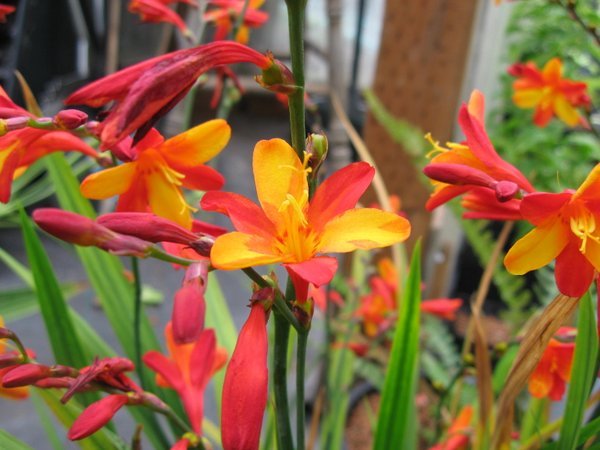
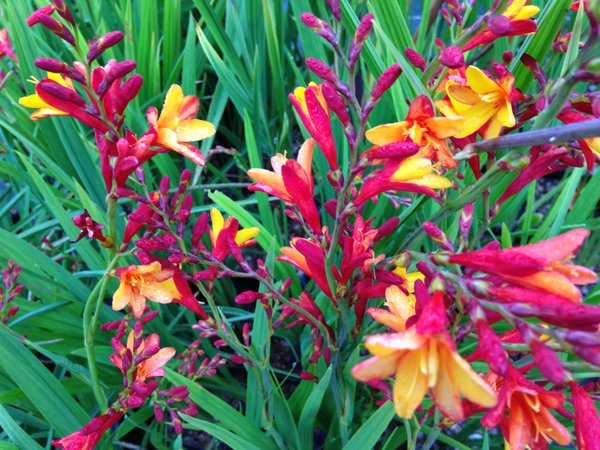
The enigmatic iconoclast Pete Ray of Puget Garden Resources, brought this perky selection back from the UK. Smaller than most varieties both in height and flower size, this has that cheeky something that the others would give their right anther for. Flowers are a perfect bicolored symmetry of red and yellow on stems to 2 feet or so.


This is an Alan Bloom selection from Bressingham Gardens which he introduced in 1970. 'Spitfire' is a feisty little plant making a dense clump of thin leaves with flared open fiery red-orange flowers held closely together in which the many presents as one to great effect. A smaller mounding plant than some of its kin.


You don't have to sell your soul to have this in your garden but once you see it, you would be more than willing. New selection from the UK that has to be Lucifer's love child. This is so much better than that old devil. Stout dark sooty stems holding deep burning red flowers with a wide flared corolla that lacks only the smell of brimstone and the wail of sinners. We do get involuntary high-pitched keening from people who see our big display plant so maybe we're just missing the brimstone. Quite difficult to come by, these are single large corms we would typically put into a gallon pot for sale here at the nursery.

An imposing selection fitting perfectly in the garden style of Big, Bold and Beautiful. it is not often one extols the merits of Crocosmia leaves but these wide blades with pleated ridges stand en garde against other substantive companions such as Canna or dark-leafed Ligularia. To 5' tall with narrow tubular orange-red flowers. This is one we brought to the US from a visit with the late Michael Wickenden of Cally Gardens in Scotland.
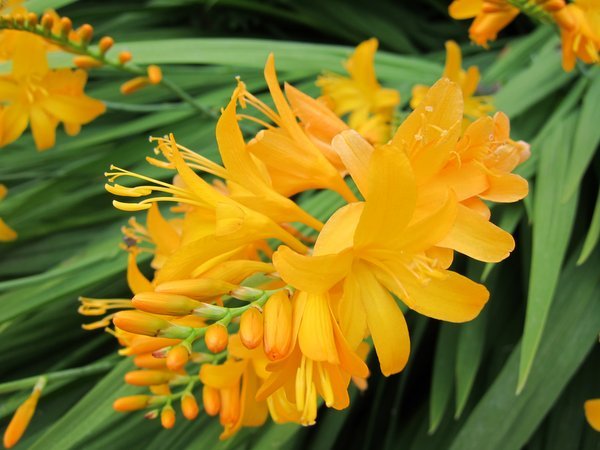
We got tired of folks asking for Jenny after seeing her in our border so being savvy entrepeneurs we potted some up. This is a dandy Crocosmia of smaller habit with tasty flowers of butterscotch infused yellow. Not a piercing yellow but of a gentle hue. Jenny has class after all.
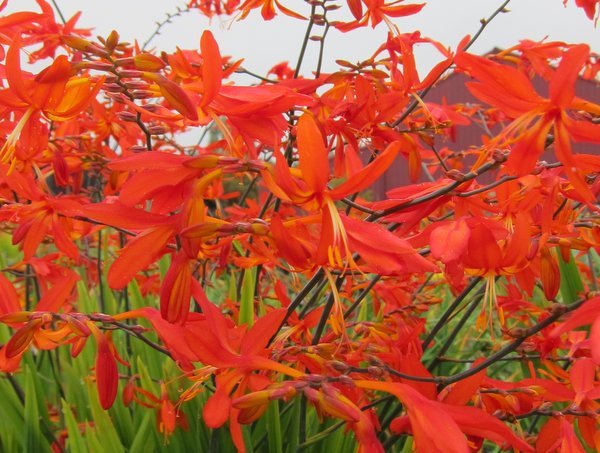
One of the truly elegant cultivars and one that will be the toast of the garden. This is one of 5 surviving C. xcrocosmoides bred by Max Leichtlin of Baden-Baden Germany before 1895 that is still in cultivation. A true heirloom cultivar. Tall stems with fingers of flowers held out like a ladies hand extended to be kissed. Refined orange tepals nicely spaced reflects its obvious confident sense of self and of place which speaks to its heritage of Teutonic thoroughness and simmering superiority.
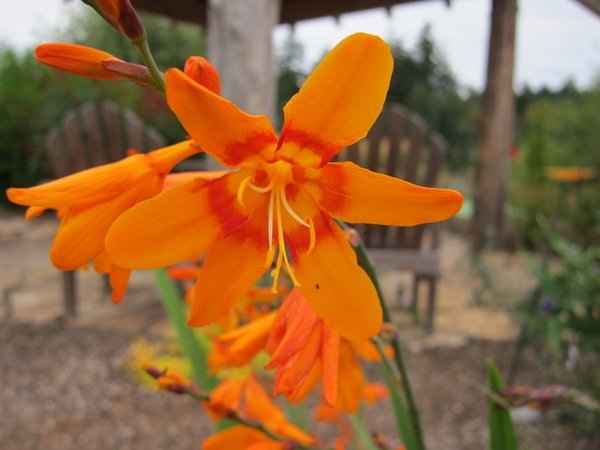
One of our favorites - and we know you have seen this on other Crocosmia labels here - but it is even more true with this one! Not to say the others are less favored, mind you. Large, wide open orange-yellow flowers with a vivid dark orange ring in the center surrounding a slightly paler throat. Well-displayed to nearly 3' tall.
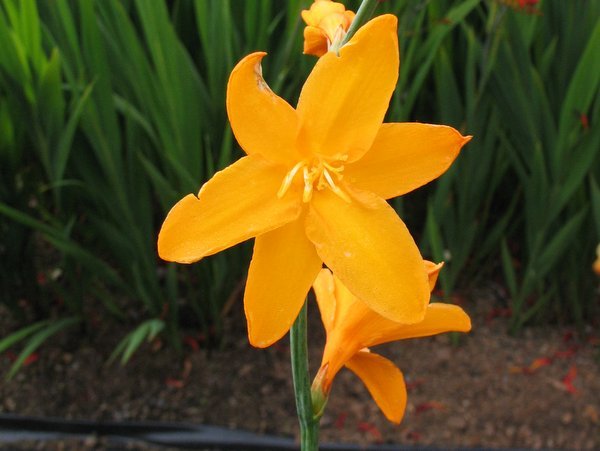
Big cheerful yellow flowers which open widely on stems to nearly 30" tall are the reason for growing this selection. This can help make some of the late season fiery colors seem even more intense by comparison or if asked to carry the floral load on its own, it is more than up to the task.

One of the better of the clear yellow hybrids with nicely presented flowers that while of good size are not so overly large that they bow down the stems. We've come to like the clean yellows as they bring something refreshingly uncomplicated to the garden bed and the fewer issues in bed, the better.


We would have been thrilled to have Paul's second or third best yellow judging by what he regard's as his best. This is an awesome plant with very large flowers of excellent substance clustered in dense heads which compounds the visual impact. Tall stems to 40" just to make sure you won't miss seeing this in bloom. A good even rich yellow that is not brightly strident but very capable of mingling with other colors and more than enough self-confidence to carry the display load on its own if required.
Page
A larger interactive map can be found here: https://planthardiness.ars.usda.gov/
Hardiness
We use the USDA hardiness zones which is the standard rating guide. We are conservative in our ratings and often with care and attention to siting, many of our plants can be grown in a colder zone. Our nursery is firmly in Zone 7. A half hour walk west to our friend’s garden finds us in an upper Zone 6 as they are cursed with the mother of all frost pockets – more like a frost crater. A half hour walk east to downtown Port Townsend and we’re firmly in Zone 8 with some microclimates a balmy Zone 9. It’s maddening.
If you are web searching hardiness zones, don’t bother with the zipcode method for finding what your zone is – we tried and it came up with Zone 5 for us instead of the correct Zone 7. We cannot stress enough how many factors beyond anyone’s control determine the hardiness of a plant. Fertility, age of plant, established or not, hot or cool summer, soil type, timing of cold, wind, near the drier vent, how expensive and difficulty of replacement all seem to play a role. Also within any given zone and often within any given garden, a range of zones and microclimates may be found.
For example, we rate our Crocosmia at Zone 7 but with mulch or dependable snowcover, these will handle short dips into Zone 6. A few fir boughs placed over a plant or a temporary wrapping can make all the difference. Remember, plants have feelings too.
on Jul 31 2023