Sort by:
1758 products
1758 products
{
Alpine.store('xUpdateVariantQuanity').updateQuantity('template--25070855422234__product-grid', '/products/saxifraga-stolonifera-md-15-32');
});">
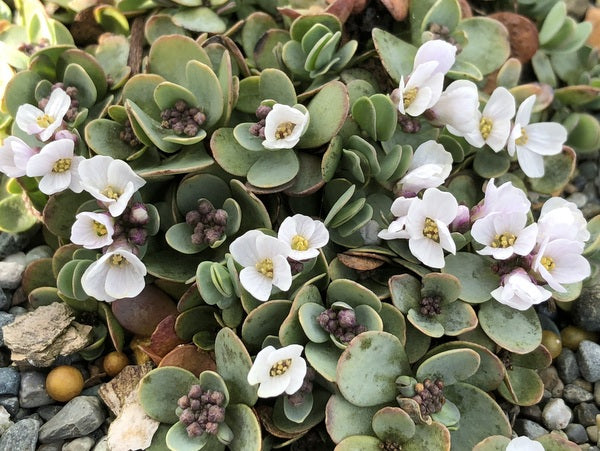
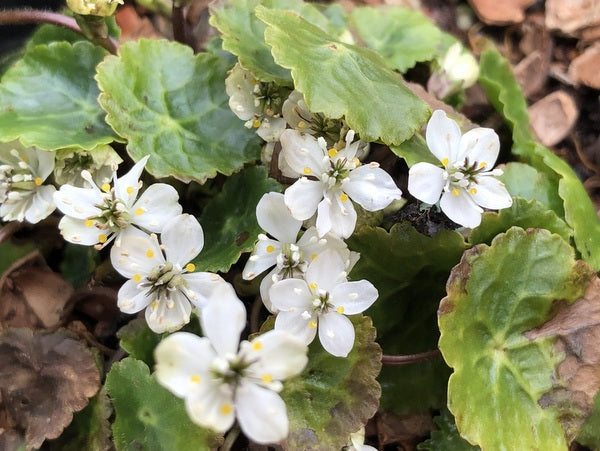
From Hubei comes this smaller form of Saxifraga stolonifera which, before taxonomic lumping, might have been called S. veitchiana. Found growing in moss on a shaded cliff face in Abies fargesii forest. This will spread by strawberry-like stolons and makes a sweet little evergreen groundcover with airy white flowers.
{
Alpine.store('xUpdateVariantQuanity').updateQuantity('template--25070855422234__product-grid', '/products/disporopsis-arisanensis');
});">
Evergreen Solomon Seal relative from Taiwan via Georgia plantsman Ozzie Johnson. Can't have too many clones of a good plant and we always say "Bring on the Clones!" This will do great in moist shade in zones 7-9 where the rounded leaves on stems up to a foot or so shelter the hanging white bell flowers. This combines well with all of those shade garden plants that any self respecting plant collector loves so rest assured that garden harmony will remain intact.
{
Alpine.store('xUpdateVariantQuanity').updateQuantity('template--25070855422234__product-grid', '/products/gaylussacia-brachycera');
});">
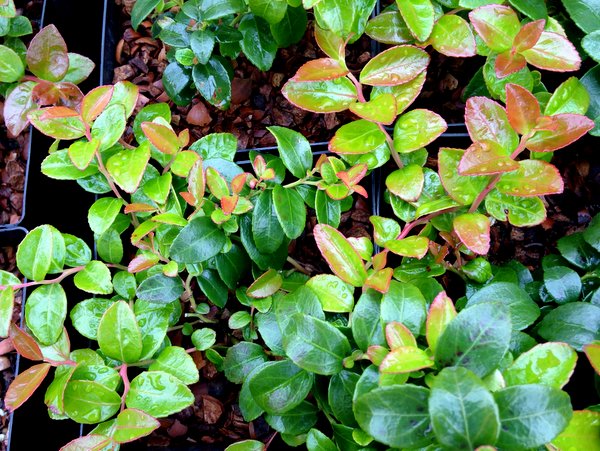
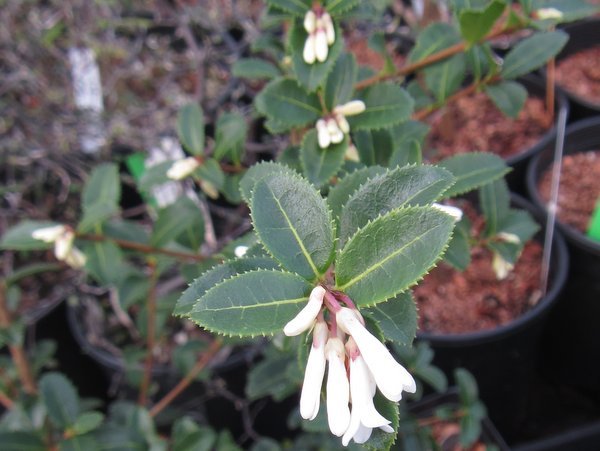
Box Huckleberry. This now rare in the wild blueberry relative is a choice little shrub that is notable on multiple counts. Compact habit to a foot or more tall and slowly spreading by rhizomes, this has good glossy evergreen leaves turning bronzy in winter with small whitish urn-shaped flowers giving way to edible blue berries. This is being marketed under the trademark name 'Berried Treasure' which might give the impression that it is a superior selection of an already outstanding species but it is the typical species with a more pronounceable marketing name. Marketing hype will be the death of horticulture.
{
Alpine.store('xUpdateVariantQuanity').updateQuantity('template--25070855422234__product-grid', '/products/arctostaphylos-x-media-peter-ehrlich');
});">
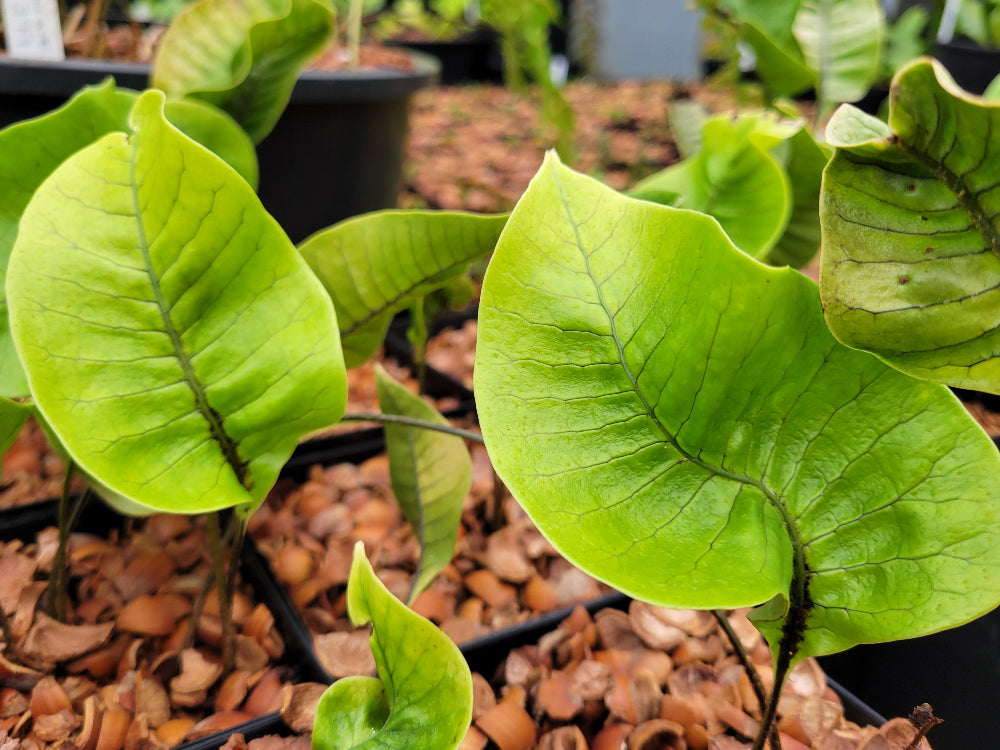
A remarkable Manzanita native to the southern Mendocino Coast which features unusually large rounded leaves for a groundcover type. Makes a dense cover mounding to 24"-30" tall and 8' + across with white flowers and bird attractant small fruit. The leaves seem verging on succulent giving this a uniquely appealing look. The name commemorates Peter Ehrlich, former head Forester at the Presidio in San Francisco, who died in a bike accident in 2017.
{
Alpine.store('xUpdateVariantQuanity').updateQuantity('template--25070855422234__product-grid', '/products/primula-sieboldii-musashino');
});">
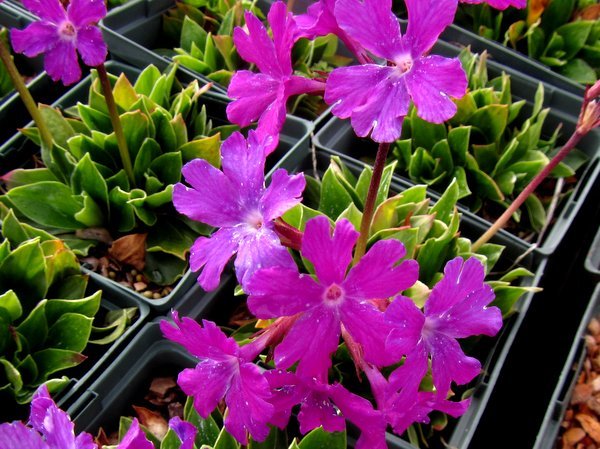
Robust Japanese selection of this revered Primrose species with sumptuous pale-faced flowers breezed with the lightest smoke of lavender-pink. The backsides of the flowers are more intensely colored borrowing perhaps on the evolutionary success of flamboyant backsides across a wide range of species. Whenever we watch Nature on PBS and there are male Mandrills in full display, Kelly feels cheated, inadequate and frustrated being a monochromatic species until Sue says "Honey, it was your inner Mandrill that I fell in love with". Hardy zone 4 to 8b.
{
Alpine.store('xUpdateVariantQuanity').updateQuantity('template--25070855422234__product-grid', '/products/olsynium-douglasii-frf8589-dark-purple');
});">
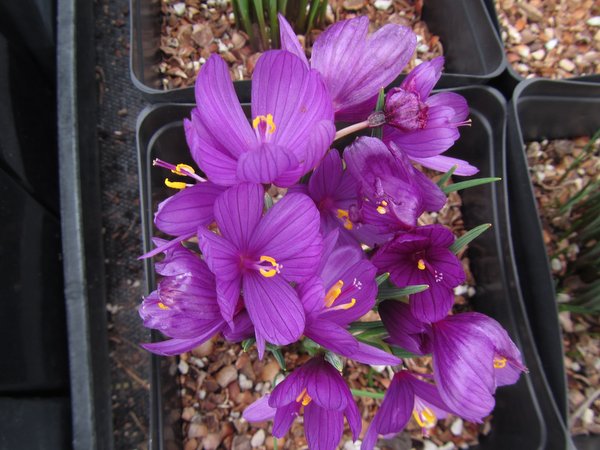
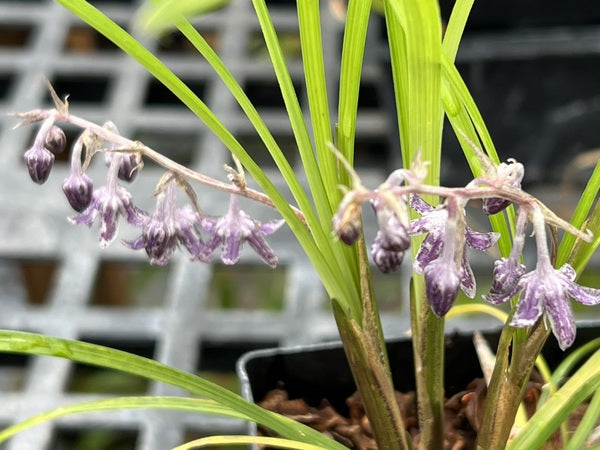
A fine dark purple selection of of our native Grass Widow. Like all of our Olsynium selections, this has been a long process of a decade or so to get this to a size where division is possible and we feel like we can safely release a few. Early flowering in Feb-Mar and fully dormant by summer. Myriad variants can be found in flower shape, color, size, time of bloom etc. and it would be easy to go Galanthus on this species in terms of collecting mania. We speak from first-hand experience on our Olsynium descent into madness. Multiple shoots which may or may not flower as it is hard to tell when dormant. This is a winter-spring moist plant which goes dry in summer in the wild where it grows in fairly heavy soil.
{
Alpine.store('xUpdateVariantQuanity').updateQuantity('template--25070855422234__product-grid', '/products/arisaema-cf-consanguineum');
});">
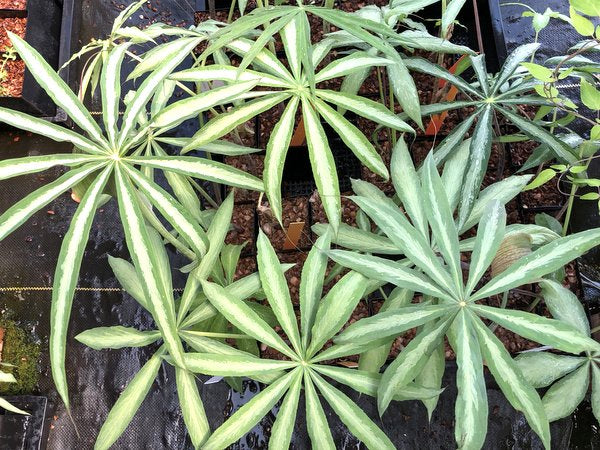
An exceptional selection by Duane West of presumably consanguineum. What sets this apart is the sultry smokiness of the new growth - the expanding radial array of leaflets colored darkly in alluring Mystery and Promise. The pseudostem leans strongly against the bar and beckons, allowing the olive flowers to stand proud.
{
Alpine.store('xUpdateVariantQuanity').updateQuantity('template--25070855422234__product-grid', '/products/begonia-red-fred');
});">
Large burnished red to maroon to olive-maroon leaves depending on leaf maturity and light intensity. The small pinkish red flowers are nice but not required for universal admiration. Our big plant has the gravitational pull of a black hole upon visitors who walk by a plethora of amazing rarities to pay homage to Fred. Frost-free.
{
Alpine.store('xUpdateVariantQuanity').updateQuantity('template--25070855422234__product-grid', '/products/hydrangea-anomala-subsp-anomala-winter-glow-bswj2411');
});">
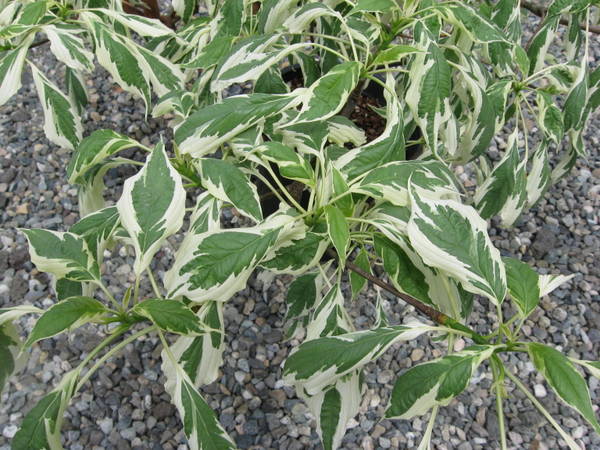
This is a pretty interesting selection of climbing hydrangea we received from the intrepid plant hunting duo of Bleddyn and Sue Wynn-Jones of Crug Farm Nursery in Wales. They collected this on a plant hunting trip to Sikkim and found this in the forest near the town of Yuksom. This has the typical small coral-green lacecap flowers and will self-adhere to a wall or tree-trunk as do the others but what sets this selection apart is the generally evergreen leaves which turn purple in the winter. Admittedly, Crug is in a mild portion of Wales which helps with the evergreen nature but what a nice bit of unexpected ornament. This was not collected at a particularly high elevation and we have no idea how hardy this will prove to be but for that sheltered spot in need of winter interest, gotta try it! Especially if grown on a wall, hardiness should be greatly improved and we expect this to be good to zone 7 anyway.
{
Alpine.store('xUpdateVariantQuanity').updateQuantity('template--25070855422234__product-grid', '/products/notholithocarpus-densiflorus-f-attenuato-dentatus');
});">
Fantastic Tanbark Oak variant from a small mutant population in Yuba County, California that was discovered in 1962. This features narrow leaves with prominent teeth on the margins. This population tends to be shrubby but in cultivation, it grows normally, capable of putting on 2'-3' or more per year. Evergreen, this will get to 30' and more if you have longevity genes and are around to see it. A broadly pyramidal shape, grows quickest in a rich moist soil but can take some dry when established and best in full sun but is surprisingly shade tolerant.
{
Alpine.store('xUpdateVariantQuanity').updateQuantity('template--25070855422234__product-grid', '/products/rhodohypoxis-hebron-farm-cerise');
});">
Presumed hybrid between Rhodohypoxis and Hypoxis from a collection on the Hebron Farm property in South Africa. Some prefer to see this as a form of Rhodohypoxis parvula var. albiflora but given the red color, we lean towards the hybrid. Great little rock garden plant provided it doesn't get too dry.
{
Alpine.store('xUpdateVariantQuanity').updateQuantity('template--25070855422234__product-grid', '/products/deutzia-multiradiata');
});">
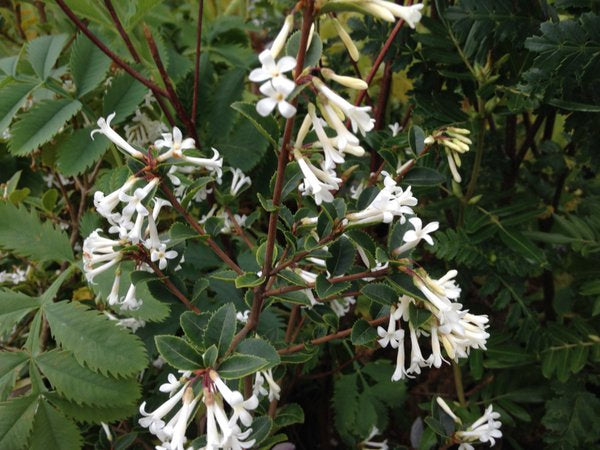
Uncommon evergreen Deutzia and we may be the only nursery in the US that carries it! This has glossy dark green leaves with a white underside. Early summer brings subtle clusters of small, star shaped white flowers with pronounced golden anthers. From a Peter Cox collection in the Cangshan.
{
Alpine.store('xUpdateVariantQuanity').updateQuantity('template--25070855422234__product-grid', '/products/leptospermum-grandiflorum-eugene-hardy');
});">
One of the hardiest of the Leptospermums which, in time and left alone, will achieve the appearance of a ruggedly handsome small tree. We say this in case you have control issues and mistake shearing for pruning in which case this will be a nice dense ball. Or square. Or blob. Evergreen, nice white flowers, deer-proof, drought tolerant. Thanks to Leptophiliac Ian Barclay for sharing this.
{
Alpine.store('xUpdateVariantQuanity').updateQuantity('template--25070855422234__product-grid', '/products/acanthus-sennii');
});">
Plant Addict Alert! If you have problems coping with uncontrollable acquisition, step away from this plant. Take a few minutes, walk through the garden and if you are still besotted, know that it is ok because this is totally cool! Crazy Ethiopian species for a hot sunny spot with red flowers late summer into fall.
{
Alpine.store('xUpdateVariantQuanity').updateQuantity('template--25070855422234__product-grid', '/products/stachys-officinalis-dwarf-white');
});">
Little gem of a Stachys we brought back from Scotland in 2013 although we hate parting with any, to be honest. Super compact with tight rich green rugose leaves and short spikes of snow white flowers of a purity and innocence so unsullied that felt compelled to ask permission prior to dividing. Perfect rock garden plant.
{
Alpine.store('xUpdateVariantQuanity').updateQuantity('template--25070855422234__product-grid', '/products/anemone-nemorosa-grandiflora');
});">
This variety of the charming European wood anemone graciously comes with slightly larger flowers reducing the need to reach for those reading glasses or get down on aching knees to appreciate their idyllic fairytale beauty. Or for those of a younger generation, your instagram photo will be in focus without the help of that $10 bootleg iphone macro lens - $10 more to put towards more anemones perhaps...
{
Alpine.store('xUpdateVariantQuanity').updateQuantity('template--25070855422234__product-grid', '/products/dianthus-superbus');
});">
A collection from China by Olsen & Floden of this well-known ornamental pink or carnation. Very nice to have a documented collection as the cultivated material can get a little diluted via unintentional hybridization in the garden. I know that is some of the most fun we have in the garden. Crazy lacy hot tomato/fuchsia-pink flowers that are scented. I'm wondering just what exactly that color is myself but know that it is very vibrant and will not be ignored.
{
Alpine.store('xUpdateVariantQuanity').updateQuantity('template--25070855422234__product-grid', '/products/anemone-nemorosa-pink-carpet');
});">
This uncommon wood anemone clone offers pale pink flowers to bring light to the dark of the shade garden. One of our Scottish acquisitions of which we have a scant few to share. Will live up to its name in time.
{
Alpine.store('xUpdateVariantQuanity').updateQuantity('template--25070855422234__product-grid', '/products/astilbe-glaberrima-yakushima');
});">
A choice and very dwarf form of the species in which everything is extremely miniaturized. This makes a tightly packed dumpling of dense, tiny leaves with 4" sprays of light pink flowers. Quite ideal for the damp rock garden or trough as this is an alpine form of Astilbe glaberrima endemic to the mountains of Yakushima in Japan. We were curious as to what constitutes the typical form of A. glaberrima and with a bit of noodling, were able to access online the herbarium sheet of this species from 1922 which is the holotype that was the basis for the original description of the species and we saw that it is indeed, a much larger plant. Plants are such great things to be curious about!
{
Alpine.store('xUpdateVariantQuanity').updateQuantity('template--25070855422234__product-grid', '/products/beschorneria-sp-queretaro');
});">
Named for the central Mexican city from which it was collected this Beschorneria forms attractively lax rosettes of strappy evergreen foliage similar to a spineless version of the closely related Agave. Slightly narrower leaves than most in the genus and only growing to about 2' wide. The real showstopper are the 5' tall hot pink flower spikes that look like Barbie-ified Godzilla asparagus dangling greenish, pendulous flowers that add grandma's lampshade fringe into the mix.