
1707 products
Sort by:
1707 products
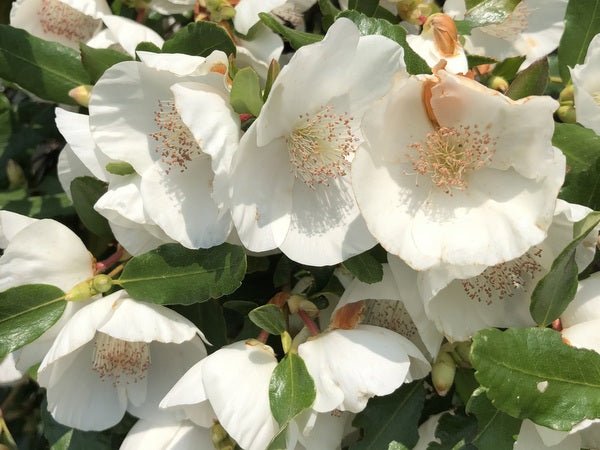
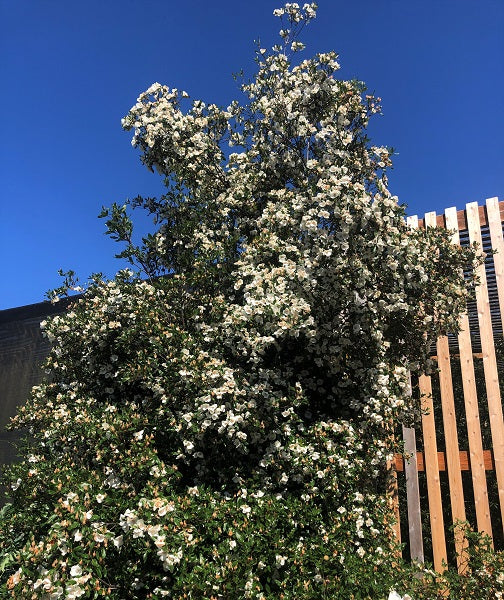
Why don't we all have a Eucryphia in our gardens? Few trees compare to this narrow evergreen - just 8' wide when 20'+ tall and when in flower it's Swoon City. Impressive 2" white flowers are borne in abandon in early summer. This likes a cool root run but we don't get hot here.
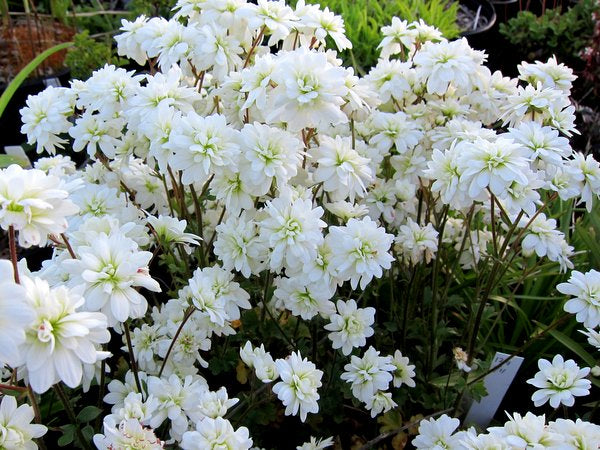
Awesome little plant with fresh winter foliage which gives way to 8"-12" tall dense stems with an improbable number of pure white double flowers. Goes summer dormant so don't panic although we still do. Cool plant native to the UK and Europe and favoring vernally wet areas.


This is very close to 'Kaleidoscope' and comes from the same Japanese nursery from which a plant was purchased and patented in this country as 'Kaleidoscope'. One has to wonder how a plant already in the trade on an international basis can be patented but that is a discussion that can run long into the night. 'Galaxy' is nearly indistinguishable from 'Kaleidoscope' and may well be a sister seedling or another selection in Japan. Lightly hairy stems hold the pale green leaves with their radially symmetrical chocolate splotches. Red flowers held beneath the foliage but who cares, really? It's all about the leaves. Moist shade and be prepared to be envied.
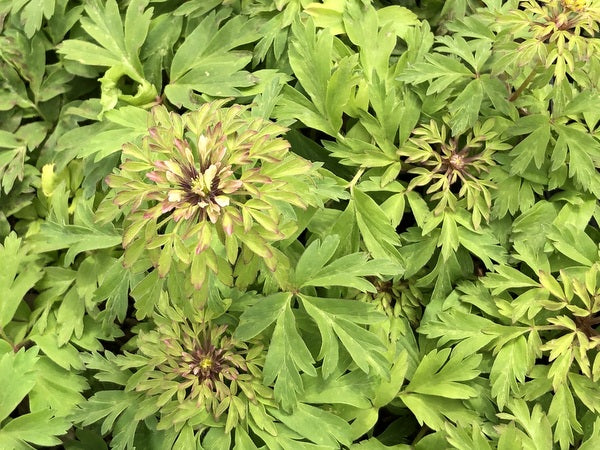
An intriguing curiosity that combines beauty with novelty. In this selection, the flower petals have become lacy green petaloid structures that are perfectly arranged to create amusing and intricate green flowers. A fun addition to the shade garden.


Pretty awesome new hybrid that came up at Suncrest Nurseries in CA thanks to some inspired work by the bees. This outshines its parents with gray-blue leaves and branched erect stems to 3' holding lots of lavender-blue flowers for many weeks. This can take drier conditions and the vermin deer don't like it.

This was one of those "Holy shit - lookit that fern!" moments when we first spotted this species growing in a moist stable and vegetated scree at the base of a soaring vertical cliff face fronting this mountainous outcrop of improbable pinnacles in Guizhou, China, The fern was perfect in scale and not intimidated in the slightest with 5'-6' wide leaves on a clumping plant 6'-8' tall. We were dismayed not to collect spore but happy to get a small plant of this species from fernologist Sue Olsen a few years back. This grows to be a pretty hefty clump but does not run. Hardy to zone 8 and mulch crown if it gets serious in winter.


Thrilling in its own rarity and exclusivity, this trillium has chosen to throw off the shackles off its repressed relatives in the greater genus Trillium in favor of treading its own path in the new monotypic genus Pseudotrillium. Petitely elegant and a believer that good things come in threes. Composed of a trio of silver-veined foliate bracts worthy of an Erythronium, centered by a pedicel-born usually white tripartite flower. Said flower, in this strain, blushes and freckles demurely amidst the lights and stardom of a world outside its endemic range in the Siskiyou mountains. The choicest blend of botany and beauty, one you'd truly be remiss in doing without.


A refined shade plant that would grace any plant connoisseur's garden yet is perfectly happy to hang with us average Joes. Leaves evoking Anemone and pendant flowers combining pastels and lavenders in an understated parasol of exquisite design and dimension. A plant that is not on the radar of a lot of gardeners so let's keep it to ourselves. It has been pleasingly tough and durable in our shade garden.
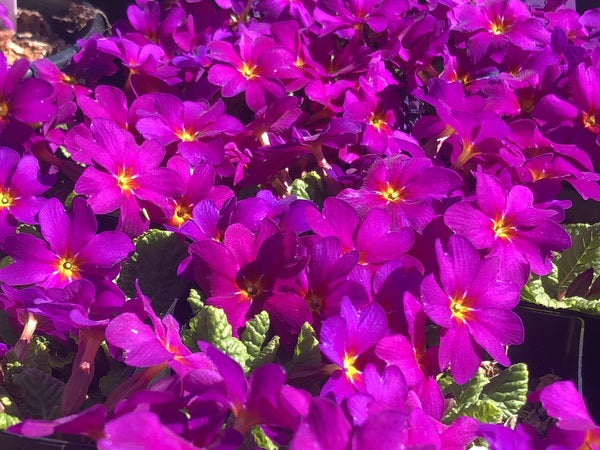
We learned our original offering of this was incorrect as noted by a Primrose Society judge who said what we had was 'Jay Jay'. Shortly thereafter, we got a letter from Deborah Lutz who said our 'Lois Lutz' was not correct and she should know as Lois was her mother and would we like the correct one? Thank you and Yes! We can now offer the correct 'Lois Lutz' with a provenance that would delight any appraiser at the Antiques Road Show. This is vigorous and floriferous with masses of short-stemmed vividly vibrant flowers that hide the foliage. And it is correctly named!
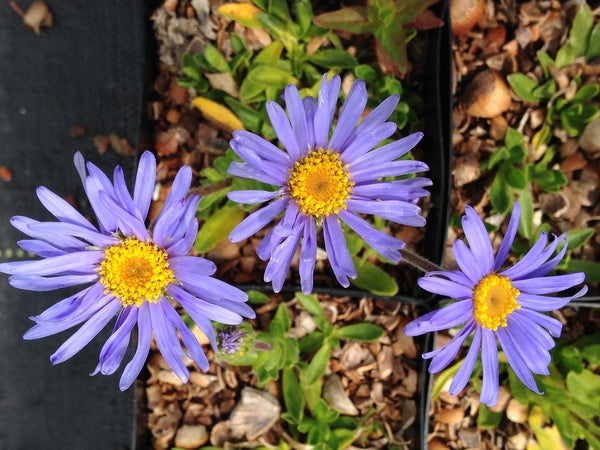
Fantastic little plant from South Africa which used to be Aster natalensis but is now in the genus Felicia. We got this from a Scottish alpine nursery in Scotland and know of a rock gardener in northern Norway who raves about it. Tight clumps with blue flowers with a yellow button in June-July. Very hardy. First introduced to the US by Far Reaches Farm.

A very good evergreen fern native to Taiwan, China and Japan which we imported from a specialist in the UK. Tidy and attractive species reaching 30" wide with fronds to 20" tall, this requires shade to part shade. And brace yourself - it is tolerant of dry shade! Happier of course with some water, Spore-grown by us.


Superb form collected in NE Yunnan at 1900 metes by perhaps the preeminent modern plant hunter, Jens Nilsen. The list of 'firsts' in Jens' history of collections is astounding. This collection is not a first but is notable for being an exceptional form. Larger in all parts than previous introductions with gold flowers in midsummer.

A superb Argentine & Chilean shrub to small tree for the mildest of gardens. There are ridiculously mild gardens around here that can grow this and it is a ceaseless lament that ours is too cold for this fantastic plant. Related to Embothrium or Chilean Fire Tree, this has intricate flowers of yellow and red but the Silk Oak-like foliage outshines the bloom. Has the Proteaceae dislike of phosphorous. Very few.
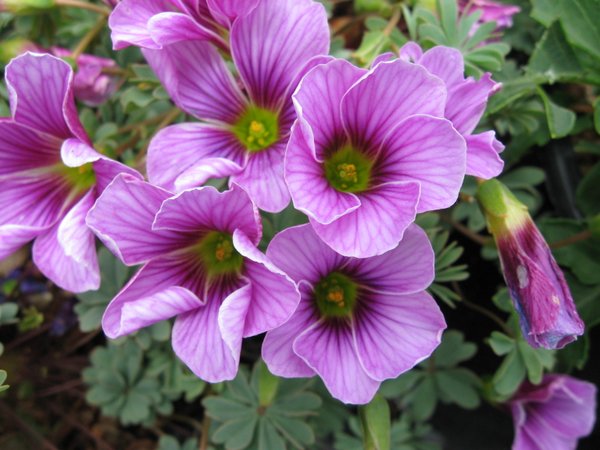
This little bulbous jewel from South America takes a back seat to no bulb. A bantamweight in size but this flowers at a weight class much higher. A perfect bun of green foliage with lots of flowers whose pale pink chases dark feathers down to the white center. Gritty and drainage. Trough or rock garden.

Grown from seed collected in the Yoro Mts in Japan, this compensates for being shorter than its cousins by being hardier to Zone 6. Personally, I subscribe to the fishing theory that it is not the size of the worm you use but how you wiggle it. Will thrive in rich moist soil.
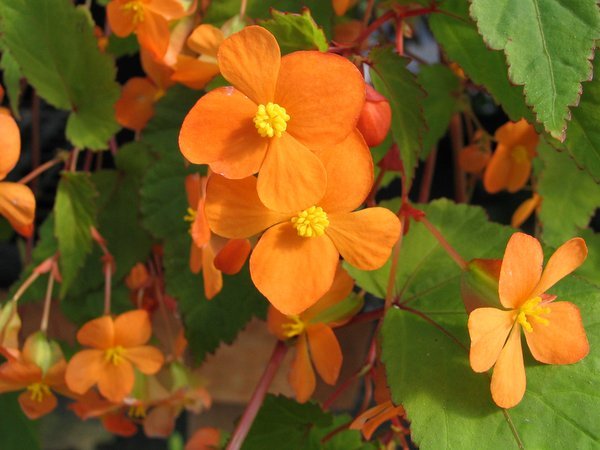
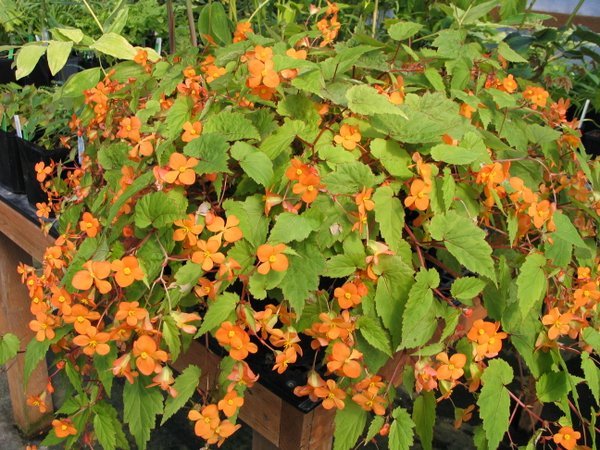
A very handsome hardy tuberous Begonia with orange flowers of which it is obviously very proud of as it is not shy about displaying them. This makes a nice clump and can be left in the garden over winter. Good in containers although I wouldn't let the pots freeze solid. Increases well.

The messiah of ferns, here to prove wrong all the doubters, turning "all ferns look the same" to ashes in their mouths, and looking darn adorable while doing it. This is a particularly good form, accentuating the best characteristics, in this case minuteness and roundness. Half inch glossy evergreen coinlike fronds packed together on spreading rhizomes forming a glorious sea of scales. Unlikely to be hardy in Washington but a great one for a terrarium setting.
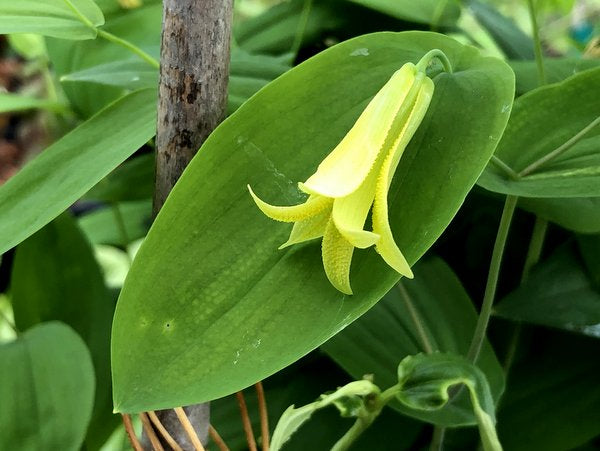
Perfoliate Bellwort. So named for the perfoliate leaves in which the stem seems to pierce the leaf and bellwort for the pendant pale yellow (in this form) to greenish flowers. This is a collection from Hamblen County Tennessee shared with us by botanist Aaron Floden. A delight in the shade garden contrasting well with dark Podophyllums and ferns.

Collected by the late Don Jacobs from an especially robust population at the eastern extension of its range in in the Arbuckle Mountains of Oklahoma. This eastern extension our native Western Stream Orchid will soon form a colony of flowering stems with small orange-yellow-brown flowers. Moist to wet rich soil - it's easy!
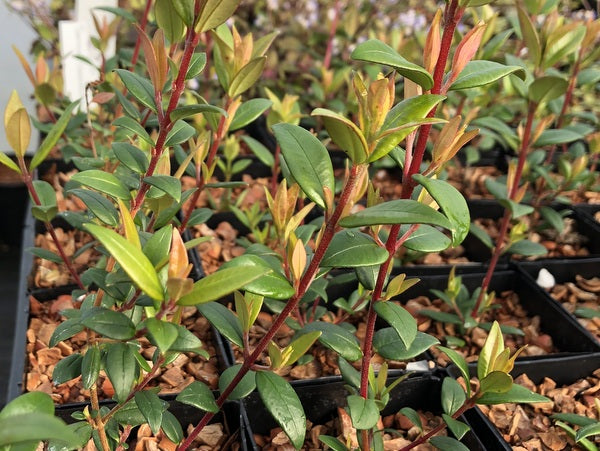
This is a hardier and somewhat smaller-leaved form of the Chilean Guava that was recently introduced by Paul Barney from Pucon, Chile and which Far Reaches Botanical Conservancy brought into the US from the UK. An excellent evergreen ornamental small shrub to 5' or 6' with scented white flowers and deep burnished red fruit in the fall which were said to be Queen Victoria's favorite fruit. We expect this to handle at least a half zone colder.