Sort by:
1758 products
1758 products
{
Alpine.store('xUpdateVariantQuanity').updateQuantity('template--25070855422234__product-grid', '/products/trillium-angustipetalum');
});">
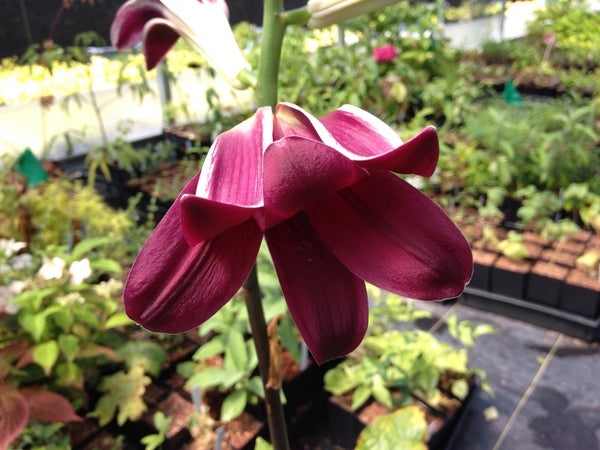
We're calling this angustipetalum as it comes true from seed and seems right to us. Others can debate but Trillium nomenclature is still in flux so until it is all settled, this is angustipetalum. Similar to T. kurabayashi, this California native is distinct in this form with large sessile tepals which have no twist. The flowers look as though a French chocolatier created them from rich dark chocolate laden with cocoa fat and infused with Cabernet Sauvignon. They have a depth and saturation of color that is to be envied and carry a smoothly quiet shine. The big foliage is well-spotted early in the season and the entire presentation defies improvement.
{
Alpine.store('xUpdateVariantQuanity').updateQuantity('template--25070855422234__product-grid', '/products/polygaloides-syn-polygala-chamaebuxus');
});">
This native of the Alps is one of the premier little shrublets in the world and one we have seen in the Swiss Alps. Slow-growing evergreen spreader with profuse pea-like flowers carrying purple-pink wings and a yellow keel reminding me somehow of candy corn when I was a kid. I guess because they don't look real. Doing fantastic in our sunny garden.
{
Alpine.store('xUpdateVariantQuanity').updateQuantity('template--25070855422234__product-grid', '/products/dianthus-barbatus-monksilver-black');
});">
Awesome Sweet William selected by John Grimshaw from seedlings at Monksilver Nursery and is notable for the foliage which turns maroon-black providing the perfect foil for the velvety maroon clustered flowers which smells of chocolate in warm weather - damn! Cut back after flowering for another go around. John personally gave us a piece from his garden so we have a fond attachment. A Far Reaches Botanical Conservancy Offering. Proceeds from this offering go to support the mission of Far Reaches Botanical Conservancy.
{
Alpine.store('xUpdateVariantQuanity').updateQuantity('template--25070855422234__product-grid', '/products/disporum-smilacinum-moonshine');
});">
Gorgeous little gem out of Japan with a rich yellow center to the leaf surrounded by green with some nice feathering details. This will increase quickly but not aggressively and adds a nice splash of color in the shade garden. The white flowers go well with the whole package.
{
Alpine.store('xUpdateVariantQuanity').updateQuantity('template--25070855422234__product-grid', '/products/bistorta-amplexicaulis-golden-arrow-syn-persicaria');
});">
Fun newish selection of the recently moved to Bistorta from Persicaria with softly golden foliage which is a great backdrop for the 24"-36" flower stems bearing spikes of flowers the same color as Dorothy's ruby slippers. Easy, hardy, bright shade and gangbusters in rich moist soil.
{
Alpine.store('xUpdateVariantQuanity').updateQuantity('template--25070855422234__product-grid', '/products/pleione-formosana');
});">
This is a surprisingly hardy terrestrial Orchid that is quite easy to grow given a couple of rules. Loose crumbly organic/gritty well-drained soil and fairly dry in the winter. Oh yeah, real cold is not the best either. We have friends who grow these easily in nearby Port Ludlow in rotting logs, stumps and deep moss on rocks with a tarp thrown over in winter to shed rain but that is in a mild maritime garden. Traditionally this is grown in containers and overwintered in a cool sunroom or coldframe. Were making this sound harder than it is and we don't mean to as it is worth the minimal fuss. Pink and white Cattleya-type flowers on such a little plant. This increases freely by small bulblets which is how we have come to offer these to you.
{
Alpine.store('xUpdateVariantQuanity').updateQuantity('template--25070855422234__product-grid', '/products/alstroemeria-isabellana');
});">
This is a surprisingly hardy Brazilian species. Good cut flower with long clean stems. We've had this growing happily outside for years and going through single digits in winter with mulch. We got this from Maggie at Western Hills some years ago and finally can offer this goody. She said this was a hybrid by noted California breeder Fred Meyer between the vining Bomarea and the non-vining Alstroemeria, and we have sold it in the past as Alstroemeria x Bomarea 'Fred Meyer' and more recently as Bomarea "Fred Meyer". The great thing about putting a plant on the internet is that all sorts of smart people read about it and very nicely suggest the correct name.
{
Alpine.store('xUpdateVariantQuanity').updateQuantity('template--25070855422234__product-grid', '/products/woodwardia-spinulosa');
});">
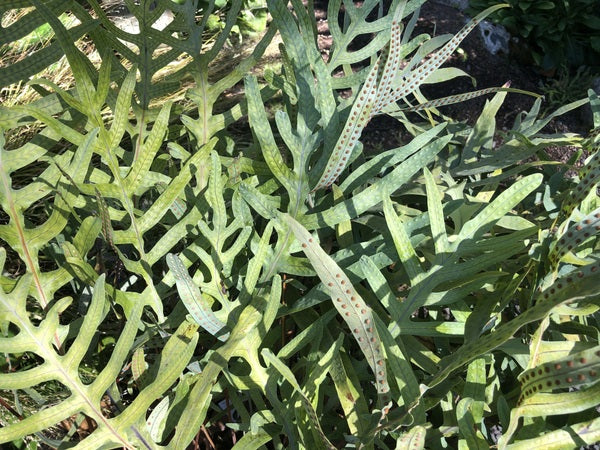
Sporelings of the Mexican Chain Fern originally introduced from the mountains near Oaxaca. A rarely seen beautiful species surviving many years in a Seattle garden. The same garden has a glorious container of this which overwinters frost-free in the sunroom where it not only survives but thrives. Thanks to Jeanette Kunnen for sharing. These are young plants but if we wait, they will all be sold here at the nursery and they need to get out into broader distribution. Just a few.
{
Alpine.store('xUpdateVariantQuanity').updateQuantity('template--25070855422234__product-grid', '/products/pleione-formosana-oriental-splendour');
});">
A tried and true selection that really puts out with classic orchid flowers with rich pink petals backing a white cup that is nicely fringed on the lip with some light spotting on the interior and touched in yellow in the throat. An amalgamation of attributes in one flower. Good increaser needing good drainage like a rotting log and overwinters here in Puget Sound.
{
Alpine.store('xUpdateVariantQuanity').updateQuantity('template--25070855422234__product-grid', '/products/fuchsia-debrons-black-cherry');
});">
A fine hardy hybrid from Deb and Ron Monnier whose nursery, Monnier's Country Gardens in Woodburn, OR closed in 2009. This knockout will keep the memory alive for years to come. Maroon tube and sepals embrace a corolla that is black velvet eggplant in color with an optical texture that is almost 3D. To 3' and hardy in the PNW. Mulch in winter.
{
Alpine.store('xUpdateVariantQuanity').updateQuantity('template--25070855422234__product-grid', '/products/anemone-nemorosa-ginny');
});">
Soft blue flowers on this Wood Anemone play nicely with the lightly bronzed emerging new leaves. Our plant came from David Mason and Susie Grimm at Hedgerows Nursery who picked this up in the UK. We always like tracing the lineage of acquisition as it helps fill in those empty hours you have so many of when you have a nursery...
{
Alpine.store('xUpdateVariantQuanity').updateQuantity('template--25070855422234__product-grid', '/products/sinopanax-formosanus');
});">
Incredibly exciting rare ornamental Araliad from Taiwan where it can reach 30 feet tall. Don't be scared by that as it will likely not attain those dimensions in your garden at least while you are the gardener! Broadly orbicular leaves with 3-5 shallow lobes on stout branches makes this a riveting centerpiece. These are likely the first seed-grown plants ever offered in North America and best in mild gardens zone 8 and above. This grows naturally with Schefflera taiwaniana and Fatsia polycarpa and we observed this in Taiwan growing in light to moderate shade but here in the maritime cool sun Northwest, this will handle full sun. Protect these youngsters the first winter or two - it will be so worth it!
{
Alpine.store('xUpdateVariantQuanity').updateQuantity('template--25070855422234__product-grid', '/products/dierama-hybrid-ex-tomato-red');
});">
Seedlings from a floriferous red-flowered selection from Russell Graham. Russell had one of the most beloved specialty nurseries in the Northwest and to say he knows a good plant is stating the obvious. The parent plant is a short, dense clumper with small red flowers that rule by their majority. This has pride of place in our garden, widely separated from our other Dierama, so hope is for similarity on these children.
{
Alpine.store('xUpdateVariantQuanity').updateQuantity('template--25070855422234__product-grid', '/products/asplenium-trichomanes');
});">
Maidenhair Spleenwort. We love common names. We must dig out our 15th century Herbal and read up on how to properly decoct this sweet little fern for afflicting humors of the spleen. Or we can just grow it in a gritty well-drained shaded rock garden and enjoy its evergreen delicate appearance which belies its rugged constitution. This little fern grows throughout the northern part of the northern hemisphere and just has a small foothold in our North Cascades. One of our favorite sights of this fern was when we did the Coast to Coast walk in northern England in the epic rainy summer of 2012 and we walked close to 200 miles through the Lakes District and Yorkshire Dales and Moors. We saw this growing everywhere naturalized on old stone walls, stone bridges and stone buildings. Very attractive and a clue to its drainage preferences.
{
Alpine.store('xUpdateVariantQuanity').updateQuantity('template--25070855422234__product-grid', '/products/anemone-nemorosa-vestal');
});">
This little European Woods Anemone is aptly named as an established patch of this in full flower is indeed purity and chastity personified although I have enough miles on me that experiences with either purity or chastity have been relegated to the dustbin of uncertain memory. The white flowers with a central button of doubleness makes this selection the most oft requested Anemone nemorosa in our shade garden. Carol Klein once described this as "the bell of the ball" when comparing it to other Anemone nemorosa cultivars and we find nothing in that statement to dispute.
{
Alpine.store('xUpdateVariantQuanity').updateQuantity('template--25070855422234__product-grid', '/products/trillium-sulcatum');
});">
A very fine Trillium from west of the Appalachian Mts, this has pedicellate (on a stem) red flowers. This is an easy one and will increase by both offsets and by seeding. It is a good one to grow with other species like erectum as it enjoys casual sex, producing interesting colors in seedlings years hence.
{
Alpine.store('xUpdateVariantQuanity').updateQuantity('template--25070855422234__product-grid', '/products/iris-scramble');
});">
We are pleased to be the first to introduce this excellent Sibirica Iris to North America. We were visiting John Grimshaw, plantsman extraordinaire and Director of the Yorkshire Arboretum, and walking about his home garden when he asked if we would like a bit of an Iris he had named with lovely scrambled egg flowers of yellow and cream. We said yes, of course because while we might be comparatively brutish colonists, we ain't without a certain native wit. Very floriferous on a shorter plant with flowers well-displayed. When Cotswold Garden Plants first introduced this in the UK in 2011, John mused on his blog about how nice it would be to receive a voluntary royalty which he could use to help fund the educational needs of a Maasai child he is sponsoring. School doesn't get less expensive as you get older so we are going to give $5 from each plant sold back to John.
{
Alpine.store('xUpdateVariantQuanity').updateQuantity('template--25070855422234__product-grid', '/products/anemone-nemorosa-blue-eyes');
});">
Choice selection of the Wood Anemone with flowers densely packed with numerous small white petals which appear all white at first but as the flowers mature or awaken, a central blue eye is revealed which is quite delightful. I go through a similar slow process every morning and tell myself that it is the same delightful end result.
{
Alpine.store('xUpdateVariantQuanity').updateQuantity('template--25070855422234__product-grid', '/products/agapetes-rubrobracteata-nv-101');
});">
This blueberry relative was an exciting find from a small mostly deforested limestone ridge in Vietnam. It was a small compact 12"-18" shrub growing both in the rocks and epiphytically with orchids on the few trees left. Evergreen with boss white tubular flowers and a red berry sheltered by 3 large red bracts. Edible. This will get larger with longer stems when growing in cushy cultivation.
{
Alpine.store('xUpdateVariantQuanity').updateQuantity('template--25070855422234__product-grid', '/products/allium-beesianum');
});">
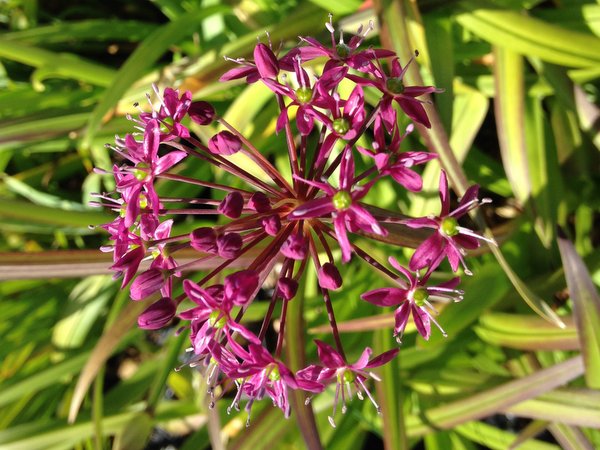
This is the coveted true species unlike the usual Allium sikkimense which is what you get from most seed exchanges. Ours came from Ian Christie in Scotland and with Ian's name as provenance, there is little doubt. Besides we flowered it and it is correct! Thin grassy leaves in dense tussocks with small headed blue flowers in late summer. A Chinese species that is not one of the bulbous summer dormant types but appreciates moisture during the summer and is quite easy despite its relative scarcity.