
Sort by:
9 products
9 products
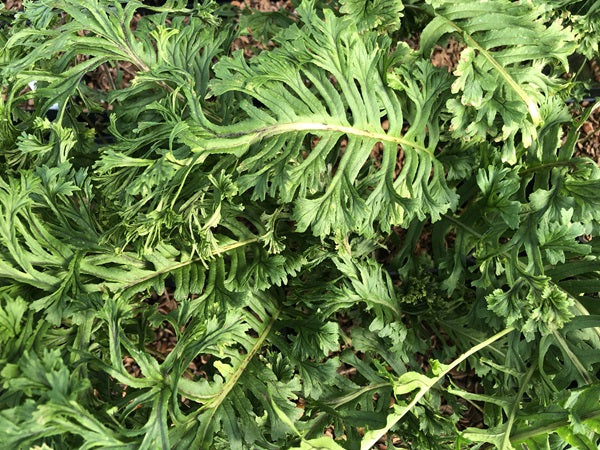
A plant of many names, 'Grandiceps', 'Grandiceps Group', 'Diane' here we have opted for crediting the original selector of this strongly crested form of our native licorice fern, Lawrence Crocker cofounder of Siskiyou Rare Plant Nursery and resident fern man. The edges and end of the fronds are highly curled and rippling ready to lend a flamboyant touch of crashing evergreen waves to the boulder or log of your choosing.

This is the Award of Garden Merit form of the species which has a superior presentation in its fronds which are blessed with a long terminal pinnae. And really, who doesn't want a long terminal pinnae? The typical species is a familiar sight growing on the trunks of our native Bigleaf Maples here in western Washington but this form is rare.


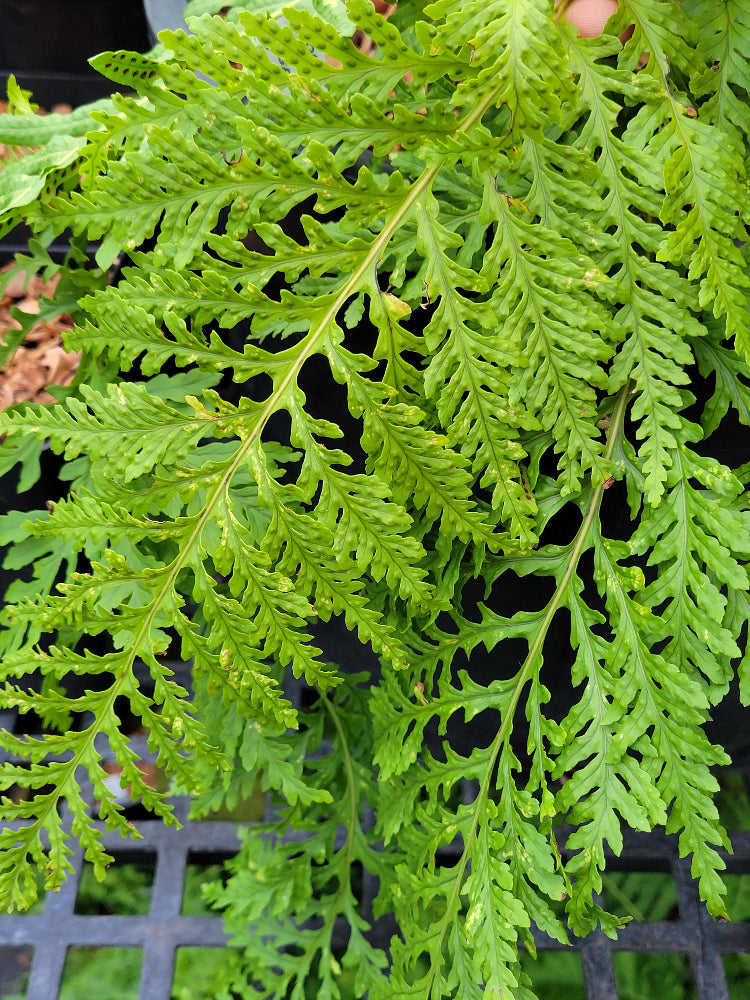
There is some debate over the hybridity of this cultivar (or cultivar group potentially) and we are pulled in differing directions by the prevalence of hybrid suspicions normally winning out and the relative rarity of true hybridization in most ferns. Regardless of whether it is a mutt or a purebred it is a fine variation on an already classic theme. Finely cut fronds with such regularity in shape that one could easily be forgiven for assuming it to be an unfamiliar species. Cultivar ferns can be a bit marmite but I think even the purists would find this acceptable if not outright agreeable. (It is entirely possible if not likely that the correct name for this plant is 'Cornubiense Foliosum', see Martin Rickard's book on Polypodium for a full idea of the complexities)


Another of the maybe mantoniaes, which is to say the hybridity is up for debate, as is the proper cultivar name (Bifido-multifidium and Bifido-cristatum are also in use), what isn’t up for debate is the really cool cresting on this Polypody with dichotomous branching at the frond apex as well as variably expressed splitting at the end of each pinnae creating a look like a row of bones. Makes me think of pirates every time I see it, and who couldn’t use more time out of their life thinking about pirates. It’s the pirate polypod life for me yarhar.

The oldest Polypodium cultivar, indeed the oldest clonal herbaceous plant in cultivation. Originating from a 1668 (That's before Carl Linnaeus and binomial nomenclature for reference) collection by Richard Kayse of a uniquely lacerated Polypodium cambricum on a high rocky cliff where it still grows. Beyond the unbelievably cool opportunity to own such a cool part of horticultural history, the fern itself is gorgeous with well cut bipinnatifid fronds, its easy to see why what began as one plant in one spot has now made its presence known across continents and centuries.
*Thanks to Neil Frame (@fern.topia) for the photo!