
123 products
Sort by:
123 products

Wide petals of bright fuchsia pink tempered by a pale white eye simply cannot fail to please. Unless of course you don't do pink, but this could be that gateway plant to that wanton world where pink plays such a big role.
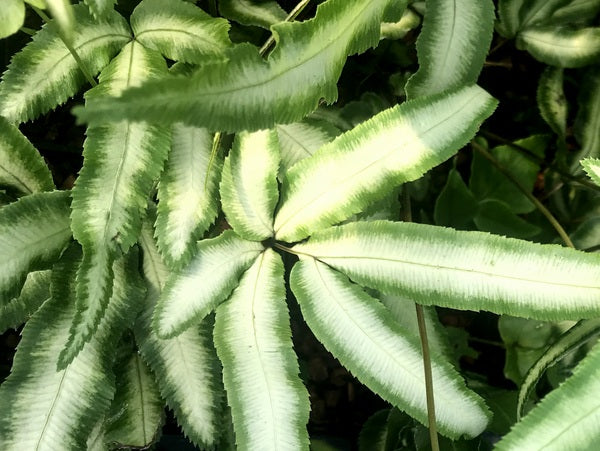
We're looking at a houseplant here for everyone except those with that San Francisco microclimate and if you are lucky enough to have such a thing, just for the record - we pretty much hate you. But we'll set aside the envy and sell you one of these astoundingly lovely ferns with long white ghostly fingered fronds.
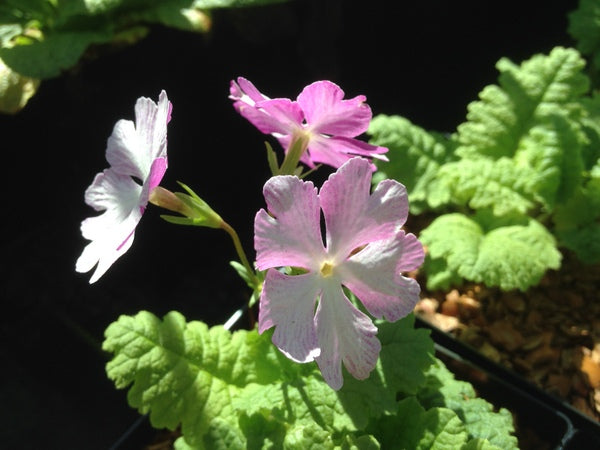
Large flowers with appropriate heart-shaped petals that are light pink on the backside and pale white-pink on the front. This is a comfortable plant with no surprises and you will have a sense of easy familiarity each spring when this flowers. No drama, no challenging colors, just a solid beauty of the sort that if it could smooch, it would.
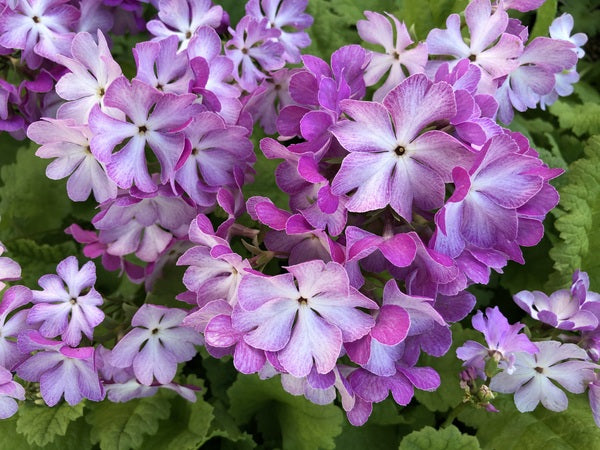
Star light star bright, First primrose I see tonight, I wish I may, I wish I might, Have this primrose I wish tonight. Nothing subliminal here. The five petals are shaped like a heart and are love-pink on the reverse while the face of the flower is white feathering to pink on the edges. Good, big flowers in quantity on each stem puts on a show.
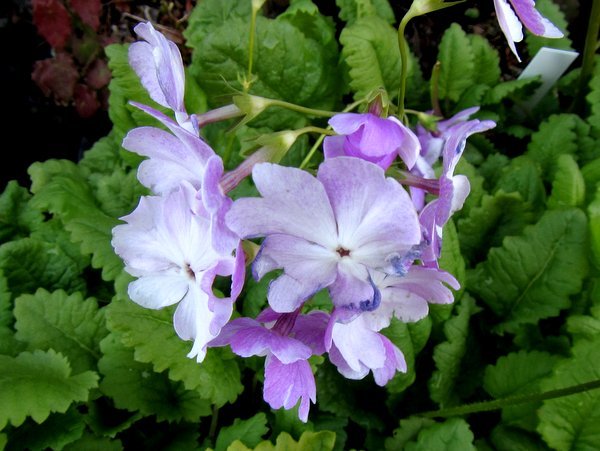
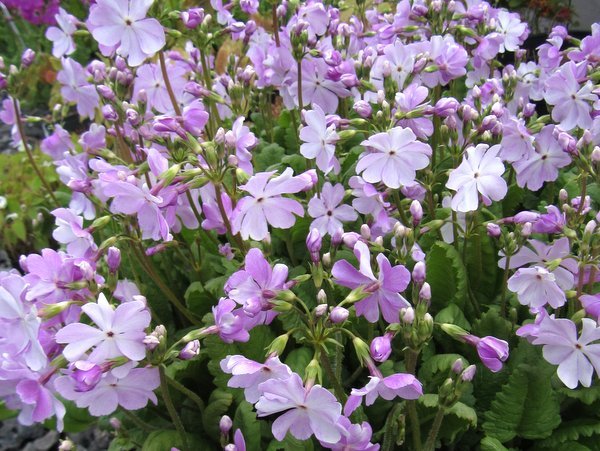
Robust Japanese selection of this revered Primrose species with sumptuous pale-faced flowers breezed with the lightest smoke of lavender-pink. The backsides of the flowers are more intensely colored borrowing perhaps on the evolutionary success of flamboyant backsides across a wide range of species. Whenever we watch Nature on PBS and there are male Mandrills in full display, Kelly feels cheated, inadequate and frustrated being a monochromatic species until Sue says "Honey, it was your inner Mandrill that I fell in love with". Hardy zone 4 to 8b.
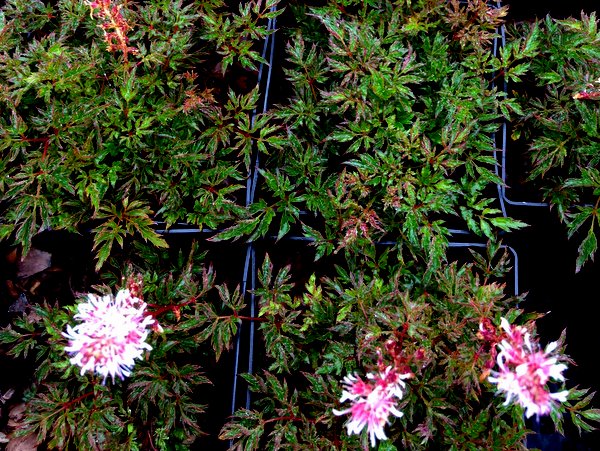
A choice and very dwarf form of the species in which everything is extremely miniaturized. This makes a tightly packed dumpling of dense, tiny leaves with 4" sprays of light pink flowers. Quite ideal for the damp rock garden or trough as this is an alpine form of Astilbe glaberrima endemic to the mountains of Yakushima in Japan. We were curious as to what constitutes the typical form of A. glaberrima and with a bit of noodling, were able to access online the herbarium sheet of this species from 1922 which is the holotype that was the basis for the original description of the species and we saw that it is indeed, a much larger plant. Plants are such great things to be curious about!
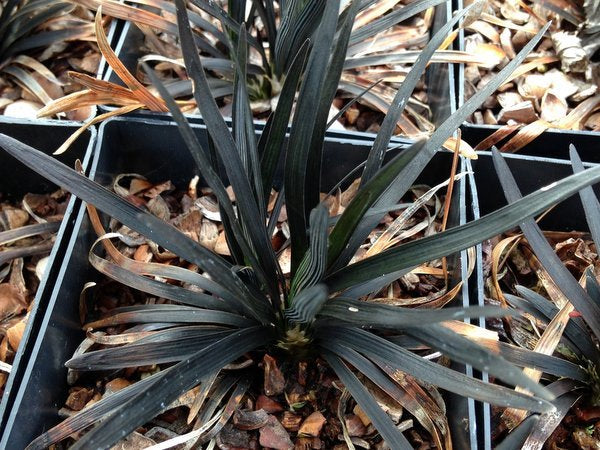
A new dwarf form of this popular Black Mondo Grass. We have not yet grown these to maturity but have had them them for some time now and can say they are very slow so we do believe they are going to be smaller than typical. Perfect in troughs, bonsai containers, edging along stones, model railway gardens, etc etc.
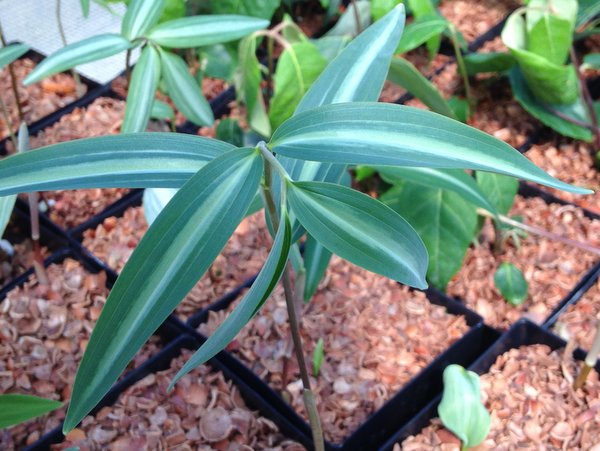
AKA 'Silver Stripe', 'Silver Lining'. This Japanese selection is totally Japanese. Presented in exquisite understatement are the elements of design, function and harmony plus all of those other mysterious criteria which our video-deadened occidental minds cannot begin to grasp but can still appreciate the inclusion. Silver stripes on the leaves puts this at another level.
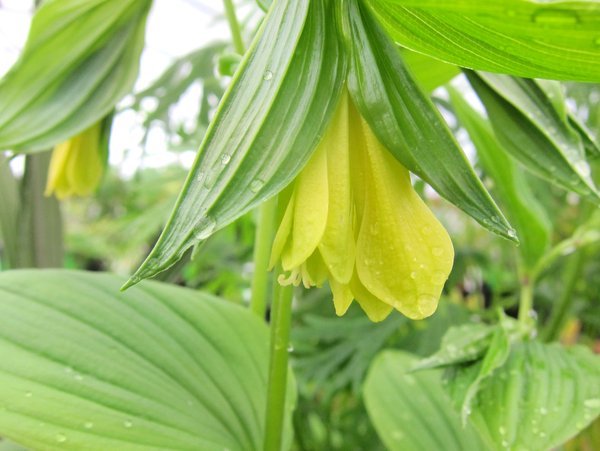
Pendant clusters of yellow bells makes this a refined and classy plant for the shade garden. Makes nice clumps and effortlessly combines with so many shade-loving plants. This Korean and Japanese native is very hardy and a good doer increasingly pleasantly fast. Some Disporum are runners but this stays obediently where you plant it. It is one of the few yellow-flowered species in the genus and for us has proven to be one of the easiest in the garden.

Primo little collector's Iris with charming white flowers - smaller than the more frequently encountered 'Alba' - over dense mounds of fine-bladed foliage. It's graceful appearance hides a tough core and an implacable perseverance that has kept it in our collection for over two decades. A Japanese deciduous species preferring light shade or part sun. This is a good one.
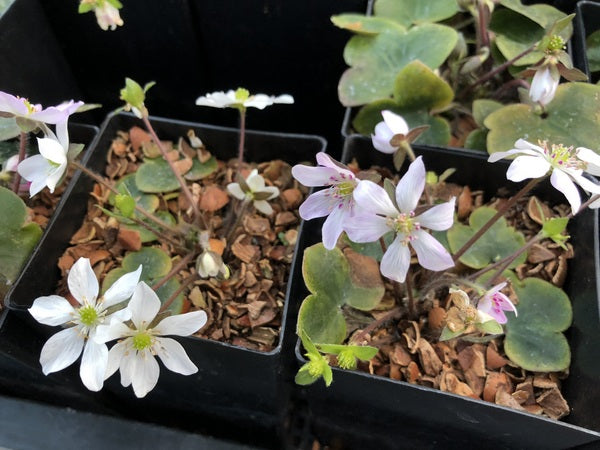
These Japanese versions of the European nobilis are ones we have grown from seed and have been hoarding for a few years but since there is no room left in the Hepatica house, we must send a few of our kids out into the world. Each plant is different from white to pale pink and we get to pick. These are larger, established plants - not fresh from Japan. Also note that these are not as hardy as the European Hepatica but good for sure in zones 8-9a.
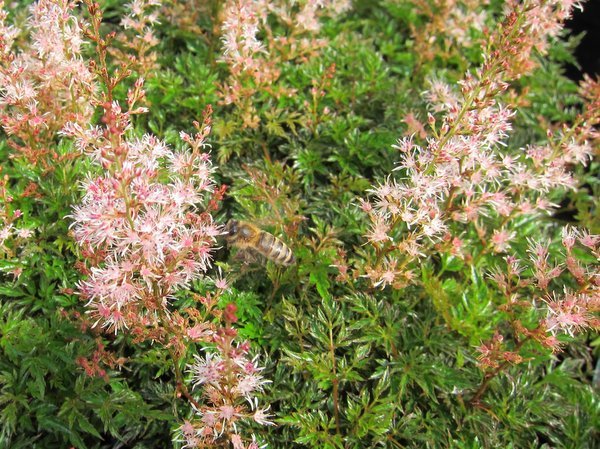
A fine little dwarf Astilbe native to Japan and one that has proved to be very enduring as well as endearing. This is one Sue used to grow at her old place in northern Vermont and charmed her to the point that it made the cut and followed her out west lo those many years ago. Low mounds of dense and finely cut foliage with short spikes of soft pink fluff in early summer. We grow this out in the full sun with ample water.
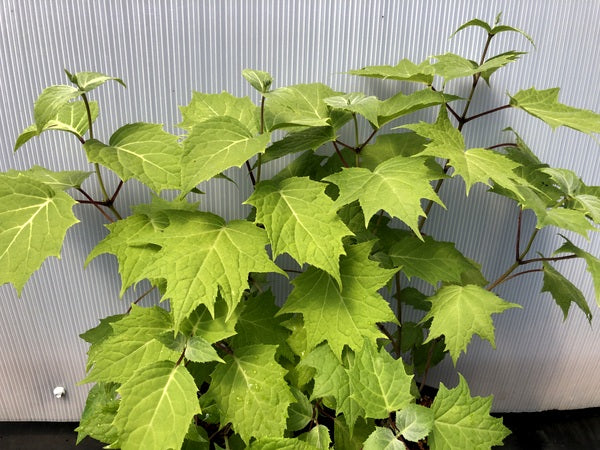
A collection from Japan by Quarry Hill Botanic Garden of this indispensable summer-flowering, beefy perennial. This is a rare opportunity to obtain this species with wild-origin provenance. Yellow flowers of substance like small shuttlecocks are held well above the leaves on upright stems in midsummer. Still remember being awestruck by a superb specimen at the Minnesota Landscape Arboretum years ago.
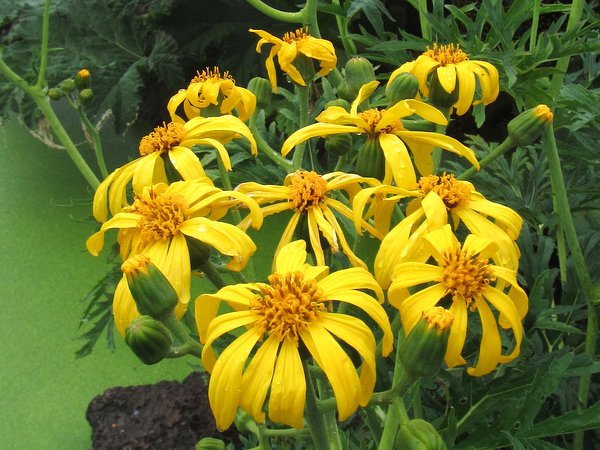
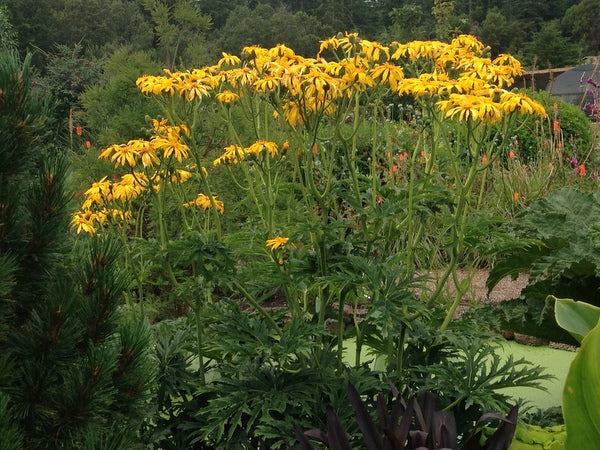
A collection from Kyushu, Japan by the Wynn-Jones of Crug Farm. Deeply incised palmate leaves with long finger-like lobes are visually arresting in themselves while the early to mid summer large yellow daisy flowers just piles on the eye candy. Structure, beauty, form and function - only the most bitter cabbage would fault this for not being edible!
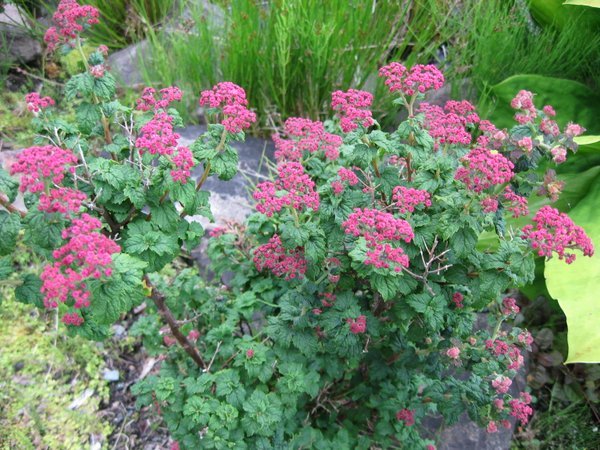
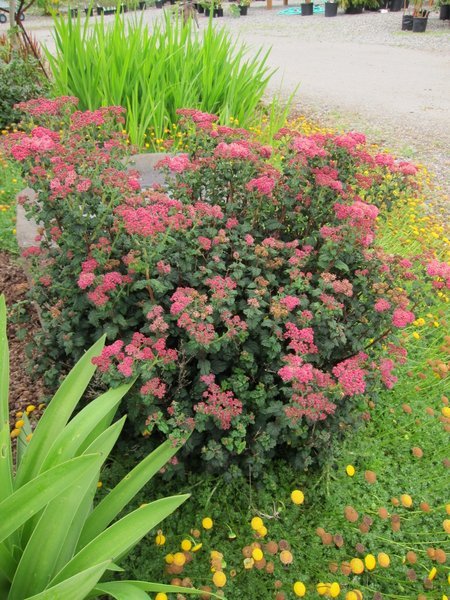
This is one of our favorite little dwarf shrubs that totally rocks the rock garden. Especially in the rock garden. Slow, slow growth, densely twiggy, small heavily textured leaves and clusters of deep pink flowers in mid summer makes this a great choice for containers or that small special place. A 15 year old plant might be 16" tall but probably shorter.

The perfection of presence so inherent to Japan oozes from the stomata of this Nipponese woodlander. Pinkish new growth with lavender tones to the rounded foliage is meant to pair with the simple light lavender flowers. Allied to our eastern Jeffersonia diphylla like a Lexus SUV to a F150 pickup, a comparison not meant to disparage or annoy champions of the lovely J. diphylla. These are from our own divisions.

Bold white flowers with broadly rounded petals on this Japanese selection of the species. In Japan in the wild, this primrose is found on grassy edges and mixed with other plants which provide a dappled light. It is also more adapted than most Primula to a bit of summer dry if need be. There is a plant society in Japan devoted solely to this one species and all of its cultivars - truly a descent into a maelstrom to contemplate the infinite variety and permutations that they have with this one Primula species. Love it when something gets taken to the limit.
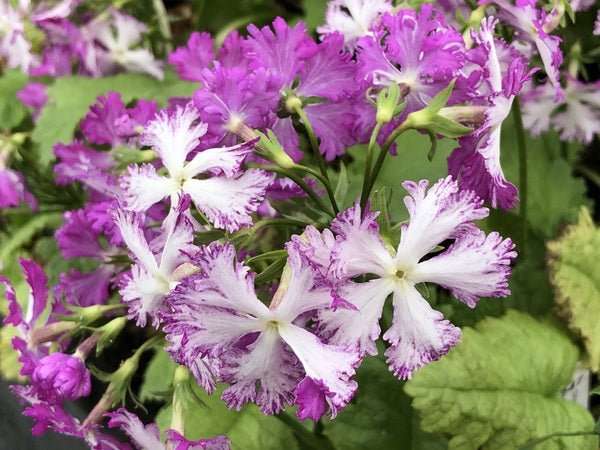
This Lady has a lot to offer and the image of a Madam in a high-end Victorian brothel keeps intruding when attempting to describe those offerings. Courting disaster on the precipice of good taste, exuding confidence without apology, this selection invites anthropomorphism like few others. The rich pink of passion on the reverse, a chaste white on the front with pink-tinged petal margins awakening.
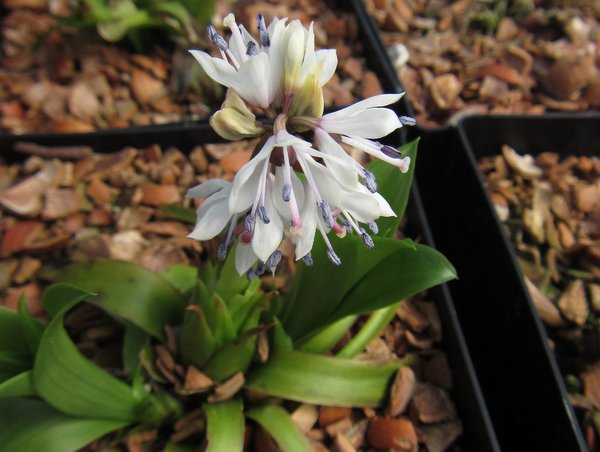
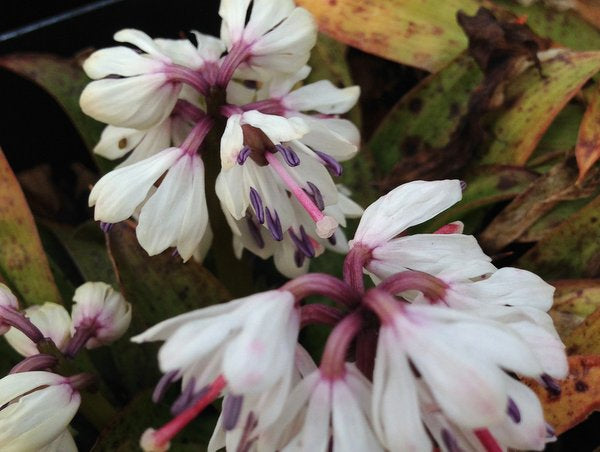
A Wynn-Jones collection from the Aso area of Honshu in Japan where there is a range of color variation in the species. We are wild about this genus and it combines beauty, rarity and growability in its appeal. Evergreen rosettes of flattened broadly lance-shaped leaves with spring whitish flowers accented by purple stamens. Zone 6.
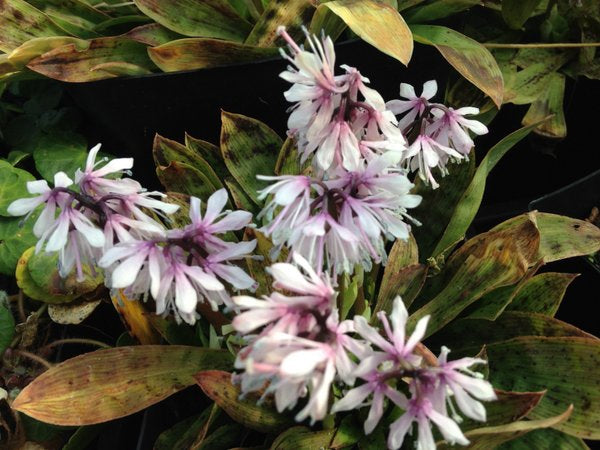
Collected by the Wynn-Jones of Crug Farm from, as they describe it, "the moist well-drained forests on the steep sides of the Aso Crater on Kyushu, Japan." The tip of the flowering stem or scape is dark purple which then holds lavender-pink flowers with dark ovaries. For moist soil in light shade to part shade.