Sort by:
16 products
16 products
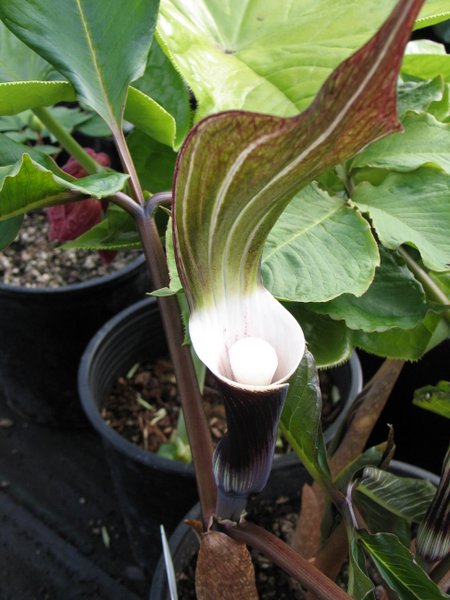
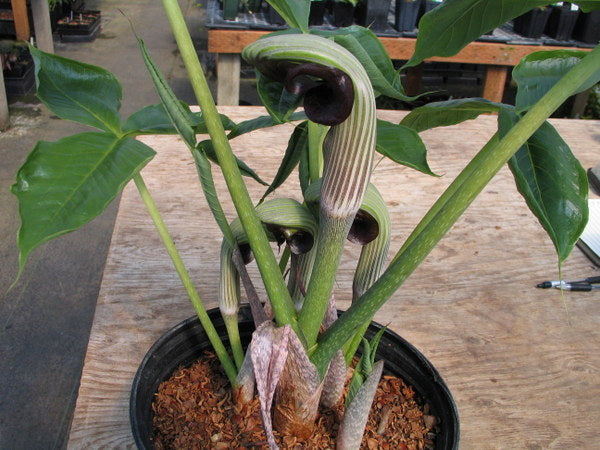
This is a heralded Japanese Jack in the Pulpit whose species name sikokianum I believe translates into English as 'divine whup-ass' because this truly and gloriously kicks some tail in the garden. A mysterious yet provocative regal beauty. A classic for the shade garden. Small plants grown from seed shared by our pal Jacques, thanks JT!
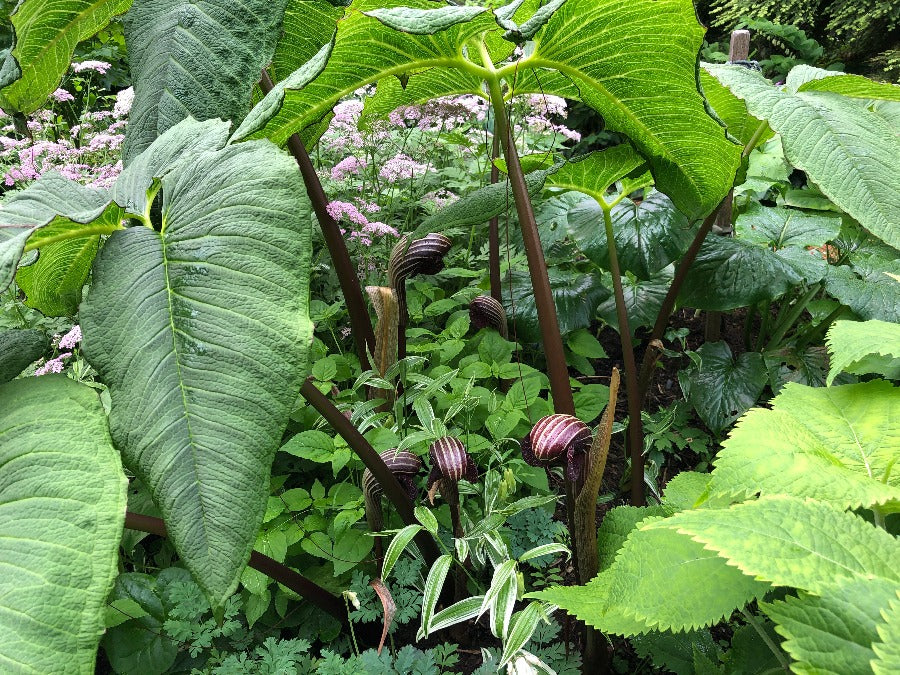
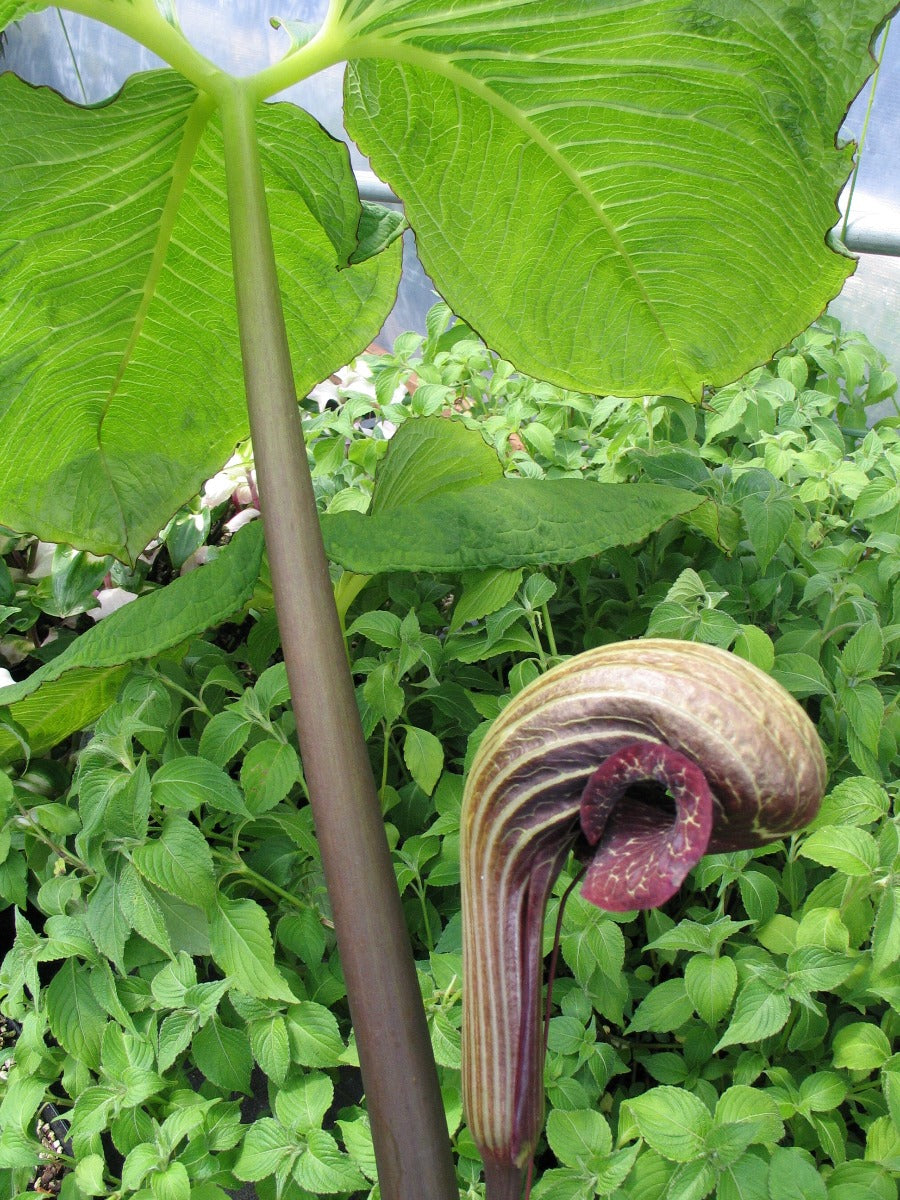
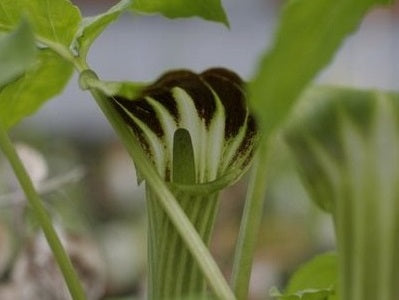
As they begin to emerge and unfurl, the huge trifoliate leaves catch the 30"-40" threadlike spadix appendage dangling from the white-striped, maroon-purple hooded flowers and carry it aloft in a decidedly wanton display. The horizontal rhizomes will increase over time leading to several flowering stems, becoming something about which one has no recourse but to brag shamelessly. This Jack in the Pulpit has proven itself over many years to be a stellar performer in our shade garden. There are some Jacks that languish or don't persist but this simply gets bigger and better every year. The rhizomes can push up near the surface so check in the Fall and mulch if necessary - most prudent in the event of severe winter cold. Seed-grown, these are still small tubers but of all the things you have waited for in your life, this surely must rate among the most worthy.
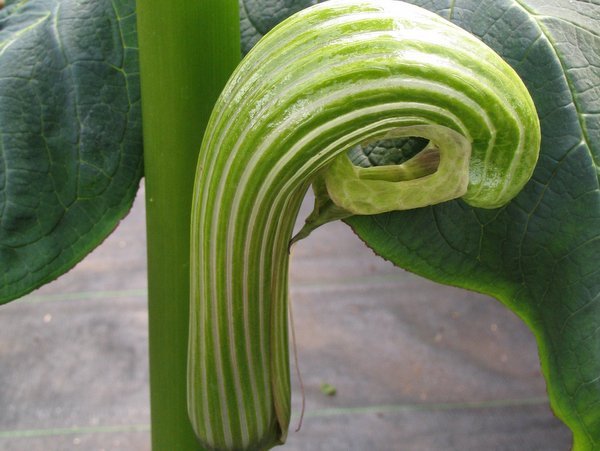
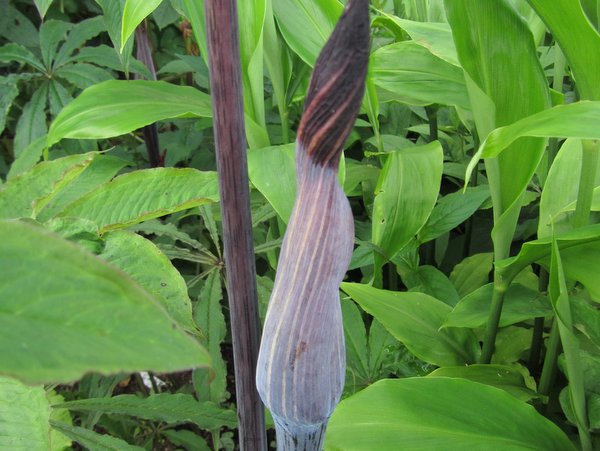
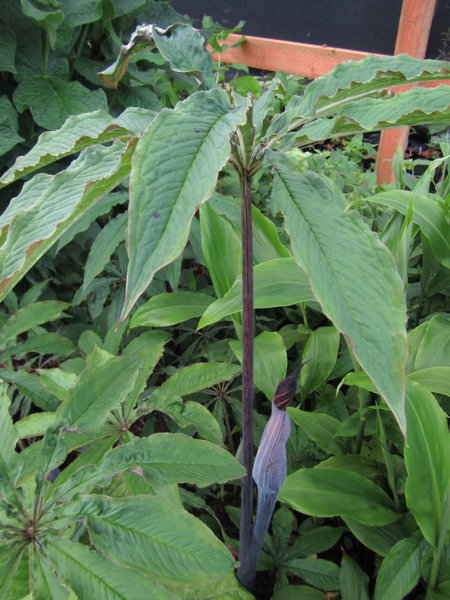
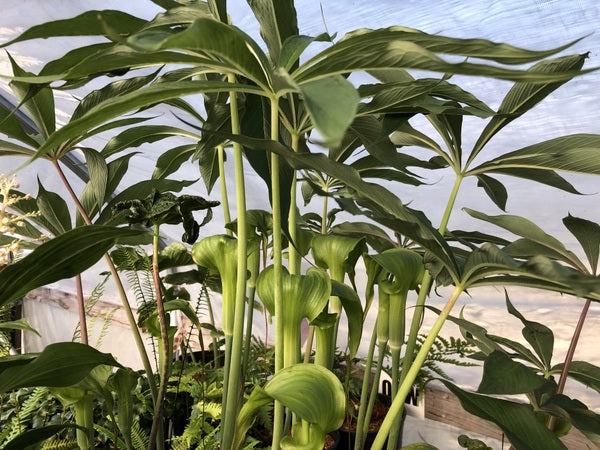
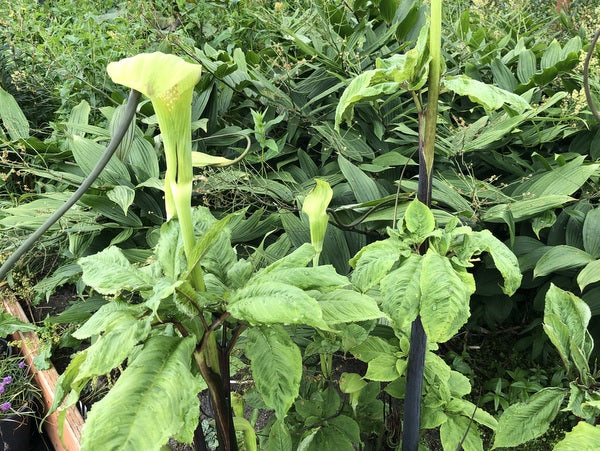
Helmeted Cobra Lily or Jack in the Pulpit. Young bulbs of this rare species from the Indian Himalayan foothills. Tall stems to 4'+ carry big 3-parted leaves and strongly cowled or helmeted flowers varying from green with white stripes to purplish. Choice plant and one to brag about. These are and seed-grown from our plants in our shade garden which have persisted and done well for 7 years now.


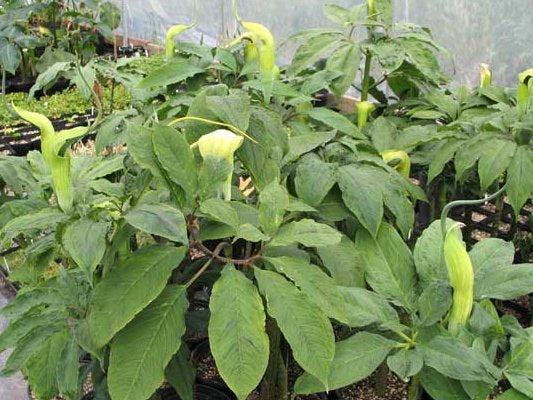

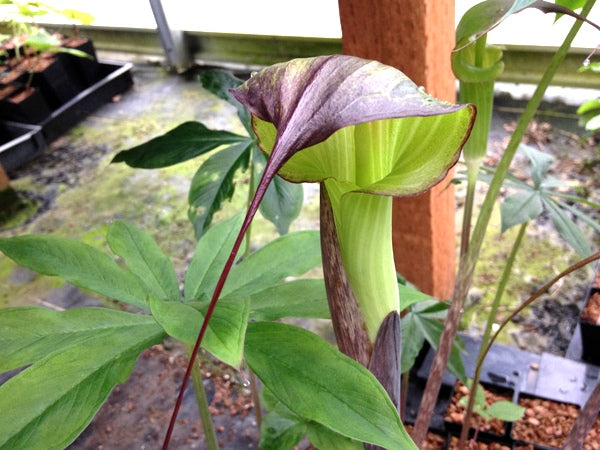
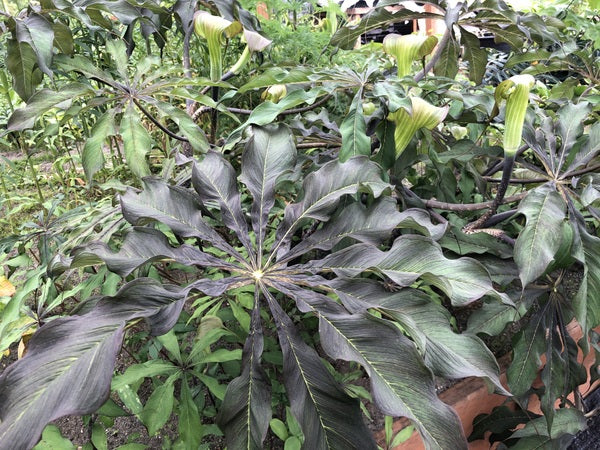
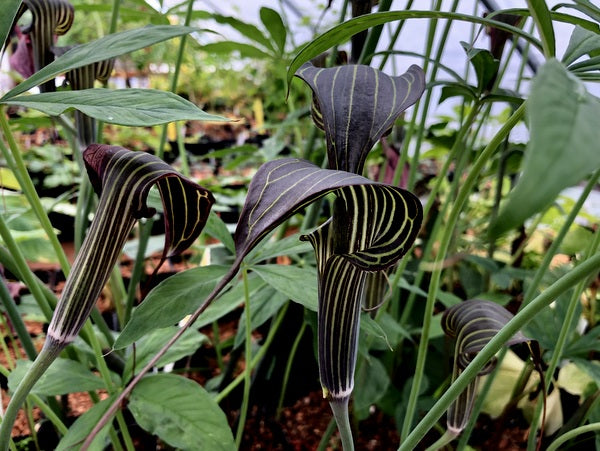

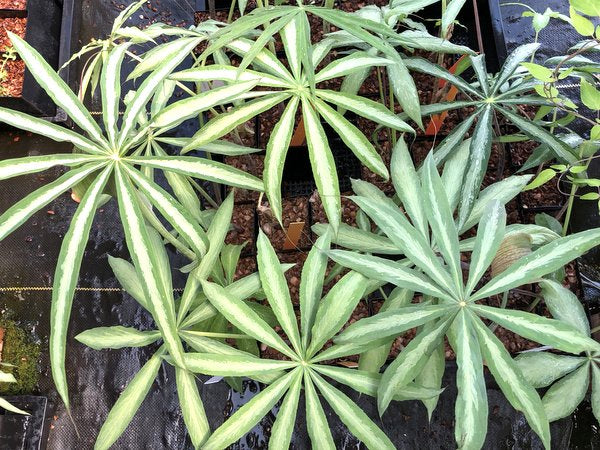
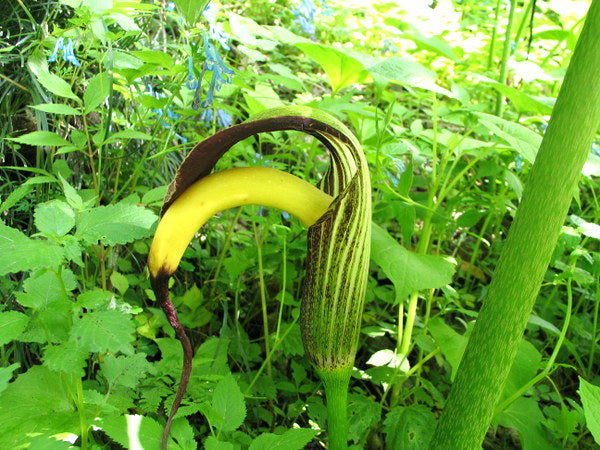
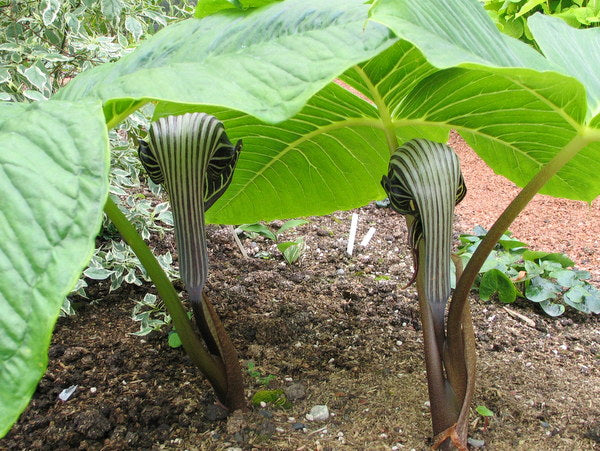
Elegant, graceful and beautiful form of the species with thin radially arranged leaflets and lovely narrow-waisted dark purple flowers accented by white stripes held fully visible below. The spathe limb or hood of the flower tapers to a long thread. This former variety lacks hairs on the spathe tube rim or lip which would need magnification to see anyway. Increases by short runners terminating in a bulb and will form a colony in time. We saw this just above Kangding in China in 2006 including a fantastic black-leafed colony of a single clone which resides not in our garden but in our memories as a longing unfulfilled.