Sort by:
1721 products
1721 products




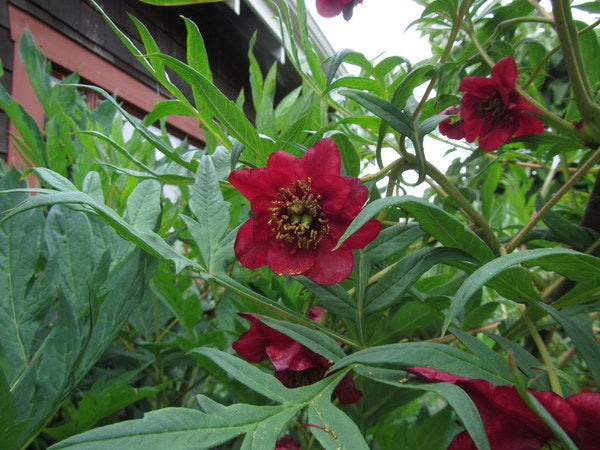
The word exceptional describes this ultra-collectible plant – a species peony in the truest sense. It is unlike its well-known relatives and mudblood hybrid cousins in just about every way. Fleshy blue-green leaves are flattened and dissected in a way that resembles birdwings illustrated by medieval illuminators, ornamental to the maximum. The single, diminutive, downward-facing flowers on the other hand are something only a plantaholic could love, leathery and not at all blousey but with a charismatic scarlet and yellow coloration that makes some amends. Rarely offered and rarely seen, in part because it inhabits the dry pine woodlands east of the Mountain West. Even though it is native to Washington east of the Cascade Mountains, this collection is from the southernmost part of its range in Washoe County, Nevada. Given its habitat, in wetter climates this will ask for quite good drainage in full sun to dappled shade – our happy plant likes our rainshadow rock garden. Any inherent and perceived challenges are well worth the trouble for those with supreme taste. While these are relatively small seed-grown plants which aren’t flowering size - not of the standard hybrid peony three-eye variety – this is more than enough to get your plant-nerd on!.
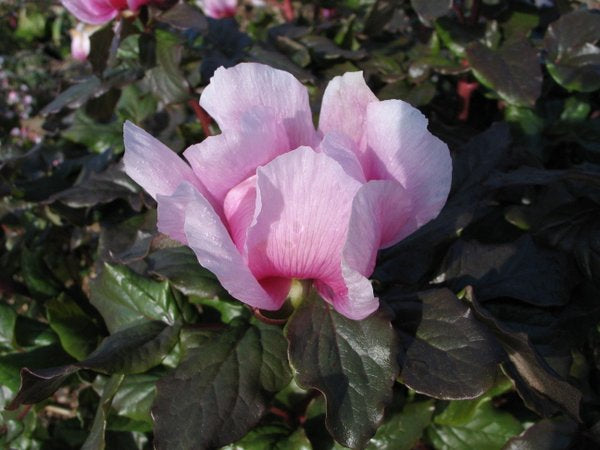
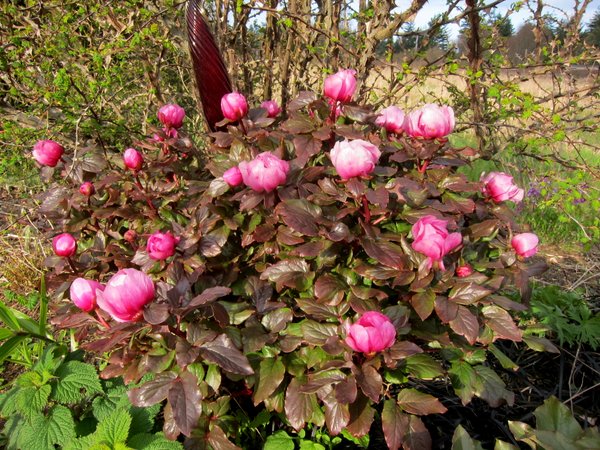
One of the finest of the species Peonies, this Mediterranean goody is among the first to bloom in spring. Fabulous new growth and very showy single pink flowers. If you want scent, get a hybrid. If you want class, here you go. This is a stunning and very good plant whose foliage gleams with a metallic sheen which looks great throughout the summer. The late summer/early fall seed pod display is of high ornament. Good, well drained soil, this will be more heat tolerant than the other species and the one most apt to succeed if you live in an area with minimal winter cold. When planting, just cover the red buds no more than an inch or two. The medium band pots are seedlings that are a few years from blooming size.
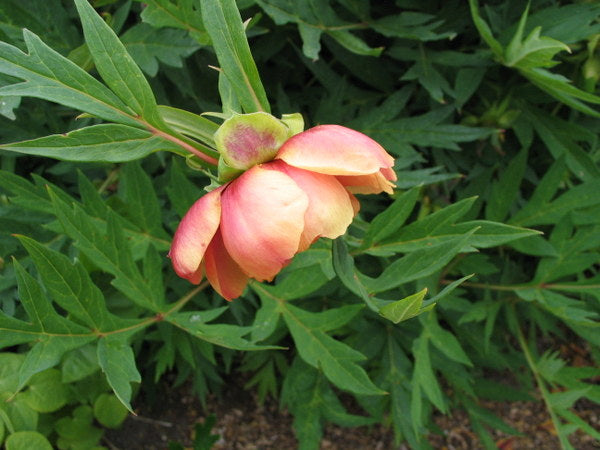


Choice woodland species from Japan where the small bowl-shaped white flowers are much admired and combine harmoniously with the simple rounded leaflets. An easy herbaceous species and one of the few Peonies that thrives in the shade. Looks great with Ferns, Hellebores and Hostas. This species has been submerged into Paeonia obovata by Hong De-Yuan in his extraordinary monograph 'Peonies of the World, Taxonomy and Phytogeography'. This book, along with the newly published second volume (2011) 'Peonies of the World, Polymorphism and Diversity', will remain the undisputed last answer for the foreseeable future.
That said, we will retain the epithet japonica to differentiate it from obovata as this blooms much earlier than our pink P. obovata from Japan and has an entirely different horticultural gestalt in the garden. We can hear Hong De-Yuan now "I pour my life into this unrivaled and exhaustive treatment of the genus Paeonia and this is what you take from it - horticultural gestalt? AARRRGGGHHH!"


Steve Hootman, Curator and Director of the Rhododendron Species Botanical Garden, often pats himself on the back for collecting this exceptional species in China and each spring as our plants flower, we murmur attaboys and give him virtual high fives while virtually raising our glass in salute. Loves some shade, great foliage and spring pink flowers. Steve has bagged a host of amazing Rhodos on his collecting trips and this Peony is just as exceptional. Narrow leaflets with a distinct sheen provide backing for the fat dark pink flower buds which often emerge in the early to mid spring before the leaves. This gives an extended period of tantalization before the impressive pink flowers open. An added bonus are the lovely shiny black seeds arrayed in the starfish-shaped seed pods. All in all, a very choice introduction. Huzzah, Hootman and well done Laddie! Just cover the 'noses' an inch or two as too deep is worse than too shallow when planting peonies. This species is best in light shade although part sun such as morning sun is perfectly ok. These are seedlings that are a few years from blooming size.


A very elegant species combining refinement of foliage and flower. Rounded leaflets softly tinted in flesh tones back the single pink goblet shaped flowers. Exquisite is a word not used lightly here. A denizen of the Japanese woodlands, this performs beautifully in full to part shade. The flowers, while small, are not to be discounted as the presentation is very good. What is better are the flamboyant starfish seed pods which open in fall to reveal a jewel box of glistening seeds like blue-black pearls nestled in the carnelian of infertile seeds. Fair to say this is the queen of our shade garden in the fall and all who view her display become instant loyal subjects. These are seedlings that are a few years from blooming size.


This one is for all my Risk enjoyers, for all those times your parents bemoaned the 3 hour timesink into an epic board game, because this little poppy hails from that all-important strategic chokepoint of geopolitics roleplaying—Kamchatka. Possessed of all the delicacy required in war-time negotiation with paper thin soft-pink flowers and lacily divided foliage, its as difficult to acquire as its home peninsula and can be as challenging to keep due to its Siberian origins. Wants near perfect drainage in a rock or pumice-laden mix and to be kept from strong heat and humidity.

When Paradise is in the name there's a lot to live up to and while I don't know that this is the harbinger of Morian utopia, it certainly isn't The Inferno. Rosettes of narrow strappy leaves and 3 feet tall spikes of white flowers. Will seed around but the architecture is relatively airy so it can play nice with others if not weeded out, or would make a great meadow component. Pretty easy and deer resistant.